
Hectonichus / CC BY-SA 3.0, via Wikimedia Commons
Jacobaea incana: complete guide
Jacobaea incana
Want to see Jacobaea incana: complete guide in your garden?
1 minute, no credit card
Overview
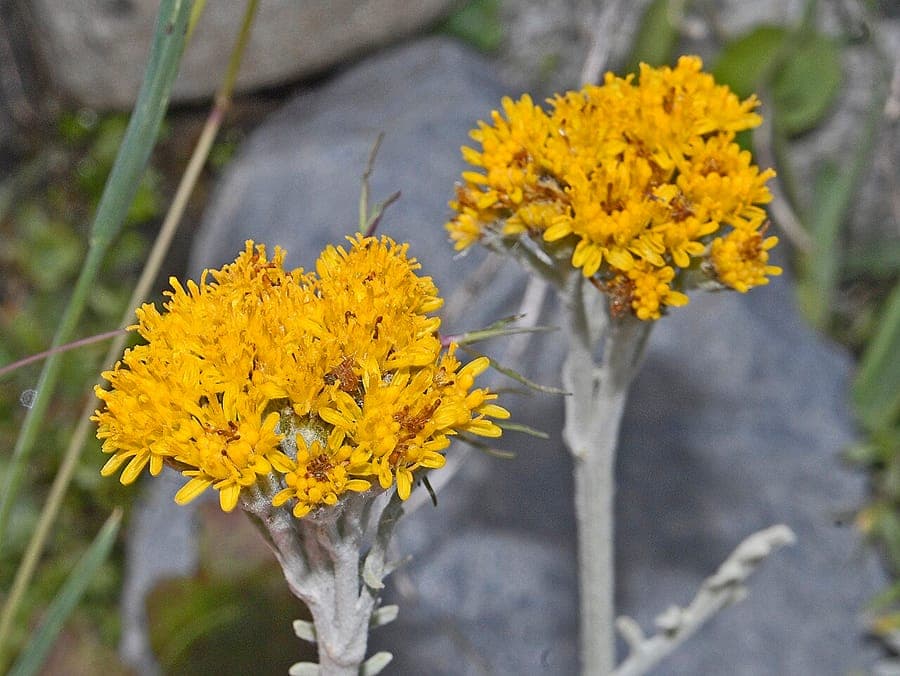
Jacobaea incana, known as Hoary Groundsel or Grey Ragwort, is an elegant alpine plant from the Asteraceae family. This species is native to Central Europe, particularly in the Alps of France, Italy, and Switzerland. The plant reaches 20-50 centimeters in height and blooms in summer (July-August) with yellow flowers. The characteristic greyish leaf covering (fine hairs) gives the plant a silvery-grey appearance.
Jacobaea incana is a valuable plant for rock gardens, xeriscaped borders, and alpine troughs. The silvery-grey foliage provides year-round interest, while yellow summer flowers add seasonal color. The plant tolerates extremely dry, poor soils where many species fail, making it ideal for challenging gardens.
This plant is winter-hardy in all European climates (zones 4-8) and can remain outdoors permanently. The grey foliage combined with yellow flowers creates a warm, natural aesthetic that works well in front garden designs with Mediterranean or alpine themes.
Appearance and Bloom
Jacobaea incana grows as a compact, densely branched plant with characteristic greyish foliage. Leaves are linear to threadlike, covered with fine silvery-white hairs that give the plant a farina-like appearance. This grey foliage is actually the primary decorative feature of this plant, even outside the blooming period.
The flowers are small to medium-sized (1-1.5 cm) yellow composites, very typical of the Jacobaea genus. They appear in dense clusters at stem tips. The blooming period is July through August, sometimes earlier or later depending on altitude and climate. Blooms typically last 4-6 weeks.
After flowering, seed heads form and are dispersed by wind. Although Jacobaea incana does not self-seed as aggressively as some related species, spontaneous seeding can occur under favorable conditions. This can usually be easily managed by cutting off seed heads.
Ideal Location
Jacobaea incana grows best in full sun in dry, extremely well-draining locations. At least 7-8 hours of direct sunlight daily is ideal. The plant tolerates no shade and becomes leggy and loses form in partial shade.
The plant is extremely winter-hardy (zones 4-8) and can remain outdoors permanently in all European climates. It tolerates night frost periods without any protection. The plant goes dormant in winter and reappears early in spring.
Essential is an extremely well-draining location. Waterlogging in winter is fatal. Rock gardens, slopes, raised borders, and containers are all suitable. Ensure water does not accumulate around the plant, especially in winter when rain can be persistent.
Soil
Jacobaea incana has very specific soil demands. The plant grows well only in dry, well-draining, poor soils. Heavy clay or moisture-retentive soils are completely unsuitable. The plant grows better on rocks than in good garden soil.
Neutral to slightly acidic pH (6.0-7.5) is acceptable, but the plant also grows in alkaline soils (up to pH 8.0). Add plenty of gravel, sand, or perlite - at least 50% of the soil should be drainage material. Organic matter is not needed and can be harmful by retaining water.
Ideal is a gravel base with a thin layer of nutrient-poor potting soil. In containers: use alpine potting mix or make your own with 40% alpine soil, 30% gravel, 20% sand, and 10% compost. Avoid all clay.
Watering
Jacobaea incana requires very little water after establishment. The plant grows in alpine areas with limited rainfall and tolerates drought excellently. In the first year after planting: water weekly until the plant develops a good root system (first 6-8 weeks), then stop.
Once established (after 1-2 years): water rarely. Water only during extremely dry periods (more than 8 weeks without rain). In temperate climates where regular rainfall occurs, supplemental water is usually unnecessary.
In winter: absolutely no watering. The plant is fully dormant and requires only dryness. Too much moisture in winter causes rot and fungal growth. Ensure water drains away and does not accumulate around the plant.
Free design
Want to see Jacobaea incana: complete guide in your garden? Make a free design now.
Pruning
Jacobaea incana requires minimal pruning. The plant grows compactly and requires no shaping. Remove dead or withered leaves carefully. This is actually a risky operation because the plant can be fragile.
After flowering, spent flower heads can be removed to prevent seeding. However, this does not encourage rebloom. Cut off seed heads before they mature if you want to prevent self-seeding.
In early spring, as new foliage begins to grow, remove last year's dead or browned foliage very carefully. Be gentle; this plant is not robust. Heavy pruning can damage the plant.
Maintenance Calendar
Spring (March-May): Check that plant survived winter intact. Remove old dead foliage very carefully. Water weekly through April (first year only). No fertilizing.
Summer (June-August): Enjoy the blooming. Water rarely, only in extreme drought. Cut off seed heads after flowering for seed control. Monitor for drought stress.
Autumn (September-October): Reduce watering. Plant prepares for winter. No fertilizing. Cut off any remaining seed heads.
Winter (November-February): Plant is fully dormant. NO water. NO fertilizing. Protect against excessive rain with a roof in very wet regions.
Winter Hardiness
Jacobaea incana is winter-hardy in zones 4-8 and can remain outdoors permanently in all European climates. The plant tolerates temperatures below -20 degrees Celsius without problem. However, waterlogging in winter is much more damaging than cold.
In zones 4-5 with very wet winters, light protection can help: glass or plastic roof to block excessive rain, or gravel mulch instead of organic material. In zones 6-8, no protection is needed.
The plant enters complete dormancy in winter and requires no frost protection for foliage. Underground roots are extremely cold-tolerant. The greatest threat is moisture, not cold.
Support and Training
Jacobaea incana is a compact alpine plant that requires no support. The plant forms low clusters of maximum 50 centimeters. This plant works well as a border plant in rock gardens or as an accent in raised borders.
Combine Jacobaea incana with other dry alpine species such as Sedum, Sempervivum, alpine phlox, edelweiss, or small alpine pines. The greyish foliage harmonizes beautifully with silvery foliage of other plants.
The plant can also be used in alpine troughs or in extremely dry corners where normal plants fail. For gardens wanting to emphasize Mediterranean or alpine themes, Jacobaea incana is an ideal choice.
Plant Care
Jacobaea incana requires very little maintenance after establishment. The plant is not hungry for nutrients and fertilizing is unnecessary. In fact, fertilizing can be harmful by causing excess growth and disease.
Division is rarely needed; this plant grows slowly and seldom forms large clusters. Every 4-5 years, careful excavation and division is possible, but not essential.
Pest/disease protection: Echoed can occasionally plague, but are rarely fatal. Fungi are a greater risk in wet winters; ensure good drainage.
Conclusion
Jacobaea incana is a unique alpine plant perfect for dry, challenging garden zones. The greyish foliage provides year-round interest, while yellow flowers add summer appeal. For gardeners seeking extremely drought-tolerant, low-maintenance alpine specimens, Jacobaea incana is an excellent choice.
GardenWorld can help you position Jacobaea incana optimally in dry front yard zones. Our design services identify challenging dry areas and select suitable alpine species. Let us transform your dry front yard into alpine beauty! Visit gardenworld.app and begin your design today.
Want to see Jacobaea incana: complete guide in your garden? Make a free design now.
Upload a photo, pick a style, and get a photorealistic design with plant list in under a minute.
No credit card required


Similar plants
Calendula stellata: complete guide
Calendula stellata
Complete guide to Calendula stellata, the star-flowered marigold from Sicily: location, soil, watering and companion planting tips.
Korean chrysanthemum: complete guide
Chrysanthemum x rubellum
Chrysanthemum x rubellum is a hardy autumn perennial with single pink to copper flowers from August to November. Care and combinations.
Helianthus divaricatus: complete guide
Helianthus divaricatus
Helianthus divaricatus is a North American woodland sunflower with yellow summer blooms, ideal for naturalistic borders and shady edges.