
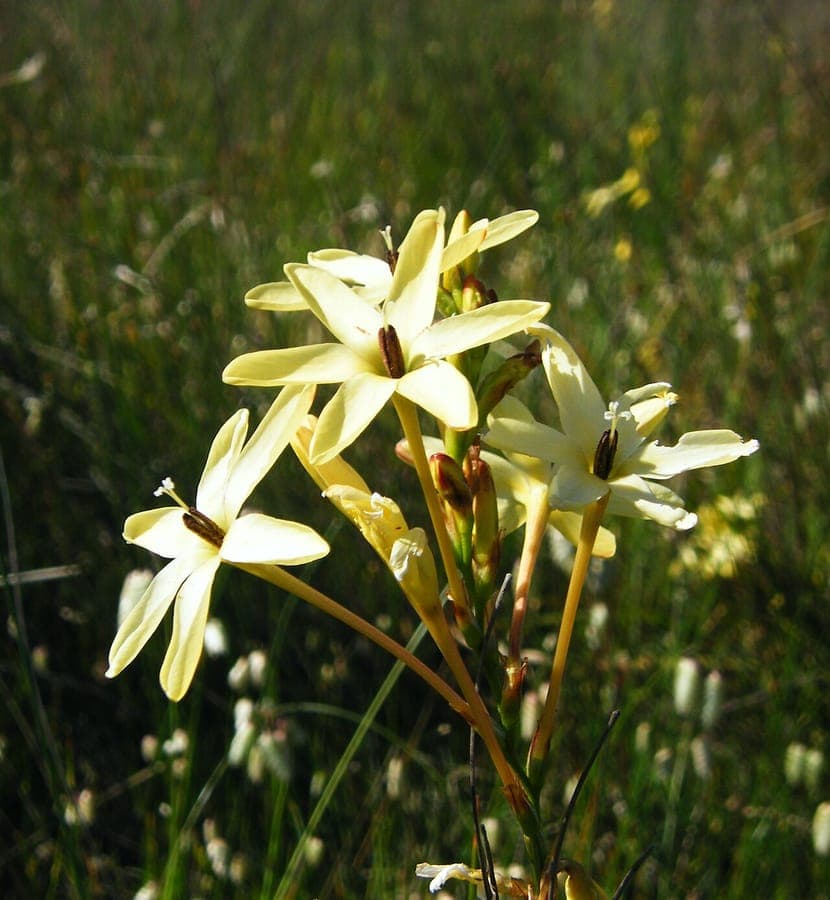
Andrew massyn / CC BY-SA 3.0, via Wikimedia Commons
Ixia paniculata: complete guide
Ixia paniculata
Want to see Ixia paniculata: complete guide in your garden?
1 minute, no credit card
Introduction
The Ixia paniculata, also known as tubular corn-lily or long-tube ixia, is a delightful bulbous plant from the Cape Provinces of South Africa. This plant grows wild in the western and southwestern parts of South Africa, where it experiences a Mediterranean climate with dry summers and wet winters. The plant has been in cultivation for centuries and has become naturalized in many parts of Europe, especially in Spain and Portugal where the climate is similar.
The Ixia paniculata is an absolute classic among gardeners seeking something special and long-flowering. With its elegant, slender growth habit and beautiful tubular flowers in yellow, red, or orange tones, this plant brings genuine exotic beauty to any garden. Whether you work in containers or borders, this South African beauty will certainly impress.
Appearance and Bloom
The Ixia paniculata grows into a slender, elegant plant with fine, grass-like green leaves that grow in rosettes. The plant reaches a height of approximately 40 to 60 centimeters depending on growing conditions and variety. The leaves are narrow and grass-like, providing fine texture to the plant.
The flowers are the stars of this plant and appear over a long period from May through August. The flowers are tubular, approximately 2 to 3 centimeters long, and grow in elegantly branched clusters atop slender stems. The flower color varies from soft yellow to deep red, sometimes with contrasting eye spots in the center. Different cultivars offer different color combinations, from pure yellow to bright red to orange-pink.
After flowering, the plant slowly fades away and becomes dormant. This is completely normal and not a sign of disease.
Ideal Location
The Ixia paniculata thrives best in full sun to light partial shade. Plant this bulb in a location receiving at least 6 hours of direct sunlight daily for optimal growth and flowering. In very hot climates, some afternoon shade can be beneficial, especially in southern regions.
The plant feels at home in sheltered spots protected from strong winds. In windy environments, the elegant flowers can be damaged. A spot along a wall or in a sheltered corner of your garden is ideal.
The plant can be grown both in the ground and in containers. For pot culture, choose a sunny windowsill or terrace where the plant receives good light.
Soil
The Ixia paniculata requires well-drained, sandy to sandy-loam soil. The plant cannot tolerate waterlogged or soggy soil. Like many South African plants, it feels at home in Mediterranean soils with moderate nutrition.
Before planting, mix sand, small gravel, and organic material into the planting soil to improve drainage. If your soil contains heavy clay, add extra sand. The pH preference is between 6 and 7.
For pot culture, use a well-draining potting mixture with additional sand or perlite added. This prevents water stagnation, which can be fatal for this plant.
Free design
Want to see Ixia paniculata: complete guide in your garden? Make a free design now.
Watering
The Ixia paniculata requires regular water during growth and flowering season. Ensure soil moisture retention of approximately 50 to 60 percent, so moist but not waterlogged. Check regularly and water only when the top centimeter feels dry.
Once the plant dies back and becomes dormant, water should be drastically reduced. During the dormant season, water minimally to not at all, depending on soil moisture. This rest season is from September to May in most climates.
For pot culture, caution is especially important. Check daily if the soil feels dry and ensure water drains completely from the pot.
Pruning
The Ixia paniculata requires no pruning during growth. Remove only dead flowers to encourage further blooming and keep the plant neat. This is called deadheading and helps the plant use energy for more flowers.
At season's end, when the plant is completely dead, remove all dead material. Leave the bulbs undisturbed in the soil or pots for next season.
Maintenance Calendar
Spring (March-April): Plant bulbs at 5 to 7 centimeters deep. Begin with careful watering. Summer (May-August): Regular watering during flowering. Fall (September): Begin tapering water. Winter (October-February): Minimal care, bulbs dormant.
Winter Hardiness
The Ixia paniculata is not fully winter-hardy in the Netherlands and Belgium. In most environments, the bulbs must be dug up after dying back and stored in a dry, cool place until next season.
Alternatively, you can grow the bulbs in containers and bring them to a cool, dry place like a shed or cellar in winter. This provides more control over temperature and moisture.
In very mild climates (coastal zones), bulbs can stay outside, but this is risky. Usually storage is better than risking loss of all bulbs.
Companion Plants
The Ixia paniculata combines beautifully with other South African bulbs like Sparaxis and Watsonia. Together these create an exotic flower garden.
In borders, the plant combines well with lavender, salvias, and other summer bloomers. The elegant flowers harmonize well with soft-colored partners. For contrast effect, plant red Ixia species next to yellow counterparts.
Conclusion
The Ixia paniculata is a unique and exotic plant that brings genuine summer color and elegance to your garden. With its long flowering period, beautiful flowers, and relatively easy care, this is a perfect choice for those wanting to try something different. Whether you work in containers or borders, this South African beauty will certainly bring joy.
The bulbs are available from specialized online suppliers and some garden centers. Plant them each spring and enjoy months of summer flowering. For more planting help and design tips, visit gardenworld.app where you can request personalized garden designs.
Want to see Ixia paniculata: complete guide in your garden? Make a free design now.
Upload a photo, pick a style, and get a photorealistic design with plant list in under a minute.
No credit card required


Similar plants
Iris tingitana: complete guide
Iris tingitana
Iris tingitana, the Morocco iris, is the bulb species behind the Dutch iris: early blue-violet blooms that need a sunny, well-drained position.
Iris hookeri: complete guide
Iris hookeri
Hooker's Iris is a compact North American native plant with blue flowers. Low-growing and moisture-loving water plant.
Siskiyou iris: complete guide
Iris bracteata
Complete guide to Iris bracteata, the Siskiyou iris: location, soil, bloom cycle, watering, pruning and companion plants for this rare Pacific Coast iris.