
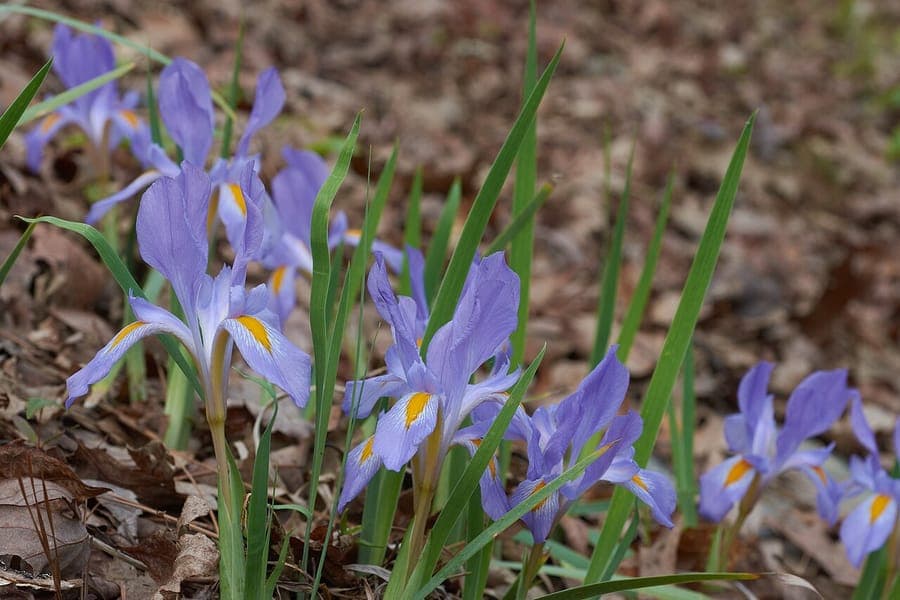
Eric Hunt / CC BY-SA 4.0, via Wikimedia Commons
Dwarf violet iris (Iris verna): complete guide
Iris verna
Want to see Dwarf violet iris (Iris verna): complete guide in your garden?
1 minute, no credit card
Overview
The Dwarf violet iris, botanically Iris verna, is an early spring iris from eastern North America distinguished by extremely compact growth and early blooming. Named 'verna' because it is one of spring's very first flowers, this iris blooms as early as March-April when many other plants are still dormant. The species occurs naturally from North Carolina to Florida and west to Kentucky and Missouri.
This iris is extremely dwarf, usually reaching only 10-25 centimeters in height, and is perfect for front borders, rock gardens, and container cultivation. The plant is very hardy to -20 degrees and requires minimal maintenance after planting.
Appearance and bloom
The Dwarf violet iris has dark purple to lavender flowers with characteristic form. The flowers are small, approximately 3-4 centimeters in diameter, but very numerous. Each flower lasts only a few days, but the plant produces successive blooms over a 2-3 week flowering period.
The leaves are extremely compact, grass-like, and form neat, tidy clumps. After flowering, the leaves quickly grow to full height (25-30 centimeters) and remain green deep into summer. The plant grows mainly in spring and autumn when it is moist and cool.
Ideal location
Full sun to light shade is suitable; this iris thrives better with some afternoon shade in very warm climates. Plant in a spot that doesn't become too dry in spring when the plant grows. Good moisture during the growing and blooming season is important.
Ensure the location drains well in wet winters; although this iris appreciates spring moisture, it doesn't want to sit in winter mud. A spot under the leaf litter of deciduous trees is ideal, where snowmelt in spring naturally drains.
Soil
The Dwarf violet iris requires moisture-retentive soil with good drainage. Heavy clay soils can be amended with sand and organic matter. A pH of 6.0 to 7.5 is ideal. Adding compost or leaf mold annually helps maintain soil quality.
This iris is not very demanding nutritionally and grows well in moderately fertile soils. Avoid very heavy fertilization, which causes unnecessary overgrowth.
Free design
Want to see Dwarf violet iris (Iris verna): complete guide in your garden? Make a free design now.
Watering
Moderate watering during the growing and blooming season (March-May). Water regularly so the soil never dries out, especially in dry spring months. After blooming, you can gradually reduce watering as summer begins and the plant enters dormancy.
Ensure good drainage in winter. This iris prefers moist autumn and winter rains to artificial summer watering. Many gardens receive sufficient rain and extra watering is unnecessary.
Pruning
Minimal pruning required. Remove spent flowers after blooming if desired, though this is not strictly necessary. Leave dead foliage intact in autumn; this helps protect roots and add organic matter in winter.
Maintenance calendar
JANUARY-FEBRUARY: Plant begins to grow. Carefully tidy fallen leaves. MARCH-APRIL: Flowering period. Water regularly. No fertilization needed. MAY-JUNE: Leaf growth. Gradually reduce water. JULY-AUGUST: Summer dormancy. Minimal water. SEPTEMBER-OCTOBER: Fall growth begins. Add compost. NOVEMBER-DECEMBER: Winter preparation. No pruning.
Winter hardiness
The Dwarf violet iris is very hardy to -20 to -25 degrees Celsius. This plant is known as one of the hardiest iris species and requires no extra winter protection even in very cold regions. Just ensure good drainage.
Companion plants
Perfect companions are other early spring woodland bloomers, species tulips, cyclamen and scilla. Later in the season, small cushion-forming plants such as Irish moss (Sagina) and alpine phlox fill the base nicely.
Closing
The Dwarf violet iris is an indispensable plant for those wanting to enjoy the season's earliest blooms. This compact American rarity brings early fragrance and dark purple tones in March when the garden is still asleep. Very easy to maintain and highly reliable.
Find this plant at nurseries specializing in dwarf iris and alpine plants. For reliable supply, check your local garden center. Combine this iris on gardenworld.app with other spring bloomers for a year-round interesting front yard. Design your spring display on gardenworld.app today.
Want to see Dwarf violet iris (Iris verna): complete guide in your garden? Make a free design now.
Upload a photo, pick a style, and get a photorealistic design with plant list in under a minute.
No credit card required


Similar plants
Iris tingitana: complete guide
Iris tingitana
Iris tingitana, the Morocco iris, is the bulb species behind the Dutch iris: early blue-violet blooms that need a sunny, well-drained position.
Iris hookeri: complete guide
Iris hookeri
Hooker's Iris is a compact North American native plant with blue flowers. Low-growing and moisture-loving water plant.
Siskiyou iris: complete guide
Iris bracteata
Complete guide to Iris bracteata, the Siskiyou iris: location, soil, bloom cycle, watering, pruning and companion plants for this rare Pacific Coast iris.