
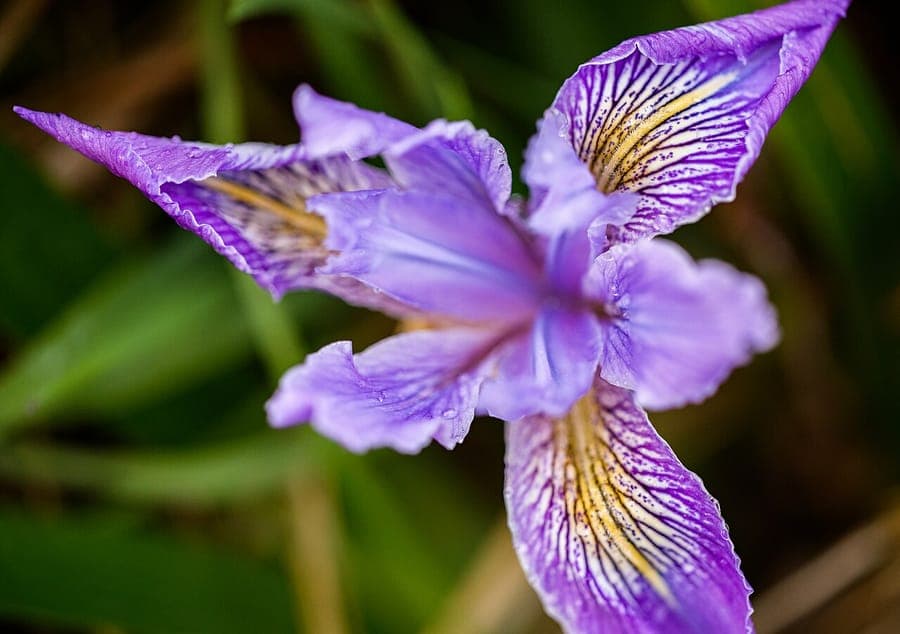
Pbjamesphoto / CC BY-SA 4.0, via Wikimedia Commons
Iris tenax: complete guide
Iris tenax
Want to see Iris tenax: complete guide in your garden?
1 minute, no credit card
Overview
Iris tenax, the Toughleaf Iris, is a strong and resilient iris native to the western United States, from Washington to California. The plant is named after its tough leaves that remain green throughout the year - the botanical name "tenax" literally means "tough" or "persistent". This iris is a true survival champion in dry, rocky gardens and is becoming increasingly popular with gardeners seeking water-saving plantings.
Appearance and bloom
Toughleaf iris grows to 40-50 cm tall with evergreen, narrow linear leaves ranging from gray-green to dark green. The flower is variable in color, usually purple-blue to deep purple with yellow marks on the hanging sepals. Some specimens have lighter colored flowers. Bloom occurs from April to May. Each flower lasts only one day, but the rhizome produces multiple flowers over several weeks. The flower has a sweet scent.
Ideal location
Tenax iris thrives in full sun to light shade, at least 5-6 hours of direct sunlight per day. Plant on dry slopes, rock walls, stone gardens or drought-resistant beds. This iris is perfect for water-saving gardens and performs well on south and west-facing slopes where heat and drought are normal.
Soil
Drought resistance requires well-draining soil. Plant in sandy, gravelly or rocky soil with pH 6 to 8. Heavy clay soil should be improved with sand and gravel. In wet areas create raised beds 15-20 cm high. Do not add much organic matter; thin mulch of small stones protects against drying while maintaining good drainage.
Free design
Want to see Iris tenax: complete guide in your garden? Make a free design now.
Watering
Once established, this iris is highly drought-tolerant. Water moderately during growing season (April-May), but keep dry after. In Mediterranean summers no extra water is needed. In rainy climates, watch for excess moisture; extra drainage helps. Winter: keep dry when plant growth is minimal.
Pruning
Pruning remains minimal. The evergreen foliage can remain intact. After blooming, remove only wilted flower stalks below the flower head. Old, damaged or dead leaves can be carefully removed in late autumn or early spring.
Maintenance calendar
April-May: Full bloom; give minimal water; enjoy purple beauty. June-August: Foliage continues to grow; keep dry; plant prepares for dormancy. September-October: Preparation for rest; keep leaves intact. November-March: Deep rest; no water; evergreen foliage remains visible; plant overwinters well.
Winter hardiness
Toughleaf Iris is hardy to USDA zone 5a (-26 to -20 degrees C), sometimes even zone 4b. Plant tolerates heavy snow and ice well due to its strong rhizome system. Rapid thaw water accumulation can be a problem; ensure good drainage.
Companion plants
Combine Toughleaf Iris with other drought-tolerant plants: lavender, santolina, sedum, stonecrop. For height variation, dwarf conifers, sea holly or small evergreens can be used. In container gardens, this works well with other western US flora.
Closing
Iris tenax offers gardeners a strong, water-saving choice with evergreen foliage and purple flowers. Ideal for dry, sunny spots without extra maintenance. Available at nurseries. Discover more garden inspiration on gardenworld.app!
Want to see Iris tenax: complete guide in your garden? Make a free design now.
Upload a photo, pick a style, and get a photorealistic design with plant list in under a minute.
No credit card required


Similar plants
Iris tingitana: complete guide
Iris tingitana
Iris tingitana, the Morocco iris, is the bulb species behind the Dutch iris: early blue-violet blooms that need a sunny, well-drained position.
Iris hookeri: complete guide
Iris hookeri
Hooker's Iris is a compact North American native plant with blue flowers. Low-growing and moisture-loving water plant.
Siskiyou iris: complete guide
Iris bracteata
Complete guide to Iris bracteata, the Siskiyou iris: location, soil, bloom cycle, watering, pruning and companion plants for this rare Pacific Coast iris.