
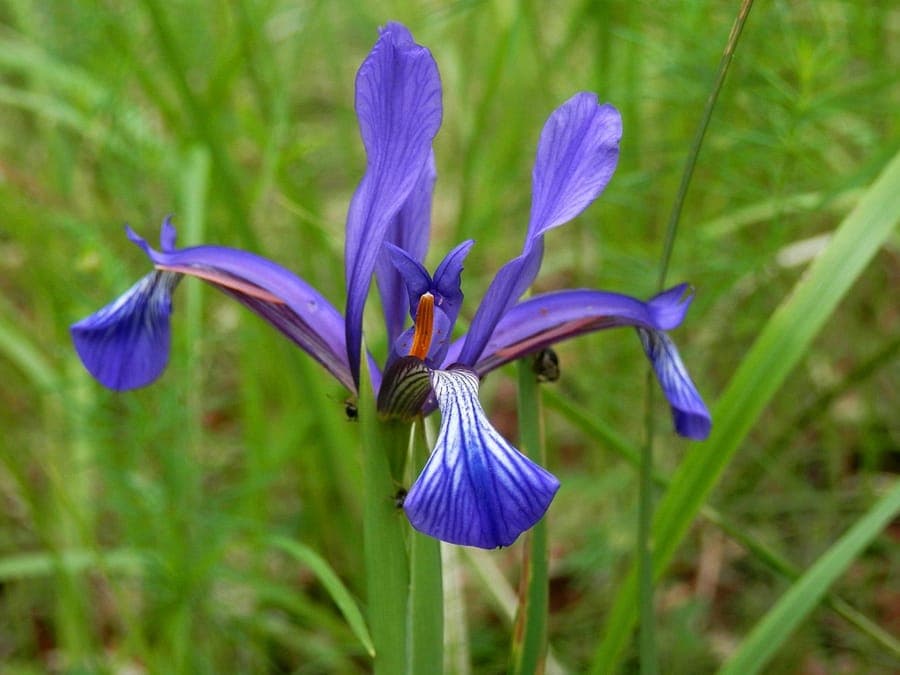
ABesheva / CC BY-SA 4.0, via Wikimedia Commons
Iris sintenisii: complete guide
Iris sintenisii
Want to see Iris sintenisii: complete guide in your garden?
1 minute, no credit card
Overview
Iris sintenisii, commonly known as Sintenis Iris, is a rare iris from the Balkans that excels in specialized front yard collections and rock gardens. This plant grows compactly, reaching only 20 to 30 centimeters in height, and flowers in early spring with purple blooms. Sintenis Iris is native to southeastern and eastern Europe and is truly a rarity in garden cultivation.
The plant is renowned for its miniature growth habit, robust character, and preference for dry, well-draining soils. At gardenworld.app, Sintenis Iris is ideal for gardeners wishing to create advanced, specialized front yard collections featuring unusual plants.
Appearance and Bloom
Sintenis Iris has a compact, low growth pattern with tightly bundled, small, grass-like leaves that remain green year-round. The plant reaches a height of only 20 to 30 centimeters and forms compact, dense clumps.
The flowers are small, approximately 4 to 6 centimeters across, but extremely detailed and decorative. They display the classic iris form with drooping falls and upright standards. Colors range from purple-blue to violet with dark markings. They bloom in early spring, March through April, and are exceptionally long-flowering with blooms persisting for many weeks. The flowers are lightly scented.
Ideal Location
Sintenis Iris performs best in full sun to light shade, requiring a minimum of six to eight hours of direct sunlight daily. The plant is also suitable in partial shade, especially in warm climates.
Select a warm, sunny location in your front yard. The plant excels in rock gardens, between stones in gravel gardens, and in raised beds. Sintenis Iris is also suitable for container cultivation on terraces with good drainage. This iris is ideal for specialized gardeners who appreciate small, delicate plants.
Soil
Sintenis Iris is highly tolerant of soil composition but absolutely requires good drainage. The plant thrives in sandy soils, gravel, and even poor, stony earth. The ideal pH ranges from 6.0 to 7.5, neutral.
Heavy, water-retaining soils are completely unsuitable. If your front yard has heavy clay, add sand, gravel, or garden compost for drainage. Raised beds are ideal for this plant. Mulching around the base can aid moisture retention without compromising drainage.
Free design
Want to see Iris sintenisii: complete guide in your garden? Make a free design now.
Watering
Once established, Sintenis Iris is extremely drought-tolerant. This is a plant for dry spring periods. Water regularly in the first year after planting, especially during dry spells.
From March through May, water once every two weeks if no rainfall occurs. After flowering in June, watering can largely cease. This plant requires minimal water assistance and can be considered drought-tolerant once established.
Pruning
Pruning is minimal for Sintenis Iris. Remove dead leaves in late autumn or early spring. Spent flowers can be removed, but this is not strictly necessary.
Once every four to five years, plant clumps can be carefully divided to maintain full flowering vigor. This is necessary only if the plant has become extremely dense.
Maintenance Calendar
Winter (December-February): Preparation, removal of dead foliage Spring (March-May): Flowering, light watering Summer (June-September): Minimal maintenance, division preparation Autumn (October-November): Winter preparation, cleanup
Winter Hardiness
Sintenis Iris is hardy to approximately minus 15 degrees Celsius. In temperate climates like the British Isles or Central Europe, the plant survives outdoors with ease.
In very severe winters, some foliage damage may occur, but the plant regrows normally in spring. Snow and frost periods present no problems. In maritime climates, this iris is highly suitable.
Companion Plants
Sintenis Iris combines beautifully with other small, delicate plants in rock gardens. Try combining it with:
- Small sedums: Succulent ground covers form interesting associations
- Saxifrage: Small alpine plants fit perfectly in the same niche
- Miniature dianthus: Small pink varieties offer texture
- Tiny stonecrops: Other fine ground-cover plants
- Ornamental grasses: Miniature grasses add movement
These combinations create striking, detailed rock garden compositions.
Conclusion
Sintenis Iris is a special plant for specialized front yard collections and rock gardens. With its compact form, delicate flowers, and minimal maintenance requirements, it offers unique charm for gardeners seeking the unusual. At gardenworld.app, you can use Sintenis Iris to create a true specialist's garden. The plant requires minimal effort and rewards with early spring flowers. For rock gardens and specialized front yard designs, Sintenis Iris is an excellent choice.
Want to see Iris sintenisii: complete guide in your garden? Make a free design now.
Upload a photo, pick a style, and get a photorealistic design with plant list in under a minute.
No credit card required


Similar plants
Iris tingitana: complete guide
Iris tingitana
Iris tingitana, the Morocco iris, is the bulb species behind the Dutch iris: early blue-violet blooms that need a sunny, well-drained position.
Iris hookeri: complete guide
Iris hookeri
Hooker's Iris is a compact North American native plant with blue flowers. Low-growing and moisture-loving water plant.
Siskiyou iris: complete guide
Iris bracteata
Complete guide to Iris bracteata, the Siskiyou iris: location, soil, bloom cycle, watering, pruning and companion plants for this rare Pacific Coast iris.