
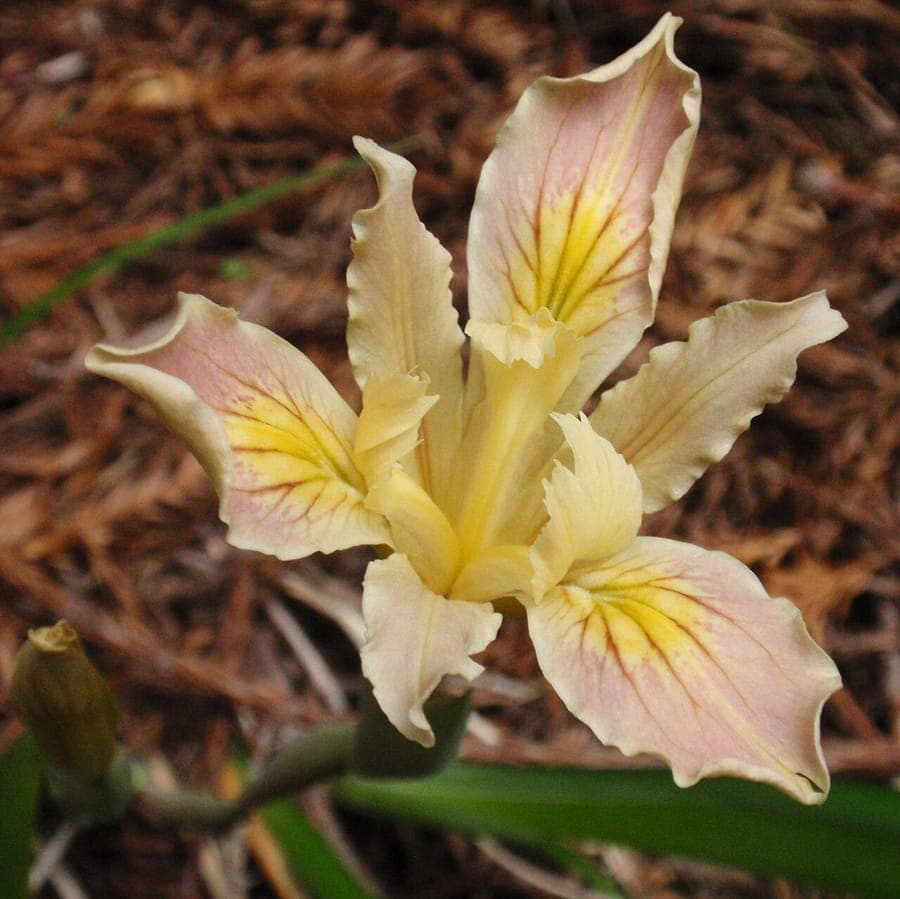
tom hilton / CC BY 2.0, via Wikimedia Commons
Purdy's iris (Iris purdyi): complete guide
Iris purdyi
Want to see Purdy's iris (Iris purdyi): complete guide in your garden?
1 minute, no credit card
Overview
Purdy's iris, botanically Iris purdyi, is an alpine endemic species from Northern California that stands out as a true mountain dweller. This iris was named after Augustus Purdy, an early California plant collector. The species grows naturally in mountain meadows and open woodland areas between 1500-2500 meters elevation.
This iris is larger than many other dwarf species, typically reaching 30-50 centimeters, and grows in dense clusters. The plant is very hardy and thrives in cooler climates with adequate moisture during the growing season. This makes Purdy's iris excellent for mountain gardens and cooler regions in Northern Europe.
Appearance and bloom
Purdy's iris has graceful violet flowers with a sturdy, characteristic form. The flowers are approximately 5-8 centimeters in diameter and appear in May through June. The color ranges from bright violet to deeper lavender, depending on growing conditions. The plant forms fast-growing shallow rhizomes that spread into large clusters.
The leaves are long and grass-like, often 40-60 centimeters, and form elegantly arching clumps. After flowering, the leaves recline in the heat and die back as summer becomes dry. This is a natural adaptation to California's Mediterranean climate.
Ideal location
Choose a spot with light shade, especially protection from hot midday sun. In mountainous regions, sufficient sunlight as long as temperature remains cool. In warm lowland areas, shelter under deciduous trees is ideal. Provide good air circulation to prevent fungal diseases.
This iris appreciates moister growing locations than many other Iris macrosiphon relatives. Place under the woodland edge or in semi-shaded borders where snowmelt and spring rains naturally drain.
Soil
Purdy's iris requires moisture-retentive but well-draining soil. A mixture of clay, sand, and organic matter (leaf mold, compost) is ideal. The pH can be neutral to slightly acidic. Because this plant naturally grows in moister mountain habitats, more organic matter can be added than for lowland iris species.
Annually in fall, adding compost or leaf mold helps improve soil structure and moisture-holding capacity. This investment in soil quality is rewarded with more robust growth.
Free design
Want to see Purdy's iris (Iris purdyi): complete guide in your garden? Make a free design now.
Watering
Moderate watering is essential, especially during the growing season. Water regularly during spring and early summer, especially in dry periods. Ensure the soil never dries out, but also doesn't sit in swampy conditions. In summer, as the plant recedes, water less.
In areas with adequate spring rain, you may not need to water extra. In dry summers, deep watering once weekly can help encourage deep rooting.
Pruning
Routine pruning: remove spent flowers after blooming. Cut back dead foliage when it completely dies after summer. In early spring you can remove dead outer leaves as growth begins.
Maintenance calendar
MARCH-APRIL: Growing season begins. Water regularly. Remove previous year's dead material. MAY-JUNE: Peak blooming period. Water if dry. JULY-AUGUST: Plant dies back. Reduce watering. SEPTEMBER-OCTOBER: Winter preparation. Add compost. NOVEMBER-FEBRUARY: Rest period. Minimal care.
Winter hardiness
Purdy's iris is very hardy to -20 to -25 degrees Celsius. Snow cover provides extra protection in extreme winters. The risk is not frost but summer moisture problems; ensure good drainage in lowland areas with wet summers.
Companion plants
Purdy's iris pairs well with other mountain plants: alpine forget-me-nots, soft yellow coneflowers, heuchera in contrasting colors. In shaded woodland edge: alpine cinquefoil, evergreen sedge, delicate woodland ferns.
Closing
Purdy's iris brings a mountain spirit to any garden. For mountain enthusiasts and gardens in cooler climates, this is a real winner. The plant thrives in moister conditions than desert-like Californian iris species, which makes it notably attractive.
Find this alpine beauty at specialized nurseries focusing on native plants and alpine gardens. For garden design ideas where alpine plants shine, visit gardenworld.app. Create your mountain paradise on gardenworld.app with the right plant selection.
Want to see Purdy's iris (Iris purdyi): complete guide in your garden? Make a free design now.
Upload a photo, pick a style, and get a photorealistic design with plant list in under a minute.
No credit card required


Similar plants
Iris tingitana: complete guide
Iris tingitana
Iris tingitana, the Morocco iris, is the bulb species behind the Dutch iris: early blue-violet blooms that need a sunny, well-drained position.
Iris hookeri: complete guide
Iris hookeri
Hooker's Iris is a compact North American native plant with blue flowers. Low-growing and moisture-loving water plant.
Siskiyou iris: complete guide
Iris bracteata
Complete guide to Iris bracteata, the Siskiyou iris: location, soil, bloom cycle, watering, pruning and companion plants for this rare Pacific Coast iris.