
Santiago Martín-Bravo / CC BY 4.0, via Wikimedia Commons
Black iris (Iris nigricans): complete guide
Iris nigricans
Want to see Black iris (Iris nigricans): complete guide in your garden?
1 minute, no credit card
Overview
The Black iris, Iris nigricans, is a rare and exotic iris from Palestine and the Levant region distinguished by its exceptionally dark purple to nearly black flowers. This iris is a true collector's item for lovers of rare and unique plants. The botanical name 'nigricans' literally means 'blackish,' referring to the remarkable dark flower color.
This iris is more compact than many other species and usually reaches only 20-35 centimeters in height. The plant requires specific growing conditions that simulate the Mediterranean climate, making it particularly suitable for enthusiasts with experience cultivating difficult iris species.
Appearance and bloom
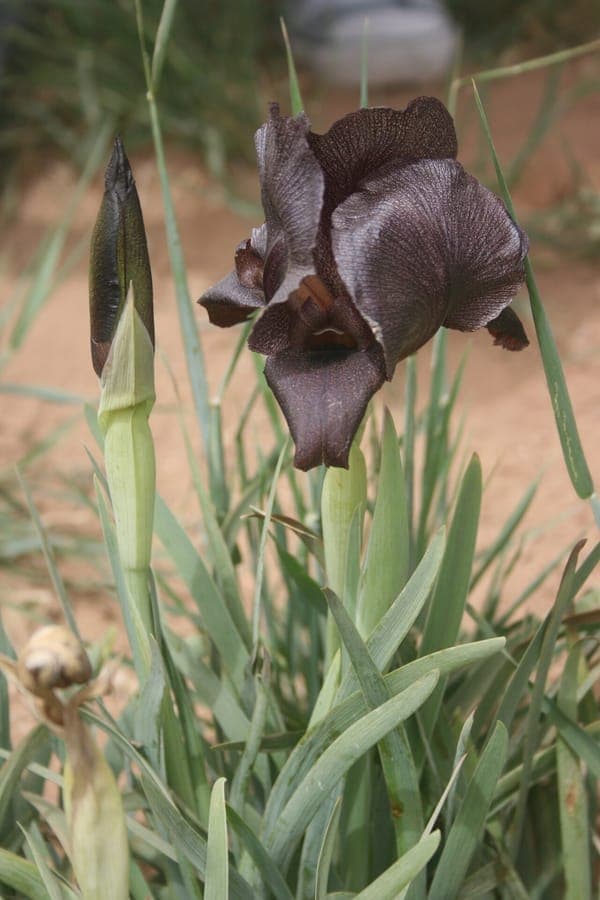
The Black iris has very dark purple to nearly black flowers that are remarkable in their somber beauty. Each flower is approximately 4-6 centimeters in diameter and appears on short flower stems. The petals are glossy and have a deep, mysterious character that makes this species completely unique.
The leaves are grass-like and remarkably long for the plant's height. The flowering period runs from March to April, making it an early spring iris species. Once bloomed, the plant forms seed capsules with a characteristic triangular shape.
Ideal location
The Black iris thrives best in a warm, sunny location with minimum 7-8 hours of direct sunlight. This Palestinian iris is very heat-loving and feels at home in warm, dry climates. In temperate zones, a sheltered, sunny spot against a south-facing wall is often ideal.
Ensure the location is well-sheltered from strong winds, which can damage the delicate flower stems. A location with some protection during extreme winter cold is highly beneficial, although this iris can be hardy to about -10 degrees Celsius.
Soil
Alkaline, very well-draining soil is essential. Add generous amounts of coarse sand, gravel, and perlite to heavier soils. A soil pH of 7.0 to 7.5 is ideal. Avoid heavy clay soils entirely; instead plant in containers with special mix than in poor soil.
The Black iris tolerates very poor soils and requires no feeding after planting. For container cultivation, a very porous mix is recommended with cactus soil and sand in a 1:2 ratio.
Free design
Want to see Black iris (Iris nigricans): complete guide in your garden? Make a free design now.
Watering
Minimal watering is essential. After planting, water only when the soil is completely dry. During the growing season (autumn to early summer) water very sparingly. In summer dormancy, water absolutely not at all.
Excessive water is lethal to this species. Ensure the rhizomes never become wet, especially during the rest and summer periods. In very dry summers, you can carefully provide some water, but dry is better than wet.
Pruning
Minimal pruning required. Remove only dead foliage and spent flowers. Leave seed capsules intact unless you want to harvest seeds. No aggressive pruning; this delicate plant prefers minimal disturbance.
Maintenance calendar
SEPTEMBER-OCTOBER: Growing season begins. Add water sparingly. OCTOBER-DECEMBER: Growth phase. Very minimal water. JANUARY-MARCH: Flowering period. Careful watering. Protection from extreme frost. APRIL-JUNE: Seed setting. Gradually reduce water. JUNE-AUGUST: Summer dormancy. No water. Dry location.
Winter hardiness
The Black iris is hardy to approximately -10 to -12 degrees Celsius, depending on watering. In very cold regions with wet winters, container cultivation is strongly recommended. A dry, sheltered location is much more important than frost.
Companion plants
This exotic iris pairs well with other Mediterranean and Palestinian plants. Combine with drought lovers such as alpine thyme, sand lavender, and small sedums. Wallflowers (Erysimum) offer nice texture contrasts.
Closing
The Black iris is a showstopper for the serious iris enthusiast. This Palestinian rarity demands some support but rewards patient cultivation with its mysterious dark purple flowers. This plant is not widely available but can be found at specialized nurseries.
Important note: if you have collected seed, you can share it online with other collectors. For more plant inspiration and garden design ideas, visit gardenworld.app where you can design your dream garden with rare jewels like this Black iris. More plant advice on gardenworld.app.
Want to see Black iris (Iris nigricans): complete guide in your garden? Make a free design now.
Upload a photo, pick a style, and get a photorealistic design with plant list in under a minute.
10,000+ gardens designed already
No credit card required


Similar plants
Iris tingitana: complete guide
Iris tingitana
Iris tingitana, the Morocco iris, is the bulb species behind the Dutch iris: early blue-violet blooms that need a sunny, well-drained position.
Iris hookeri: complete guide
Iris hookeri
Hooker's Iris is a compact North American native plant with blue flowers. Low-growing and moisture-loving water plant.
Siskiyou iris: complete guide
Iris bracteata
Complete guide to Iris bracteata, the Siskiyou iris: location, soil, bloom cycle, watering, pruning and companion plants for this rare Pacific Coast iris.