
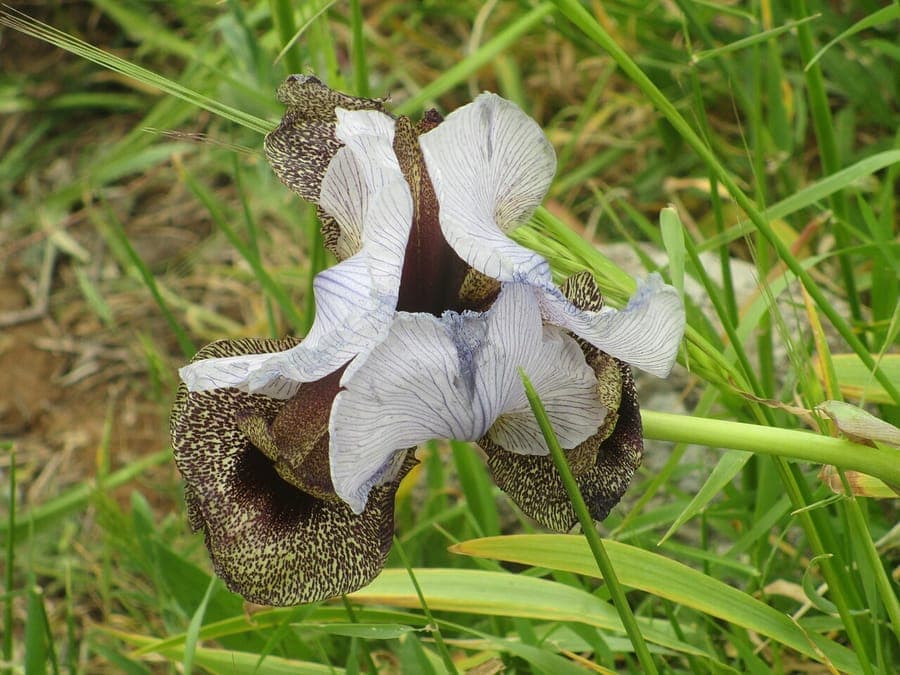
Dr. Avishai Teicher / CC BY 2.5, via Wikimedia Commons
Golan Iris: complete guide
Iris hermona
Want to see Golan Iris: complete guide in your garden?
1 minute, no credit card
Iris hermona, commonly known as Golan iris, is a refined dwarf iris native to the mountain regions of Southwest Syria through Lebanon. This rare iris belongs to the Iridaceae family and blooms in late winter through early spring. The plant is deeply valued by botanists and specialist collectors for its refined beauty and geographic origin.
Overview
Golan iris is a compact, low-growing iris originating from mountain regions on the Syria-Lebanon border. This rare iris is less known than many other garden iris species, but is profoundly appreciated by plant enthusiasts for its elegant flowers. The plant grows from underground rhizomes, reaching only 10-15 centimeters in height. The geographic origin contributes to its distinctive winter-blooming pattern, making this iris particularly special.
Appearance and Bloom
Golan iris displays elegant flowers in purple and yellow tones. The upright segments (standards) are typically violet, while drooping segments (falls) are yellow with purple markings. Flowers appear from March through May in the northern hemisphere and are relatively large relative to the plant. Each plant typically produces only a few flowers simultaneously, but these are extraordinarily refined and elegant. The flowers possess subtle fragrance.
Ideal Location
Golan iris performs best in completely sunny locations with excellent air circulation. Position the plant in a location receiving at least 6 hours of direct sun daily. The plant prefers somewhat moister conditions than some other alpine irises, yet still requires excellent drainage. Ensure the plant tolerates wind, as this helps prevent fungal problems.
Soil
Golan iris performs best in somewhat moister soil than many other alpine irises, yet drainage remains essential. Blend garden soil with moderate amounts of sand and compost. A pH between 6.5 and 7.5 is ideal. Ensure soil never becomes permanently waterlogged. Add organic matter to improve moisture retention without creating soggy conditions.
Free design
Want to see Golan Iris: complete guide in your garden? Make a free design now.
Watering
Golan iris appreciates consistent moisture availability, especially during growth and flowering period. Water regularly during spring and early summer. After blooming, watering can be carefully reduced. In fall and winter, when the plant has rest periods, watering can be more substantially reduced, though complete dryness should be avoided.
Pruning
Golan iris requires no pruning. Remove dead flowers and leaves naturally. After blooming, allow foliage to remain so nutrients return to rhizomes. Cut foliage only in autumn when completely senescent.
Maintenance Calendar
Winter: Blooming in March-May. Water regularly. Light feeding. Summer: Gradually reduce water. Keep soil moister than in winter. Fall: Stop feeding. Prepare plant for winter dormancy. Ensure good drainage for coming winter.
Winter Hardiness
Golan iris is reasonably winter-hardy in temperate climates, to approximately minus 10 degrees Celsius. In very cold regions, protection can be beneficial. The plant grows best in climates with mild winters. In warm climates, this iris may be less reliable without special treatments.
Companion Plants
Golan iris pairs well with other alpine plants and winter-blooming plants. Combine with helleborus (Christmas rose), winter-sweet, and other winter bloomers. In rock gardens, pairs well with alpine phlox and sedums. Plant at higher ground elevations for better drainage.
Closing
Golan iris is a fascinating rare choice for specialist plant enthusiasts. With attention to drainage and consistent moisture management, your plant will thrive. This iris is more difficult to source; check specialized retailers or plant exchanges. For more iris inspiration, visit gardenworld.app for ideas about alpine plants and rock gardens. On gardenworld.app, discover design tips for integrating rare alpine plants into your front yard vision.
Want to see Golan Iris: complete guide in your garden? Make a free design now.
Upload a photo, pick a style, and get a photorealistic design with plant list in under a minute.
No credit card required


Similar plants
Iris tingitana: complete guide
Iris tingitana
Iris tingitana, the Morocco iris, is the bulb species behind the Dutch iris: early blue-violet blooms that need a sunny, well-drained position.
Iris hookeri: complete guide
Iris hookeri
Hooker's Iris is a compact North American native plant with blue flowers. Low-growing and moisture-loving water plant.
Siskiyou iris: complete guide
Iris bracteata
Complete guide to Iris bracteata, the Siskiyou iris: location, soil, bloom cycle, watering, pruning and companion plants for this rare Pacific Coast iris.