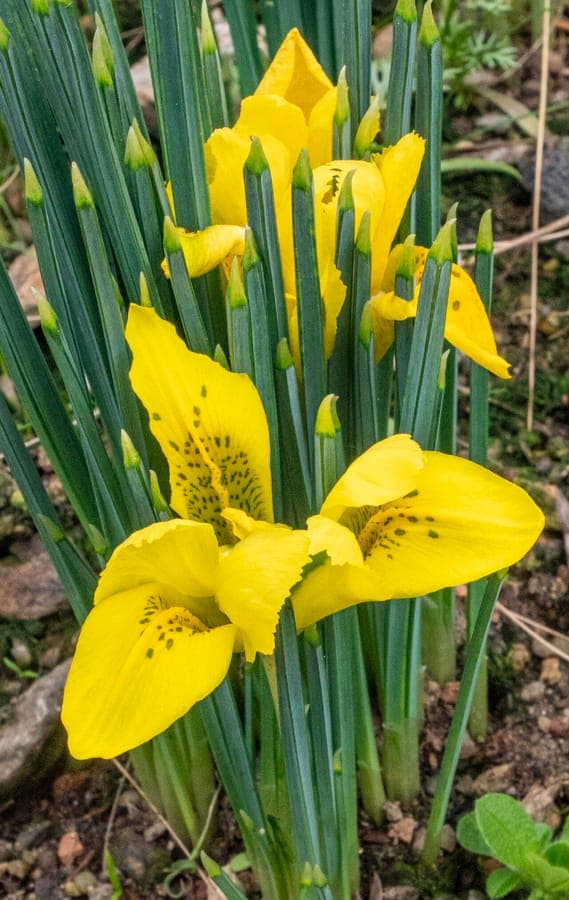
Chrisaliv / CC BY 4.0, via Wikimedia Commons
Iris danfordiae: complete guide
Iris danfordiae
Want to see Iris danfordiae: complete guide in your garden?
Full design in HD: €7.99
Look after your Iris danfordiae with the GardenWorld app
Identify plants with your camera and get a care calendar with reminders for this plant.


Iris danfordiae, known as Danford iris or winter iris, is a charming early spring bloomer native to Turkey. This small, elegant iris belongs to the Iridaceae family and grows from underground bulbs. The plant is valuable for gardeners who treasure early flowers, blooming as early as February-March, long before many other flowering plants awaken.
Overview
Danford iris is a compact, early-blooming iris reaching only 10-20 centimeters in height. The plant grows from small underground bulbs planted in autumn and blooming in early spring. Native to Turkey, where the plant grows in mountainous regions, this iris has adapted to cold winters and dry summer climates. In temperate regions, this iris blooms reliably each spring, making it valuable for gardeners seeking early color.
Appearance and Bloom
Danford iris is characterized by bright yellow flowers. Blooms appear close to the ground on short stems. Each flowering stem typically produces 1-3 elegant flowers. The color is a striking bright yellow that stands out against early spring greenery. The flowers possess subtle fragrance, though not strongly scented. The flowering period is brief but distinctly early, usually February-March in northern hemisphere.
Ideal Location
Danford iris performs best in sunny locations receiving at least 4-6 hours of direct sunlight daily. The plant prefers a location with good drainage where soil can become dry in summer. Plant on raised beds or slopes to prevent winter waterlogging. The plant is extremely winter-hardy and requires no protection in temperate climates.
Soil
Danford iris performs optimally in well-draining soil. This is essential, as these plants originate from dry mountain regions and cannot tolerate waterlogging. Blend garden soil with sand and perlite for optimal drainage. A pH between 6.0 and 8.0 is acceptable. This iris grows well even in poor soil, provided drainage is excellent. Add organic matter but ensure this doesn't create wet conditions.
Free preview
Want to see Iris danfordiae: complete guide in your garden? Make a free preview of your design.
Watering
Danford iris appreciates dry treatment. Plant bulbs in autumn and water lightly to promote establishment. During growing and blooming period (early spring), water if it threatens dryness. After blooming, reduce watering substantially. In summer, this plant can be kept completely dry and requires no regular water.
Pruning
Danford iris requires no pruning. Allow flowers to fade naturally and fall. Remove dead petals and stems as they brown. After flowering, allow foliage to remain so nutrients return to the bulb.
Maintenance Calendar
Fall: Plant bulbs in September-October. Fall/Winter: Minimal maintenance. Frost periods help trigger blooming. Spring: Enjoy blooms in February-March. Light feeding can be provided. Summer: Allow foliage to desiccate. Reduce water. Bulbs can be lifted and stored if desired.
Winter Hardiness
Danford iris is extremely winter-hardy to approximately minus 20 degrees Celsius, making it perfect for temperate and even cold climates. The plant requires no winter protection. Indeed, the cold winter period is essential for blooming. In warm climates, this iris may bloom less reliably.
Companion Plants
Danford iris pairs wonderfully with other early spring bloomers. Combine with other small bulbs such as snowdrops, crocuses, and blue scilla. Plant alongside helleborus (Christmas rose) for extended early blooming. This plant pairs excellently in alpine gardens and between rock gardens.
Closing
Danford iris is an excellent choice for gardeners who treasure early color and charm. Provide well-drained soil and a sunny location, and you'll enjoy these early flowers for years. For gardeners seeking early spring color, this bulb is widely available from specialty nurseries. On gardenworld.app, find inspiration for spring-blooming design, and gardenworld.app can help you plan early flowers for your front yard vision.
Frequently asked questions about Iris danfordiae
Is Iris danfordiae winter hardy?
Danford iris is extremely winter-hardy to approximately minus 20 degrees Celsius, making it perfect for temperate and even cold climates. The plant requires no winter protection.
When and how do you prune Iris danfordiae?
Danford iris requires no pruning. Allow flowers to fade naturally and fall.
How much water does Iris danfordiae need?
Danford iris appreciates dry treatment. Plant bulbs in autumn and water lightly to promote establishment.
Where does Iris danfordiae grow best?
Danford iris performs best in sunny locations receiving at least 4-6 hours of direct sunlight daily. The plant prefers a location with good drainage where soil can become dry in summer.
What soil does Iris danfordiae need?
Danford iris performs optimally in well-draining soil. This is essential, as these plants originate from dry mountain regions and cannot tolerate waterlogging.

See it in your garden
See Iris danfordiae in your garden
One photo of your garden and a few questions. You see the result in about a minute.
Try it with a photoIdentify this plant in your own garden. Identify a plant
Similar plants
Giant montbretia (Crocosmia masoniorum): growing guide
Crocosmia masoniorum
Everything about giant montbretia (Crocosmia masoniorum): position, soil, planting, winter protection and companions for its fiery orange summer flowers.
Dierama pulcherrimum: growing angel's fishing rod
Dierama pulcherrimum
Everything about angel's fishing rod (Dierama pulcherrimum): full sun, moist but free-draining soil, spring planting and winter care for this graceful summer perennial.
Hesperantha coccinea (Schizostylis): autumn stars for your border
Hesperantha coccinea
A complete guide to Hesperantha coccinea, formerly Schizostylis coccinea: site, moist soil, dividing and overwintering this late-flowering crimson flag lily.
