
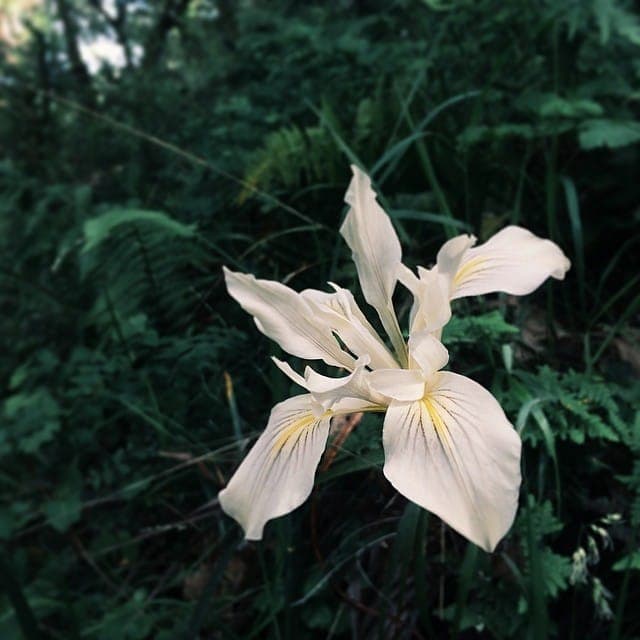
Jaredzimmerman (WMF) / CC BY-SA 3.0, via Wikimedia Commons
Iris chrysophylla: complete guide
Iris chrysophylla
Want to see Iris chrysophylla: complete guide in your garden?
1 minute, no credit card
Overview
Iris chrysophylla, the yellow-leaf iris, is a charming dwarf iris native to southern Oregon and northern California. This Pacific Northwest species grows naturally in dry rocky foothills where most plants struggle. In gardens, it brings early spring color, compact form, and remarkable drought tolerance. It's an underappreciated gem for rock gardens, scree beds, and dry borders.
Appearance and bloom
Iris chrysophylla forms dense clusters of narrow foliage reaching just 30-40 cm tall. The steel-blue-green leaves remain attractive throughout the year. The flowers are notably large for the plant's size, ranging from pale lemon to deep golden yellow with purple or brown veining on the lower falls. Blooming in May through early June, each flower lasts just days but are followed by interesting seed pods.
Ideal location
Full sun and excellent drainage define successful cultivation. Minimum six hours of direct sun is essential for strong growth and abundant blooms. Rocky slopes, raised beds, and scree gardens suit this iris perfectly. Avoid wet winter locations where water collects. On level ground, provide extra drainage.
Soil
Iris chrysophylla thrives in lean, gritty, well-draining soil with pH 6.0-8.0. It tolerates acidic to slightly alkaline conditions equally well. Heavy clay or waterlogged soil causes decline. On heavy soils, add grit, sand, or gravel to improve drainage dramatically. Once established, poor soil doesn't worry this hardy alpine.
Watering
Once established, this iris is remarkably drought-tolerant. Supplemental water is rarely needed except during extended droughts. In the first year, water occasionally during dry spells to establish deep roots. After that, Mother Nature usually provides enough.
Free design
Want to see Iris chrysophylla: complete guide in your garden? Make a free design now.
Pruning
No pruning needed. Simply remove spent flower stems after blooming ends. Tidy up dead foliage in spring to maintain neat appearance. The seed heads can be left to mature for self-seeding.
Maintenance calendar
- Spring (March-May): Blooming period arrives. Clear last year's dead leaves.
- Summer (June-September): Minimal care. Let it be drought-tolerant.
- Autumn (October-November): Leave mature seed heads for birds and self-seeding.
- Winter (December-February): No care needed. Plant handles cold dormancy well.
Winter hardiness
Iris chrysophylla is extremely hardy, surviving temperatures far below -20 Celsius. In temperate climates, it needs no winter protection or special care. The foliage remains semi-evergreen, adding winter structure.
Companion plants
Pair with other drought-tolerant alpine dwellers like pulsatilla, alpine poppies, and dwarf sisyrinchium. Combine with silver-leaved artemesia or gray-foliaged sedums. The yellow flowers sing against purple-leaved neighbors. Underplant with creeping sedums for layered texture.
Closing
Iris chrysophylla deserves far wider recognition among drought-conscious gardeners. This is a Pacific Northwest gem that brings early spring color with zero fuss. Find it through specialty alpine nurseries or native plant growers. Once planted in a sunny, well-drained spot, expect years of reliable early blooming. Visit gardenworld.app for drought-garden design and gardenworld.app for water-wise plant combinations.
Want to see Iris chrysophylla: complete guide in your garden? Make a free design now.
Upload a photo, pick a style, and get a photorealistic design with plant list in under a minute.
No credit card required


Similar plants
Iris tingitana: complete guide
Iris tingitana
Iris tingitana, the Morocco iris, is the bulb species behind the Dutch iris: early blue-violet blooms that need a sunny, well-drained position.
Iris hookeri: complete guide
Iris hookeri
Hooker's Iris is a compact North American native plant with blue flowers. Low-growing and moisture-loving water plant.
Siskiyou iris: complete guide
Iris bracteata
Complete guide to Iris bracteata, the Siskiyou iris: location, soil, bloom cycle, watering, pruning and companion plants for this rare Pacific Coast iris.