
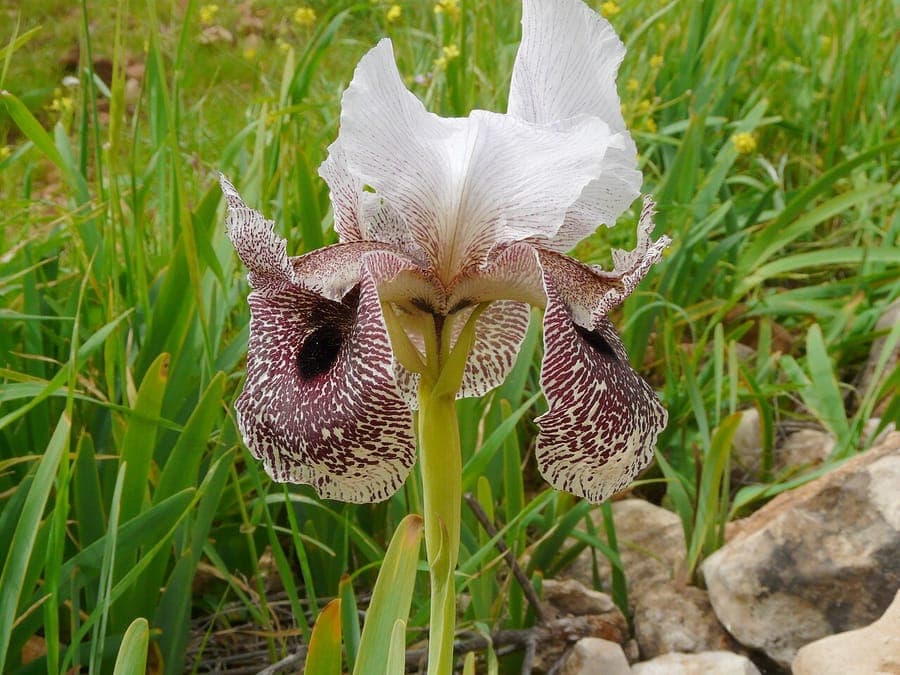
Alastair Rae from London, United Kingdom / CC BY-SA 2.0, via Wikimedia Commons
Nazareth Iris: complete guide
Iris bismarckiana
Want to see Nazareth Iris: complete guide in your garden?
1 minute, no credit card
Iris bismarckiana, commonly known as Nazareth iris, is a captivating dwarf iris native to the mountains of South Lebanon through North Israel and North Jordan. This ornamental treasure is valued by plant enthusiasts for its unique, refined flowers and compact growth habit. The plant belongs to the Iridaceae family, related to many popular garden irises worldwide.
Overview
Nazareth iris is a small, low-growing iris producing complete flowers on short stems. This species is native to the Levantine mountains, where it grows in rocky, well-drained habitats at significant elevations. In horticulture, this iris is less frequently cultivated than larger cultivars, but its compact stature and refined blooms make it invaluable for specialized gardens. The plant grows from underground rhizomes that expand slowly over time.
Appearance and Bloom
Nazareth iris is a compact plant reaching only 15-30 centimeters in height. Flowers appear during spring (March-May in northern hemisphere) with elegantly proportioned forms. Each bloom comprises upright segments ("standards") and drooping segments ("falls") in shades of blue, purple, and yellow. Colors vary depending on location and growing conditions. Typically, each plant produces only a few flowers simultaneously, but these possess extraordinary refinement.
Ideal Location
Nazareth iris performs best in completely sunny locations with excellent air circulation. Position the plant in a spot receiving at least 6 hours of direct sunlight daily. The plant prefers a dry summer situation, typical of its mountain origin. Ensure excellent water drainage and avoid stagnant water around rhizomes, which causes rotting.
Soil
Nazareth iris performs optimally in extremely well-draining soil. This is essential, as the plant dislikes permanent moisture availability. Blend sand, perlite, and garden soil to create a light, mineral-rich substrate. A pH between 6.0 and 7.5 is ideal. This iris grows excellently in alpine or rock gardens featuring exceptionally draining soil.
Free design
Want to see Nazareth Iris: complete guide in your garden? Make a free design now.
Watering
Nazareth iris prefers moderate watering. Water when soil feels dry, but avoid soggy feet. After flowering (summer), the plant tolerates minimal water excellently. This native dryland plant adapts to regular drought and even tolerates extended dry periods. Overwatering is the most common cause of failure with this iris.
Pruning
Nazareth iris requires no pruning. Remove dead leaves and flowers naturally. After blooming, allow foliage to remain so nutrients return to rhizomes. Cut foliage only in autumn after complete senescence.
Maintenance Calendar
Spring: Emergence from winter dormancy. Light iris fertilizer application. Summer: Minimal water and maintenance. Allow foliage to desiccate. Fall: Prepare for dormancy by ceasing fertilization. Winter: Rest period. Minimal water in most regions with protection against extreme cold.
Winter Hardiness
Nazareth iris is reasonably winter-hardy in temperate climates, down to approximately minus 10 degrees Celsius, though extreme cold isn't ideal. In very cold regions, protection in the form of leaf mold or sand can be beneficial. In warm regions, this plant performs best at higher ground elevations with enhanced drainage.
Companion Plants
Nazareth iris functions excellently in alpine gardens and rock gardens alongside other mountain plants. Combine with other compact rock plants such as sedums, saxifrages, and alpine phlox. The plant integrates well in container settings with well-draining soil.
Closing
Nazareth iris is a fascinating rare iris for specialized gardeners. With attention to drainage and prevention of overwatering, your plant will thrive. For gardeners seeking specialized irises, explore specialty nurseries for reliable sources. More iris inspiration awaits on gardenworld.app, and gardenworld.app offers design ideas for rock gardens and alpine garden layouts.
Want to see Nazareth Iris: complete guide in your garden? Make a free design now.
Upload a photo, pick a style, and get a photorealistic design with plant list in under a minute.
No credit card required


Similar plants
Iris tingitana: complete guide
Iris tingitana
Iris tingitana, the Morocco iris, is the bulb species behind the Dutch iris: early blue-violet blooms that need a sunny, well-drained position.
Iris hookeri: complete guide
Iris hookeri
Hooker's Iris is a compact North American native plant with blue flowers. Low-growing and moisture-loving water plant.
Siskiyou iris: complete guide
Iris bracteata
Complete guide to Iris bracteata, the Siskiyou iris: location, soil, bloom cycle, watering, pruning and companion plants for this rare Pacific Coast iris.