
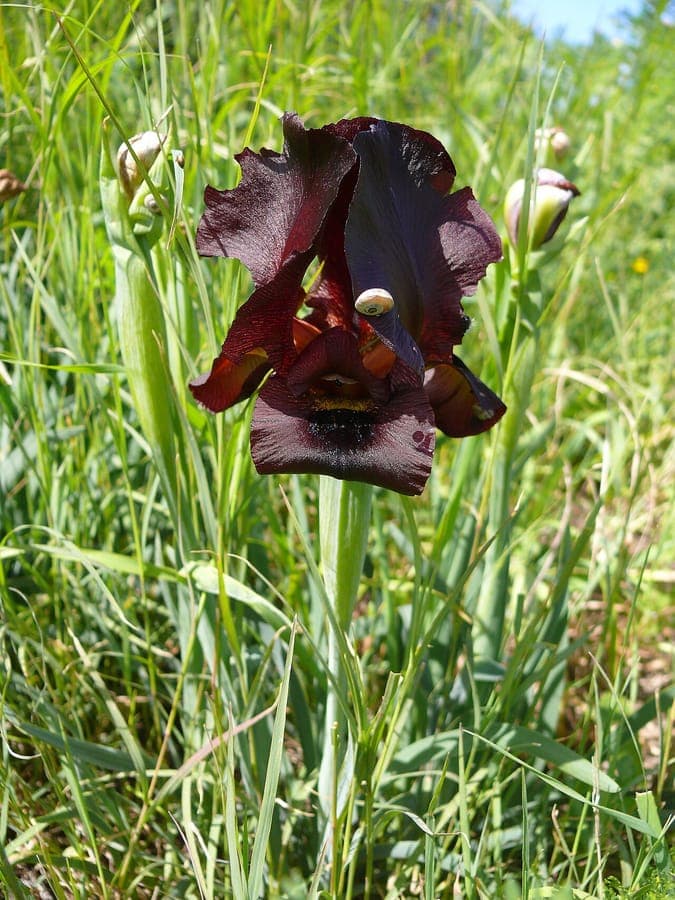
MathKnight and Zachi Evenor / CC BY 3.0, via Wikimedia Commons
Iris atropurpurea: complete guide
Iris atropurpurea
Want to see Iris atropurpurea: complete guide in your garden?
1 minute, no credit card
Overview
Iris atropurpurea, commonly known as Coastal Iris, is an elegant dwarf iris that transforms your front garden with its deep purple, almost black-toned flowers. This rare iris is native to the coastal regions of Palestine and belongs to the Iridaceae family. With its refined bloom, it adds exclusivity to any garden design.
This iris appeals to enthusiasts seeking something special. It grows compactly, blooms reliably, and requires minimal maintenance once established. Perfect for front gardens where nature handles most of the work after planting.
Appearance and bloom
Coastal Iris grows as a low, elegant bulbous iris reaching approximately 20-30 centimeters in height. The flowers are the standout feature: deep velvety purple to nearly black color with undulating petals reminiscent of elegant satin.
Each bulb typically produces 1-2 flowers blooming for 4-6 weeks in early spring (February to March). The foliage is narrow, linear, and remains green after flowering, providing a nice background effect in the garden.
Ideal location
Criterion for this iris: full sun position with at least 6 hours of direct sunlight daily. Shade causes leggy growth and fewer flowers. The ideal spot ensures maximum sun exposure for the clearest color expression.
Beware of stagnant groundwater in winter - this species naturally occurs in dry coastal fields and cannot tolerate waterlogged conditions. Ensure proper drainage.
Soil
Iris atropurpurea thrives best in sandy to gravelly soil. Standard garden soil amended with coarse sand and garden gravel delivers excellent results. The pH should be neutral to slightly acidic (6.0-7.5).
With clay soil: arrange elevated planting or substantial sand and gravel incorporation. This iris cannot tolerate heavy, wet soils - these invite rot and fungal diseases.
Free design
Want to see Iris atropurpurea: complete guide in your garden? Make a free design now.
Watering
Water sparingly after sprouting in autumn and winter. When rain falls, supplemental watering is usually unnecessary. Ensure water drains freely - no pooling around bulbs.
During dry summers, water cautiously, especially in weeks after blooming, but keep this to absolute minimum. Allow the top soil layer to dry between waterings.
Pruning
After flowering, remove spent blooms but do not cut green foliage until it yellows - those leaves feed the bulb. In August, cut all brown and yellow foliage to ground level.
Remove dead leaf debris in autumn - this prevents fungal issues and pests in the upcoming season.
Maintenance calendar
August-September: Clean up, remove dead foliage. October-November: Check bulbs for fungal issues, ensure dry placement. December-February: Blooming period, no interventions needed. March-May: After flowering, no pruning, plant allows offsets to develop. June-July: Completely dormant, sometimes hardly visible beneath surrounding plants.
Winter hardiness
Extremely cold-hardy down to -15 degrees Celsius. In the Netherlands, leave outdoors without frost protection. The bulb sleeps deeply in winter and requires no winter care.
During very wet winters, bulbs may rot if water accumulates. Elevated planting helps significantly in heavy clay soils.
Companion plants
Combine with other early bloomers: snowdrops, crocuses, and other low-growing bulbs. Lavender and sun roses provide beautiful color contrast and tolerate the same dry conditions.
Keep distance from moisture-loving plants like hydrangeas and astilbes - they prefer water where iris prefers dryness.
Final thoughts
Iris atropurpurea is not for everyone, but for gardeners with patience and a preference for subtle elegance. Once established, it grows without intervention, and each spring rewards you with velvety flowers.
Available at garden retailers, and on gardenworld.app you can determine the perfect spot in your front garden where this gem shines brightest.
Want to see Iris atropurpurea: complete guide in your garden? Make a free design now.
Upload a photo, pick a style, and get a photorealistic design with plant list in under a minute.
No credit card required


Similar plants
Iris tingitana: complete guide
Iris tingitana
Iris tingitana, the Morocco iris, is the bulb species behind the Dutch iris: early blue-violet blooms that need a sunny, well-drained position.
Iris hookeri: complete guide
Iris hookeri
Hooker's Iris is a compact North American native plant with blue flowers. Low-growing and moisture-loving water plant.
Siskiyou iris: complete guide
Iris bracteata
Complete guide to Iris bracteata, the Siskiyou iris: location, soil, bloom cycle, watering, pruning and companion plants for this rare Pacific Coast iris.