
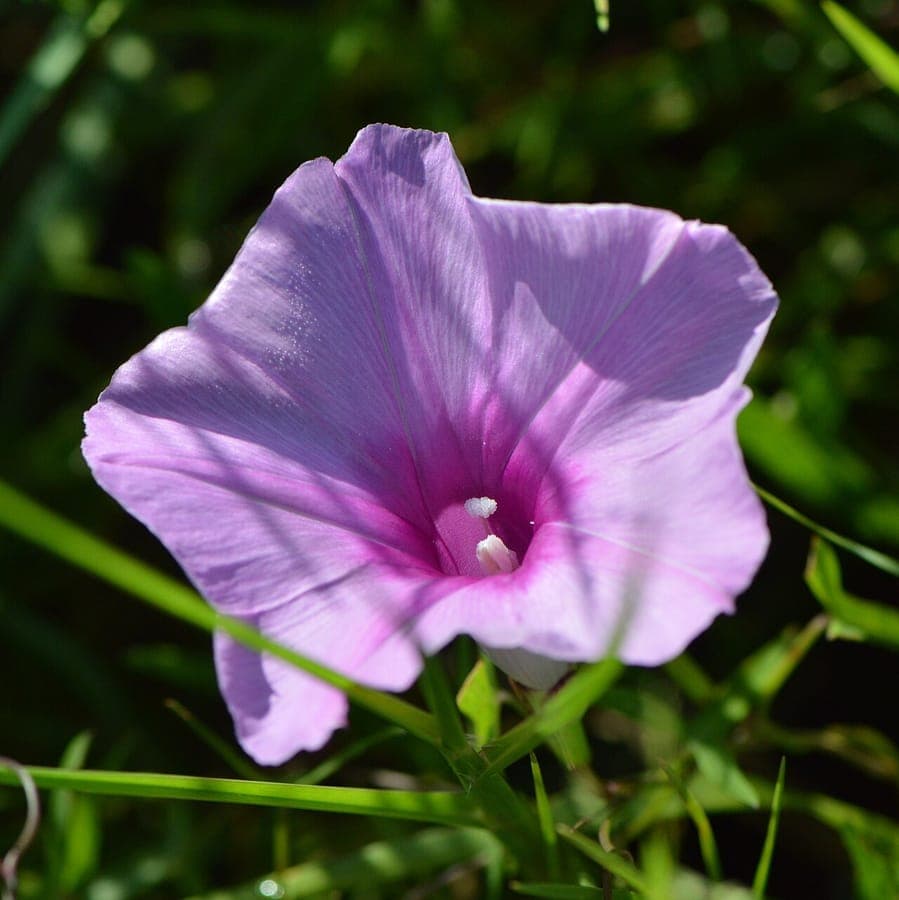
Jean-Lou Justine / CC BY-SA 4.0, via Wikimedia Commons
Arrow-Leaved Morning Glory: Complete Guide
Ipomoea sagittata
Want to see Arrow-Leaved Morning Glory: Complete Guide in your garden?
1 minute, no credit card
Overview
The arrow-leaved morning glory (Ipomoea sagittata), also known as saltmarsh morning-glory, is a captivating vining plant native to coastal regions of southeastern and south-central America, the Caribbean, and parts of the Mediterranean. This tropical beauty is characterized by its elegant arrow-shaped foliage and delicate pale pink to deep purple flowers that open early in the morning and close around midnight. The plant naturally thrives along seashores and in saltmarsh environments, demonstrating remarkable adaptability to challenging growing conditions.
This plant is a true lover of warmth and moisture, making it ideal for gardeners in Mediterranean and subtropical climates. Its rapid growth and abundant flowering make it a favorite choice for pergolas, fences and other climbing structures where it can receive full to partial sun exposure.
Appearance and Bloom Period
The arrow-leaved morning glory grows as a slender climbing vine with heart-shaped to arrow-shaped leaves that are glossy green and regularly distributed along the stems. The leaves typically reach 5 to 12 centimeters in length and feature delicate veins that radiate elegantly.
Flowers appear in abundance throughout the growing season and are the true showstopper of this plant. Each bloom has a funnel to bell shape and measures 3 to 5 centimeters in diameter. The flower color ranges from light pink to deep purple, sometimes with a darker heart or center. These flowers are highly light-sensitive and follow the classic morning glory pattern of opening early and closing late in the day.
The fruit is a small seed capsule containing several seeds, which contributes to natural propagation in warm climates.
Ideal Location
The arrow-leaved morning glory thrives best in locations with abundant sunlight throughout the day. At least six to eight hours of direct sunlight daily is essential for optimal flowering. In very hot climates, light afternoon shade can be beneficial to prevent leaf scorch.
This plant performs best when grown against south or west-facing walls where it can absorb warmth. Ideally, plant it in locations with sheltered growing conditions, especially in temperate climates. An open placement where air can circulate freely prevents moisture-related diseases.
In northern European regions, this plant requires container cultivation and winter storage in a sunny, warm location. Many gardeners choose to grow it against a sunny window indoors or move it outside during summer months.
Soil
The arrow-leaved morning glory prefers well-draining soil with nutrient-rich components. Ideal is a mixture of garden soil with one-third compost or leaf mold, supplemented with some sand for improved drainage. A pH of 6.0 to 7.0 is optimal, although the plant is relatively tolerant of slightly different values.
Salt-tolerant soil is one of this species' inherited qualities, making it suitable for coastal gardens where salt spray occurs. For container cultivation, a high-quality potting mix with extra drainage works well.
Ensure regular addition of organic material to maintain soil structure and nutritional value, especially with intensive cultivation.
Watering
The arrow-leaved morning glory loves consistently moist soil during the growing season but cannot tolerate waterlogged conditions or poor drainage. Water thoroughly and regularly, especially during dry summers and peak flowering. Check soil moisture daily in containers and ensure water can drain properly.
In early autumn, gradually reduce watering frequency, preparing the plant for dormancy. During winter rest, container plants need significantly less water; provide only enough so the soil doesn't completely dry out.
During rainy periods, you may need to adjust watering frequency to prevent excessive moisture. Ensure your pot has drainage holes to remove excess water.
Free design
Want to see Arrow-Leaved Morning Glory: Complete Guide in your garden? Make a free design now.
Pruning
The arrow-leaved morning glory responds well to regular pruning that stimulates plant form and promotes compact, flower-rich growth. Cut the longest shoots back to approximately one-third their length in early spring before new growth begins.
Remove dead or damaged branches whenever you encounter them. This helps prevent diseases from spreading and improves air circulation in the plant's center.
Gradual pruning throughout the growing season helps maintain a neat form and stimulates further bud formation. Avoid heavy pruning after August, as the plant needs energy to prepare for winter.
Maintenance Calendar
January-February: Winter. Minimal watering, no fertilizer, check for pests.
March-May: Spring. Begin growth stimulation, move containers outside to warm, sheltered locations. Start regular watering.
June-September: Summer. Full bloom, regular watering and monthly feeding with plant fertilizer. Light pruning to maintain shape. Regular pest and disease monitoring.
October-November: Autumn. Gradually reduce water and fertilizer. Prepare containers for indoor storage.
December: Winter. Move containers indoors to bright, cool locations.
Winter Hardiness
The arrow-leaved morning glory is not winter-hardy in the UK, northern Europe, and most of continental Europe. This tropical plant cannot tolerate frost and dies at temperatures below 10-15 degrees Celsius. In Mediterranean regions, the plant might survive winter in very protected locations close to heated walls, but winter protection is still recommended.
The best strategy is container cultivation, moving the plant to a bright, cool indoor location before the first frost. Successful overwintering can occur in unheated greenhouses, conservatories or very sheltered indoor corners, as long as temperatures stay above freezing.
In warm climates (USDA zones 9-11), the plant can overwinter outdoors and may remain as a permanent fixture, although annual pruning is still recommended.
Companion Plants
The arrow-leaved morning glory combines beautifully with other heat-loving climbing plants such as passion flowers, Ipomoea purpurea (purple morning-glory) and clematis. For an exotic appearance, plant it alongside woody vines like jasmine or hydrangeas.
Underplanting combinations work well with fuchsias, African blue agapanthus or compact salvias that share similar heat requirements. In containers, it looks lovely with geraniums and scarlet lobelias.
Ensure neighboring plants have similar watering needs to the morning glory, as it has regular moisture requirements.
Closing Thoughts
The arrow-leaved morning glory is a wonderful plant that can transform even the most modest front yard into a tropical paradise. With its rapid growth, abundant flowering and adaptability to various growing conditions, it's a practical choice for gardeners wanting to add tropical flair. Whether growing it against a sunny wall in containers or letting it climb along a pergola, this enchanting morning glory will fill your garden with color and life from July through October daily.
For UK and northern European gardening in regions like England, Scotland and the Netherlands, consider container cultivation and obtain this stunning plant from reputable garden centers. Gardenworld.app offers design ideas for integrating exotic climbing plants into your front yard. Gardenworld.app helps you design a garden that perfectly matches your climate zone and growing conditions.
Want to see Arrow-Leaved Morning Glory: Complete Guide in your garden? Make a free design now.
Upload a photo, pick a style, and get a photorealistic design with plant list in under a minute.
No credit card required


Similar plants
Spreading alkaliweed: complete guide
Cressa truxillensis
Full growing guide for Cressa truxillensis, the salt-tolerant groundcover of alkaline flats: location, soil, watering, pruning and winter care.
Betony-leaved bindweed: complete guide
Convolvulus betonicifolius
Full guide to betony-leaved bindweed (Convolvulus betonicifolius): origin, appearance, ideal site, soil, watering and garden uses.
Ivyleaf morning glory: complete guide
Ipomoea hederacea
Everything about Ipomoea hederacea: location, soil and climbing care. A fast-growing annual vine with blue funnel flowers for sunny walls and pergolas.