
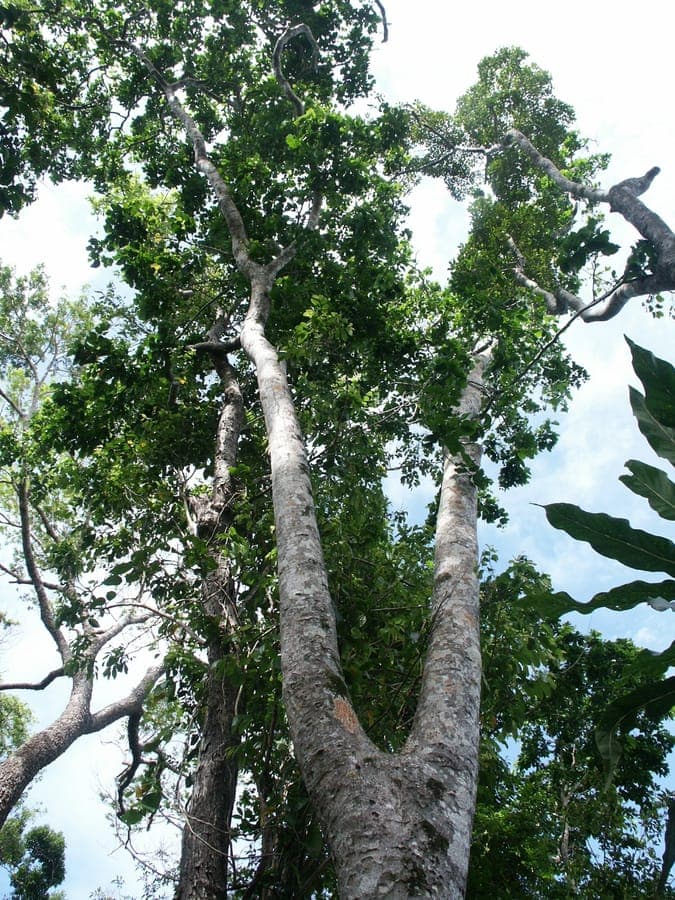
Denis.prévôt / CC BY-SA 3.0, via Wikimedia Commons
Johnstone River-Teak: complete guide
Intsia bijuga
Want to see Johnstone River-Teak: complete guide in your garden?
1 minute, no credit card
Intsia bijuga, commonly known as Johnstone river-teak, merbau, or borneo-teak, is an impressive tropical hardwood tree that has long been valued for its exceptional durability and timber quality. Belonging to the Fabaceae family, this species ranges natively from Tanzania to the western Pacific. The tree can reach enormous dimensions, forming an important structural component of tropical rainforests throughout its range.
Overview
Intsia bijuga is a large, fast-growing tree capable of reaching 30 meters or more in optimal tropical conditions. Native across tropical rainforests from Tanzania (Zanzibar) to the western Pacific, this exceptional tree is renowned for its durable timber used extensively in construction and decorative woodworking. While less commonly cultivated in residential gardens, where climate permits, it forms a spectacular landscape addition with its massive trunk and expansive canopy.
Appearance and Bloom
The Johnstone river-teak is an impressive specimen with a thick, straight trunk that gradually develops greater girth with age. The compound leaflets are large and glossy, producing a distinctly tropical appearance. The tree bears inconspicuous flowers arranged in clusters, followed by characteristically-shaped seed pods. These botanical structures are interesting from a plant development perspective and serve the essential function of seed dispersal. The tree provides valuable ecological function by attracting various bird species and insects.
Ideal Location
Intsia bijuga thrives in warm, humid tropical climates receiving abundant direct sunlight. Position the tree in a location receiving at least 6 hours daily direct sun, with protection from strong winds. In temperate climates, seeds and young plants are extremely difficult to source, and cultivation is only practical in warm greenhouses or genuinely tropical regions. Ensure abundant space, as this tree becomes genuinely massive.
Soil
Intsia bijuga performs well in well-draining, fertile soil. The tree prefers soil that doesn't become excessively dry, with regular moisture availability. Provide deep rooting zones by amending soil with organic matter. While adaptable to various pH ranges, the tree performs optimally in neutral to slightly acidic soil. For container cultivation, large, well-draining substrate is essential for developing healthy specimens.
Free design
Want to see Johnstone River-Teak: complete guide in your garden? Make a free design now.
Watering
During the growing season, water regularly, particularly for young trees. The tree appreciates consistently moist soil without permanent waterlogging. During dry periods, increase watering frequency, especially for container-grown specimens. Mature, in-ground trees tolerate drought better through their extensive root systems, but regular watering promotes healthier growth and development.
Pruning
Intsia bijuga grows naturally to a symmetrical form requiring minimal pruning. Remove dead branches and crossing growth for optimal structure. For container specimens, gentle formative pruning maintains compact size. Heavy pruning is unnecessary and can weaken tree vigor.
Maintenance Calendar
Spring: Begin feeding when growth becomes visible. Establish watering schedule maintaining consistent moisture. Summer: Ensure regular water, particularly for young specimens. Apply mulch around base. Fall: Reduce feeding as growth slows. Scout for pests and diseases. Winter: Minimal maintenance in warm climates. Protect against unexpected cold.
Winter Hardiness
Intsia bijuga is purely tropical, unable to tolerate frost. The tree dies when exposed to temperatures below approximately 10-12 degrees Celsius. Outdoor cultivation is only viable in genuinely tropical and subtropical climates. In temperate regions, the tree is suitable solely for heated interiors or warm greenhouses.
Companion Plants
Intsia bijuga functions excellently as a solitary shade-providing specimen. Combine with shade-tolerant tropical plants such as ferns, arums, and begonias. Position palms and additional foliage plants beneath to create rainforest-like character.
Closing
Intsia bijuga is a respectable choice for those in authentic tropical conditions desiring a spectacular specimen tree. Outside tropical regions, this tree is impractical for most gardeners. For temperate-climate enthusiasts, explore alternative tropical species on gardenworld.app, which suggests more adaptable tropical choices. On gardenworld.app, discover more suitable tropical inspiration for moderate climates.
Want to see Johnstone River-Teak: complete guide in your garden? Make a free design now.
Upload a photo, pick a style, and get a photorealistic design with plant list in under a minute.
10,000+ gardens designed already
No credit card required


Similar plants
Tall Silky Lupine: complete guide
Lupinus elatus
Tall silky lupine is a fast-growing Californian perennial with silvery foliage and blue-purple flower spikes, ideal for a prairie-style garden.
Garfield Lupine: complete guide
Lupinus garfieldensis
The Garfield lupine is a rare, fast-growing American perennial for alkaline, dry grassland gardens, with striking blue flower spikes.
Lupinus elegans: complete guide
Lupinus elegans
Lupinus elegans, the elegant lupine, is a spectacular blooming plant from Mexico with blue flower spikes. Care, cultivation and garden use.