
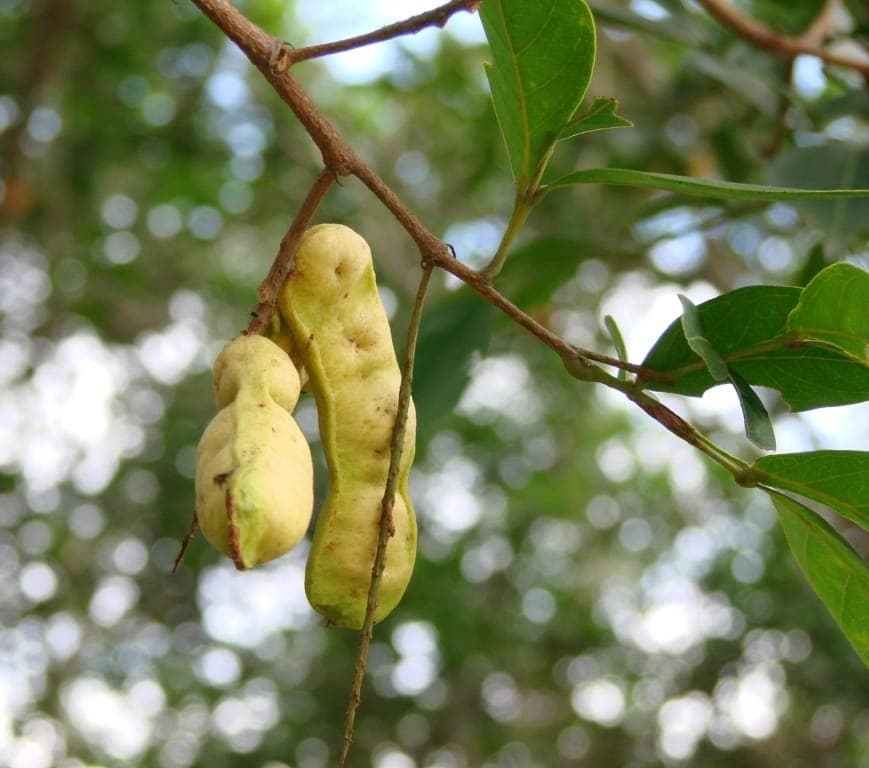
João Medeiros / CC BY 2.0, via Wikimedia Commons
Inga laurina: complete guide
Inga laurina
Want to see Inga laurina: complete guide in your garden?
1 minute, no credit card
Overview
Inga laurina, known in English as sacky sac bean or red wood, is a tropical legume tree in the family Fabaceae, subfamily Mimosoideae. It is native to an enormous range that stretches from Mexico and Central America through the Caribbean islands and across virtually all of South America - from Colombia, Venezuela, and the Guyanas south through Brazil, Peru, Bolivia, Paraguay, and northeastern Argentina. The species has also been introduced to Java and New Caledonia.
In Portuguese, the tree carries a range of folk names including ingai, inga-branco, and inga-mirim. The genus Inga comprises several hundred species of tropical and subtropical trees and shrubs, all sharing the characteristic pinnate leaves and fluffy white flower heads typical of the Mimosoideae subfamily.
Inga laurina is cultivated for its ornamental value in warm climates, as shade tree in coffee and cocoa plantations - a time-honoured agroforestry practice across Latin America - and as a source of food for birds and wildlife. In northwest European gardens it can be grown as a container specimen in a heated greenhouse, a conservatory, or a warm bright indoor space. Visit gardenworld.app for inspiration on integrating tropical accent plants into your outdoor or indoor garden design.
Appearance & bloom cycle
Inga laurina is a medium to large tree that in its native habitat can reach 10 to 20 metres in height, but in container cultivation or as a young greenhouse plant it rarely exceeds 2 to 4 metres. The crown is broad and spreading in mature specimens growing freely; in a pot the plant remains compact and manageable.
The leaves are pinnate, with four to eight pairs of leaflets per leaf. Each leaflet is elliptic to lance-shaped, dark green, and glossy on the upper surface. Characteristic of the genus Inga are the nectary glands located on the rhachis between the leaflet pairs: small, cushion-like, nectar-secreting organs that attract ant species, establishing a mutualistic relationship that protects the tree.
The flowers are white, fluffy, and fragrant: the five small petals are barely visible, but the numerous long white stamens give the flowers the distinctive brush-like appearance characteristic of the Mimosoideae subfamily. In tropical habitats, blooming is largely nocturnal and the scent attracts bats and moths as pollinators. Under greenhouse conditions, flowering may be irregular, but plants two to three years old can begin to flower.
The fruits are long, linear pods that ripen from green to cream-beige. Inside, the seeds are wrapped in sweet white pulp that is edible and consumed locally across Latin America. The fruits are an important food source for birds and mammals in tropical forest ecosystems.
Ideal location
Inga laurina is a warmth-loving plant that needs full sun to part shade. In its native range it grows in open tropical woodland, along riverbanks, and in urban environments throughout the tropics. The tree is adapted to high temperatures and high humidity but tolerates shorter periods of lower rainfall intensity.
In northwest Europe, outdoor cultivation is only possible during the hottest summer months, in a fully sheltered, south-facing position against a heat-retaining wall. The ideal growing environment is a heated greenhouse, a large glazed veranda, or a bright, warm living space. Temperatures should never fall below 10 degrees Celsius for extended periods; brief exposure to a few degrees above zero is the maximum cold the plant can tolerate.
For temporary outdoor placement in summer, choose a sheltered, warm spot in full sun or light shade. Bring the plant back indoors as soon as nights begin to drop below 12 degrees Celsius.
At gardenworld.app you can find garden designs that incorporate large container plants like Inga laurina as seasonal focal points in terrace and conservatory layouts.
Soil requirements
Inga laurina grows naturally on a variety of soils, from sandy alluvial ground along rivers to lightly clayey forest soil. The preferred soil pH ranges from 6.0 to 8.5, indicating a preference for neutral to mildly alkaline conditions - broader than many tropical plants.
For container cultivation, use a freely draining mix of potting compost and perlite or coarse grit in a ratio of roughly 2:1. Good drainage is essential: waterlogged compost leads rapidly to root rot even in a warmth-loving species like Inga. Use pots with adequate drainage holes and always allow water to drain fully after watering.
In the ground in a tropical climate or in a large greenhouse bed, the tree also thrives in humus-rich, freely draining soil. Add mature compost at planting and apply a slow-release organic fertiliser once a year in spring.
The soil should never dry out completely: although the tree tolerates brief dry spells, it recovers more slowly from prolonged drought than most tropical tree species.
Watering
Inga laurina needs regular watering, especially during the growing season. The growing medium should always remain lightly moist but never saturated. Check the top 2 to 3 cm of the potting mix: if it feels dry to the touch, it is time to water. Water generously until it runs through the drainage holes, and always discard excess water from the saucer.
In summer, at high temperatures and in full light, the tree will take up considerably more water than in winter. In a greenhouse or warm indoor space, daily watering may be necessary in summer. Use water at room temperature where possible; cold tap water applied directly to the roots can occasionally cause growth stress.
Mist the leaves regularly in dry indoor air or in a heated greenhouse in winter. High air humidity of 60 to 80 percent is ideal for good leaf health. A humidifier near the plant or regular misting with a hand spray is worthwhile.
During the relative dormancy period in winter, when temperatures are lower and light weaker, reduce watering substantially. Water only when the top 5 cm of the potting mix is dry, to prevent root rot.
Free design
Want to see Inga laurina: complete guide in your garden? Make a free design now.
Pruning
Inga laurina needs little pruning to maintain its natural, graceful habit. In greenhouse or container cultivation, you can prune the plant to keep it compact and manageable, or to shape the canopy.
The best time to prune is early spring, just before the new growing season begins. First remove all dead, crossing, or overcrowded branches. Then cut back long extension shoots to a lateral bud or branching point to compact the crown.
Where the plant is in flower, take care not to remove all the flower-bearing shoots. Flower buds form at the tips of the previous season's growth; cutting too deeply removes potential blooms.
After pruning, you can seal larger cuts with a wound sealant paste. With container plants in a greenhouse this is less critical than with trees growing in open ground.
Young plants one to two years old can be lightly shaped to establish a good basic structure. Remove overly dominant leading shoots early to encourage branching.
Maintenance calendar
January-February: Plant in relative dormancy in the heated greenhouse or indoors. Reduce watering. Check for pests (scale insects, spider mites). No fertilising.
March: Start of the growing season. Prune if needed. Light application of organic fertiliser as growth resumes.
April: Growth accelerates. Gradually increase watering. Check whether the plant needs repotting.
May: Container can spend time outdoors on warm days in a sheltered, sunny spot. Monitor regularly for pests and drying out.
June-August: Full growing season. Regular watering and fertilising every two weeks. Outdoors when night temperatures stay above 15 degrees Celsius. Mist leaves in dry conditions.
September: Gradually bring back indoors as nights cool. Reduce watering. Last fertiliser application of the season.
October-December: Plant in greenhouse or indoors. Minimal watering. Check for overwintering pests. No fertilising.
Winter hardiness
Inga laurina is a strictly tropical species and is not winter-hardy anywhere in northwest Europe. The tree tolerates brief exposure to temperatures as low as around 5 degrees Celsius, but prolonged exposure below 10 degrees Celsius leads to leaf drop, growth arrest, and eventually root death.
The plant requires a minimum night temperature of 12 to 15 degrees Celsius year-round for optimum growth. In heated greenhouses, large orangeries, or winter gardens it can be grown year-round. In terms of USDA hardiness zones, Inga laurina is suited to zone 10 and above - in Europe this means only the coastal strip of southern Spain, the Canary Islands, and the southernmost coastal areas of Portugal and Italy where year-round outdoor cultivation is feasible.
If overwintered in a cooler but frost-free space (minimum 5 degrees Celsius), the plant may drop its leaves and enter a form of dormancy. When temperatures rise again in spring it will resprout. This is an acceptable emergency measure, but a consistently warm environment is better for the plant's long-term health.
In a heated indoor space with adequate light - at least 6 hours of direct or bright indirect daylight per day - the plant remains evergreen and in active growth year-round.
Companion plants
Inga laurina pairs well with other tropical plants that thrive in the same growing conditions:
- Heliconia species: large tropical perennials with dramatic orange or red bracts that reinforce the exotic atmosphere and appreciate the same warm, mildly humid greenhouse environment.
- Strelitzia reginae (bird of paradise): a slightly hardier tropical plant with the same location requirements, thriving alongside Inga laurina as a container plant on a warm summer terrace.
- Plumeria species (frangipani): fragrant tropical flowering trees sharing the same warmth and drainage preference, contrasting beautifully with the pinnate foliage of Inga.
- Hibiscus rosa-sinensis (tropical hibiscus): a popular greenhouse and terrace plant with the same light and temperature requirements, extending the flowering season.
- Musa species (banana plant): the large, impressive leaves provide a tropical backdrop that perfectly complements Inga laurina as a specimen with its finer pinnate foliage.
- Passiflora species (passionflower): climbers with exotic flowers that appreciate the same warm greenhouse conditions and can form green vertical screens as a backdrop for Inga.
For more ideas on composing an exotic greenhouse garden or tropical terrace design, explore the planning tools at gardenworld.app.
Closing
Inga laurina is a fascinating tropical tree that brings genuine exotic character to any greenhouse or covered outdoor space with its graceful pinnate leaves, the fluffy white flowers, and the decorative pods that follow. While it does not overwinter outdoors in northwest Europe, it is an excellent container plant for a heated greenhouse, conservatory, or a bright, warm indoor room.
Cultivation requires warmth, good light, and regular watering, but otherwise the plant is relatively undemanding. Given those conditions, Inga laurina will reward you with lush foliage, a remarkable flowering display when conditions are right, and a genuine sense of the tropical forest right in your own garden space.
Want to see Inga laurina: complete guide in your garden? Make a free design now.
Upload a photo, pick a style, and get a photorealistic design with plant list in under a minute.
10,000+ gardens designed already
No credit card required


Similar plants
Tall Silky Lupine: complete guide
Lupinus elatus
Tall silky lupine is a fast-growing Californian perennial with silvery foliage and blue-purple flower spikes, ideal for a prairie-style garden.
Garfield Lupine: complete guide
Lupinus garfieldensis
The Garfield lupine is a rare, fast-growing American perennial for alkaline, dry grassland gardens, with striking blue flower spikes.
Lupinus elegans: complete guide
Lupinus elegans
Lupinus elegans, the elegant lupine, is a spectacular blooming plant from Mexico with blue flower spikes. Care, cultivation and garden use.