
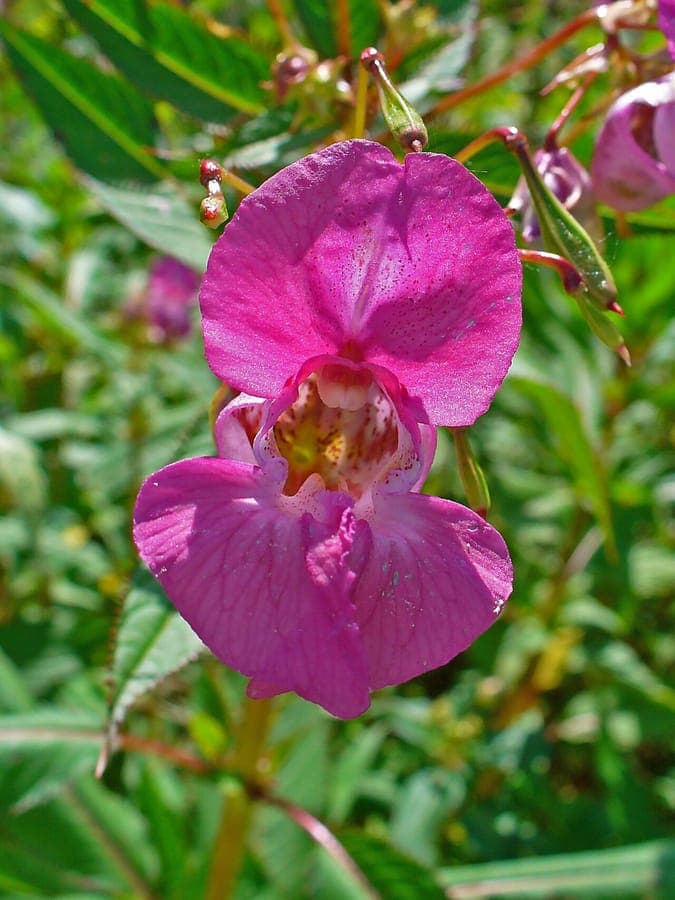
H. Zell / CC BY-SA 3.0, via Wikimedia Commons
Himalayan balsam: complete guide
Impatiens glandulifera
Want to see Himalayan balsam: complete guide in your garden?
1 minute, no credit card
Overview
Himalayan balsam (Impatiens glandulifera) is a spectacular annual plant from the Himalayan mountains. This plant is known for its large, purple to pink flowers and impressive height up to 2 meters. Despite its attractiveness, it's an invasive species in many countries, so responsible management is crucial.
Himalayan balsam is popular in wet, naturalistic gardens and along water features. The enormous blooms attract many insects. However, because it self-seeds and can become invasive, careful management is essential. Many countries advise against allowing it to spread into the wild.
Appearance and bloom
Himalayan balsam grows rapidly to 1-2 meters tall in a single season. The plant has sturdy, succulent stems, often with reddish or purple tints. The leaves are large, oval, and toothed, dark green in color.
The flowers are spectacular. They're large, about 3-5 centimeters, usually pink to purple with purple spots. Flowers grow in dense racemes and cover the plant. They have a distinctive shape with a prominent spur. Flowers appear from July to October.
After flowering, large seed pods develop. These pods burst explosively when ripe, scattering thousands of seeds. This is why the plant can be invasive.
Ideal location
Himalayan balsam grows best along water features, in moist borders, and in wet shaded spots. It tolerates half-shade to full light. Along streams and rivers it can flourish excellently.
The plant is excellent for ecological gardens and water gardens. However, check local regulations: in many countries it's illegal to allow seeds to spread. Manage carefully and remove seed pods before they burst.
Soil
Himalayan balsam demands rich, moisture-retaining soil. It's not suitable for dry locations. Add plenty of organic matter. The plant thrives in acidic to neutral soil.
Good drainage despite moisture needs is necessary - prolonged waterlogging is not tolerated. Regular mulching helps moisture retention.
Free design
Want to see Himalayan balsam: complete guide in your garden? Make a free design now.
Watering
Consistent moisture is essential. Water regularly to keep soil moist. In dry periods, daily watering may be needed. This is not drought-tolerant.
Use mild water. Ensure the plant doesn't sit in standing water. Young plants need thorough watering until established.
Pruning
Pruning isn't always necessary but can prevent the plant from becoming too large. The crucial task is removing seed pods before they burst. This prevents invasive spread and unwanted self-seeding.
Remove seed pods in August-September, before they ripen. This is crucial for responsible management.
Maintenance calendar
May: Sow seed indoors or plant seedlings outdoors after frost.
June: Start regular watering. Plant grows rapidly.
July - September: Peak bloom. Heavy watering. Check seed pods and remove before they burst.
October: Continuous bloom. Remove all seed pods before they burst.
November: Plant dies after frost.
Winter hardiness
Himalayan balsam is not winter hardy and dies after frost. It's an annual. The seeds are winter hardy and can overwinter, causing invasion. This is why seed pod management is crucial.
Companion plants
Himalayan balsam combines well with other moisture-loving plants along water features. Group with hostas, ferns, and native waterside plants. The tall height makes it suitable as a background plant.
Conclusion
Himalayan balsam offers spectacular beauty for wet gardens. With consistent moisture, this plant grows rapidly and flowers abundantly. The large purple blooms attract bees and butterflies.
Sow seed in April or plant seedlings in May. Provide consistent moisture. But: manage carefully. Remove seed pods before they burst to prevent invasive spread. Check local regulations before planting this species.
For more moisture-loving plants, visit gardenworld.app and read our guide on responsible plant management.
Want to see Himalayan balsam: complete guide in your garden? Make a free design now.
Upload a photo, pick a style, and get a photorealistic design with plant list in under a minute.
No credit card required


Similar plants
Impatiens aurella: complete guide
Impatiens aurella
Pale yellow touch-me-not is a North American moisture-loving wildflower with golden blooms. Master cultivation of this delicate jewelweed in moist, shaded garden spaces.
Balfour's touch-me-not: complete guide
Impatiens balfourii
Discover Balfour's impatiens (Impatiens balfourii), a fascinating bicolor flower from the Himalayas. Growing and care tips.
Balsam: complete guide
Impatiens balsamina
Learn everything about garden balsam (Impatiens balsamina), a classic with colorful flowers. Growing and care tips.