
Fritz Geller-Grimm / CC BY-SA 2.5, via Wikimedia Commons
Orange jewelweed: complete guide
Impatiens capensis
Want to see Orange jewelweed: complete guide in your garden?
1 minute, no credit card
Overview
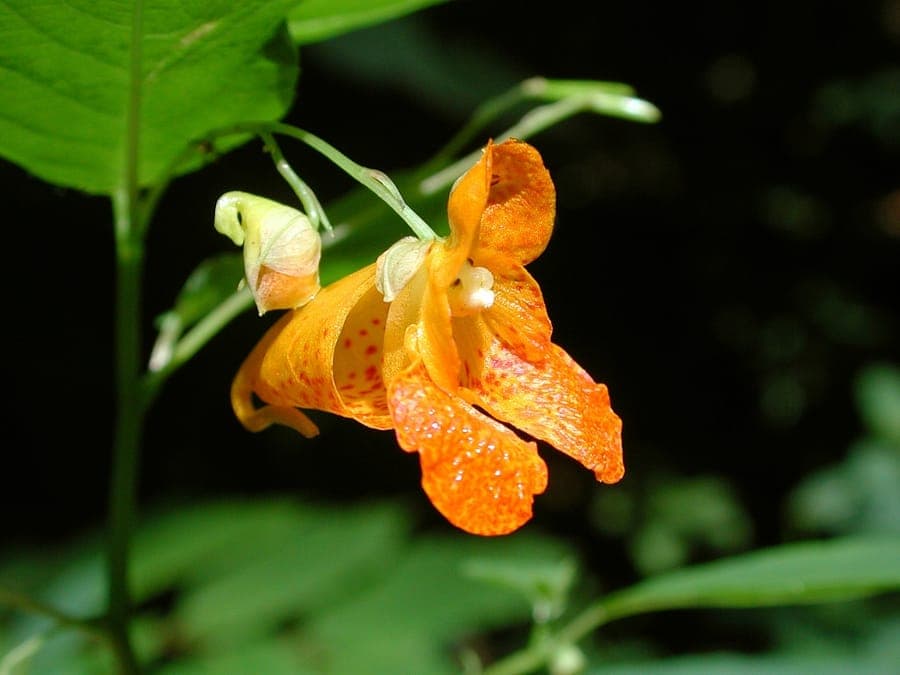
Orange jewelweed (Impatiens capensis) is a charming North American plant from moist forests. This annual flower is known for its bright orange blooms, which add warm accents to dark, moist spots in the garden. It's a hummingbird plant that attracts insects and creates a natural woodland appearance.
Orange jewelweed is popular with gardeners wanting to brighten shady, moist zones. The bright orange flowers provide striking contrast with green foliage. This is a worthy plant for woodland gardens, under trees, and along wet water features.
Appearance and bloom
Orange jewelweed grows 30-120 centimeters tall, depending on growing conditions. In rich, moist soil it grows larger. The plant has sturdy, brownish stems. The leaves are oval, soft, veined, and fresh green.
The flowers are the hallmark. They're bright orange, about 2-3 centimeters, with a distinctive shape featuring a forward-curved spur. This spur contains the nectar. Flowers appear from July to October. They grow in clusters of two or three and have a delicate yet striking color.
After flowering, seed pods develop that burst open explosively - when ripe, they spring open and scatter seed widely.
Ideal location
Orange jewelweed thrives in shady to half-shady locations. Although it tolerates some sun, it loses color in full sun. Seek the shade of larger trees, north-facing walls, or protected corners.
This plant works ideally along water features, in moist borders under trees, and in containers on shady terraces. It creates a woodland, natural look. Perfect for ecological and wild gardens.
Soil
Orange jewelweed demands rich, moisture-retaining soil. It's not suitable for dry locations. Add plenty of organic matter, especially compost and leaf mold. This helps moisture retention and nutrition.
The soil can be acidic to neutral. Good drainage despite moisture needs is crucial - the plant cannot tolerate prolonged waterlogging. Regular mulching helps moisture retention and temperature regulation.
Free design
Want to see Orange jewelweed: complete guide in your garden? Make a free design now.
Watering
Consistent moisture is essential. Water regularly to keep soil moist. In dry periods, daily watering may be needed. This is not a drought-tolerant plant - it handles dryness poorly.
Use mild, preferably chlorine-free water. Ensure pots have good drainage if using containers. Morning watering is better than evening. Young plants need extra watering until established.
Pruning
Pruning isn't always needed but can be helpful. Pinch out tips for fuller growth. Deadhead spent flowers for continuous blooming. If the plant becomes too tall, cut it back for a more compact form.
Old plants cut back in summer stimulate lateral growth and renewed flowering in fall.
Maintenance calendar
April - May: Sow seed indoors or plant seedlings outdoors after frost.
June: Start regular watering. Pinch tips for branching.
July - September: Peak bloom. Heavy watering. Monitor moisture. Deadhead spent flowers.
October: Continuous bloom if conditions are good. Collect seed.
November: Plant dies after frost.
Winter hardiness
Orange jewelweed is not winter hardy and dies after frost. It's an annual. In mild areas it may grow until November/December. Saving seed for next season is recommended.
Companion plants
Orange jewelweed pairs well with other moisture-loving shade plants like hostas, ferns, begonias, and wishbone flower. For contrast, plant with purple flowers. Group several plants together for warmer, richer color effects.
In wilder gardens it pairs beautifully with native woodland species.
Conclusion
Orange jewelweed offers unusual warmth and color for shady, moist gardens. With consistent moisture and shade, this plant will grow well and flower abundantly. The bright orange blooms attract hummingbirds and other insects.
Sow seed in April or plant seedlings in May. Provide consistent moisture and plenty of shade. Then enjoy months of these lovely orange flowers! For more moisture-loving plants, visit gardenworld.app.
Want to see Orange jewelweed: complete guide in your garden? Make a free design now.
Upload a photo, pick a style, and get a photorealistic design with plant list in under a minute.
No credit card required


Similar plants
Impatiens aurella: complete guide
Impatiens aurella
Pale yellow touch-me-not is a North American moisture-loving wildflower with golden blooms. Master cultivation of this delicate jewelweed in moist, shaded garden spaces.
Balfour's touch-me-not: complete guide
Impatiens balfourii
Discover Balfour's impatiens (Impatiens balfourii), a fascinating bicolor flower from the Himalayas. Growing and care tips.
Balsam: complete guide
Impatiens balsamina
Learn everything about garden balsam (Impatiens balsamina), a classic with colorful flowers. Growing and care tips.