
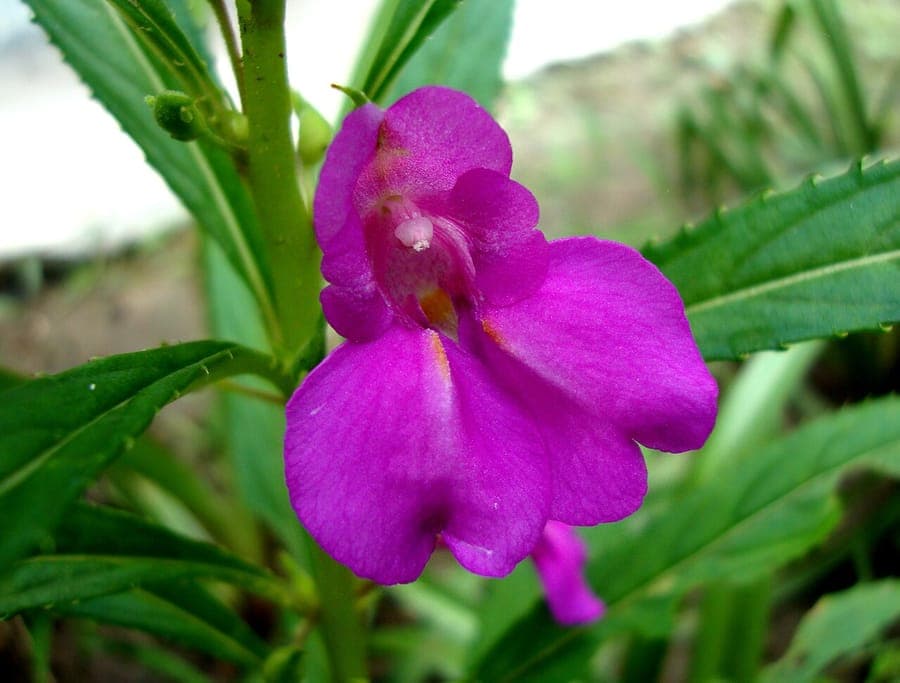
Joydeep / CC BY-SA 3.0, via Wikimedia Commons
Balsam: complete guide
Impatiens balsamina
Want to see Balsam: complete guide in your garden?
1 minute, no credit card
Overview
Garden balsam (Impatiens balsamina) is a classic among annual flowers. This plant from India and Sri Lanka brings abundant, dense blooms throughout the season. With its countless flowers in pink, red, white, and purple, sometimes spotted or double-form, it's a colorful addition to any garden.
Balsam has been a favorite in cottage gardens and formal beds for centuries. The plant grows vigorously and is easy to maintain. Even beginner gardeners can achieve successful blooming. It's perfect for borders, beds, containers, and even as a cut flower.
Appearance and bloom
Balsam reaches 30-60 centimeters in height and spreads to about 30 centimeters wide. The stems are succulent and fleshy, often with reddish tints. The leaves are lance-shaped, smooth, and soft green.
The flowers are the highlight. They appear in numerous colors: pink, red, white, purple, and orange. Some varieties have spotted flowers; others are double. The flowers grow densely along the stems, covering the plant. They bloom from June to October. Flowers are approximately 2-3 centimeters wide.
After flowering, explosive seed pods develop - mature seed pods burst open at the slightest touch.
Ideal location
Balsam grows best in half-shade to full light. It tolerates full sun better than many other Impatiens species. However, in very hot climates, some afternoon shade can be beneficial.
This plant works well in borders, along paths, in container planting, and as a patio plant. In formal gardens, plant in rows for linear effect. In informal gardens, use groups of different colors.
Soil
Balsam tolerates various soil types but thrives best in well-draining, moisture-retaining soil. Add plenty of organic matter. The plant tolerates acidic to neutral soils.
Ensure good drainage, not waterlogging. Regular mulching helps water retention. Use moisture-retaining potting mix in containers.
Free design
Want to see Balsam: complete guide in your garden? Make a free design now.
Watering
Balsam has moderate to high water needs. Keep soil moist but not waterlogged. Water regularly, especially during dry periods. Young plants need thorough watering until established.
Morning watering is better than evening. Avoid wetting flowers as this causes spotting. For container plants, daily watering may be needed in summer.
Pruning
Pruning promotes branching and fuller plants. Pinch out the tips when the plant is 10-15 centimeters tall. Later in the growing season, remove spent flowers for continuous blooming.
Old, leggy plants can be cut back in summer for rejuvenation. This is useful if plants look worn from heat or drought.
Maintenance calendar
May: Sow seed indoors or plant seedlings outdoors.
June: Start regular watering. Pinch tips.
July - August: Full bloom. Water heavily. Check for pests. Deadhead spent flowers.
September - October: Continuous blooming. Seeds can be collected.
November: Plant dies after frost.
Winter hardiness
Balsam is not winter hardy and dies after the first frost. It's a true annual. In mild conditions it may persist until November. Saving seed for next season is recommended.
Companion plants
Balsam combines well with other summer bloomers. Plant with salvias, begonias, and ageratum for a palette of purple to pink. For contrast, plant with yellow flowers like sunflowers or tagetes.
In borders, place groups of the same color for maximum impact. Mixed colors create a whimsical effect.
Conclusion
Balsam is a reliable, prolific bloomer with no difficult requirements. With regular watering and modest pruning, this plant will bloom all season. The range of colors and forms offers endless design possibilities.
Sow seed in April or buy seedlings in May. Plant outdoors after frost. Water regularly. Then enjoy months of colorful blooms! For more summer bloomers, visit gardenworld.app.
Want to see Balsam: complete guide in your garden? Make a free design now.
Upload a photo, pick a style, and get a photorealistic design with plant list in under a minute.
No credit card required


Similar plants
Impatiens aurella: complete guide
Impatiens aurella
Pale yellow touch-me-not is a North American moisture-loving wildflower with golden blooms. Master cultivation of this delicate jewelweed in moist, shaded garden spaces.
Balfour's touch-me-not: complete guide
Impatiens balfourii
Discover Balfour's impatiens (Impatiens balfourii), a fascinating bicolor flower from the Himalayas. Growing and care tips.
Orange jewelweed: complete guide
Impatiens capensis
Discover orange jewelweed (Impatiens capensis), a North American flower with vibrant orange blooms. Growing and care tips.