
KENPEI / CC BY-SA 3.0, via Wikimedia Commons
Japanese holly: complete guide
Ilex crenata
Want to see Japanese holly: complete guide in your garden?
1 minute, no credit card
Overview
Japanese holly (Ilex crenata) is an elegant ornamental shrub from East Asia. This compact shrub grows slowly and forms dense, easily-pruned foliage. With its fine texture and glossy dark green leaves, Japanese holly is ideal for formal hedges, topiary, bonsai and as a specimen plant.
This plant is very popular in contemporary and classical garden designs because of its refined appearance and versatility. It provides year-round structure and form to your front garden.
Appearance and bloom
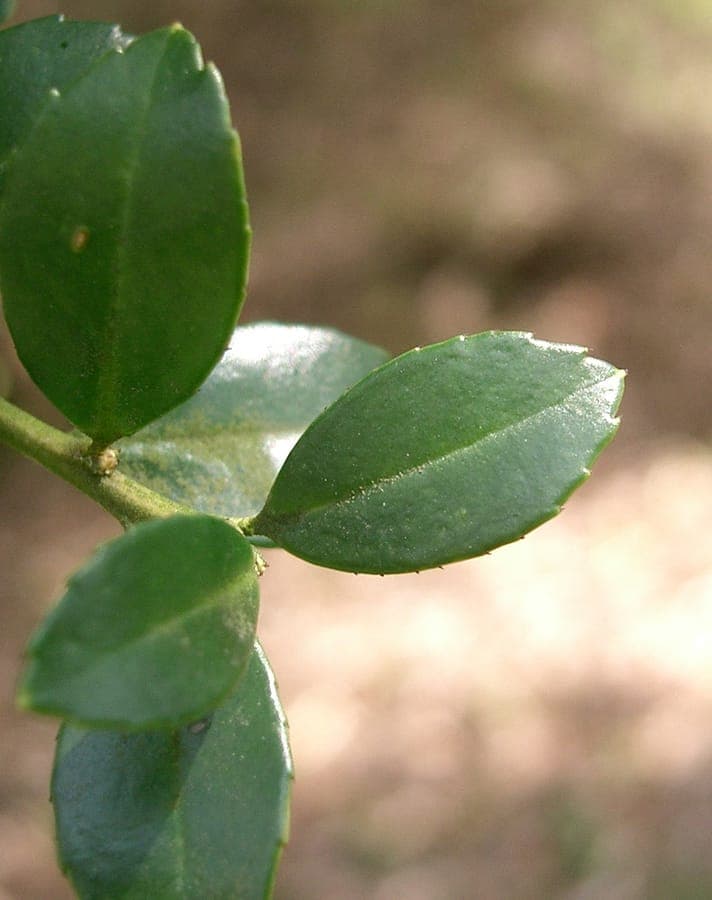
Japanese holly typically reaches 1.5 to 2.5 meters height in cultivation, depending on variety and pruning method. The leaves are very small, 5 to 10 millimeters long, elliptical, finely saw-toothed and firm. They glisten dark green and remain present year-round.
In May to June small, inconspicuous yellow flowers appear. These are followed by glossy black berries about the size of a pea. These berries provide winter decoration and feed birds.
Ideal location
Japanese holly thrives in full sun to partial shade. At least four hours of sunlight per day is recommended for compact growth. In full shade the plant becomes weak and loses leaves.
This shrub is very suitable for formal borders, hedge rows, small-scale garden designs and bonsai pots on terrace or balcony. It also does well as a specimen plant in a sunny or partially shaded corner.
Soil
Japanese holly grows best in well-draining, slightly acidic soil. pH 4.5 to 5.5 is ideal. Light sandy or loamy soil with good organic matter is preferred.
This plant does not tolerate heavy clay soil well; work in sand, compost and leaf mold. Provide well-draining soil mix for container growing. Annual feeding with balanced fertilizer supports compact growth.
Watering
Japanese holly likes evenly moist, but not waterlogged soil. During the growing season (spring and summer) water when the top layer of soil feels dry. Underestimating moisture needs leads to leaf drop.
In fall and winter you can reduce watering, but do not let the soil dry out. Drought periods can cause leaf drop. In pot culture daily moisture checks are essential.
Free design
Want to see Japanese holly: complete guide in your garden? Make a free design now.
Pruning and maintenance
Japanese holly is a pruning-tolerant shrub that can grow with minimal pruning. For formal shapes prune three to four times per year, starting in March and ending in August. This promotes compact, dense foliage.
For topiary and shaped forms use soft pruners; remove only loose foliage. Heavy pruning can damage the shrub. Older wood can be cut back deeply to rebuild the shape.
Maintenance calendar
March: Growing season begins; start pruning cycle for shapes. April-May: Flowering period; regulate watering well. June: Second pruning round; shape balls. July: Third pruning round; support dense foliage. August: Final pruning round of the season. September-October: Gradually reduce watering; berries form. November-February: Rest period; minimal maintenance.
Winter hardiness
Japanese holly is hardy to about -10 degrees Celsius, meaning it can withstand winter well in much of Europe. However, very cold weather with strong wind can cause leaf drop.
In very cold regions you can provide protection against north and east winds. In pot culture protect carefully against freezing over winter.
Companion plants
Japanese holly combines beautifully with other Asian shrubs such as Bamboo, Acer and Mahonia. In formal gardens it grows well with Boxwood and Privet.
In woodland and natural settings it harmonizes with Heather plants, Erica and low Conifers. Provide different textures and shapes.
Final thoughts
Japanese holly is a refined, versatile shrub for modern and traditional gardens. With regular pruning and basic care you can enjoy this elegant plant for decades.
You will find Japanese holly at specialized garden centers and nurseries. Gardenworld.app helps you find the perfect spot in your garden for optimal growth and shaping. With proper maintenance and pruning your Japanese holly will be a green jewel in your front garden year-round.
Want to see Japanese holly: complete guide in your garden? Make a free design now.
Upload a photo, pick a style, and get a photorealistic design with plant list in under a minute.
No credit card required


Similar plants
Clustered holly: complete guide
Ilex aggregata
Clustered holly (Ilex aggregata) is a rare Andean holly with glossy foliage and bright red berry clusters, perfect for a sheltered, partly shaded corner.
Farges's holly: complete guide
Ilex fargesii
Farges's holly (Ilex fargesii) is an evergreen Chinese holly with glossy, spine-free foliage and bright red winter berries, ideal as a specimen or hedge.
Japanese Winterberry: complete guide
Ilex serrata
Discover Japanese winterberry: a deciduous holly with bright red berries that bring color to the garden deep into winter.