
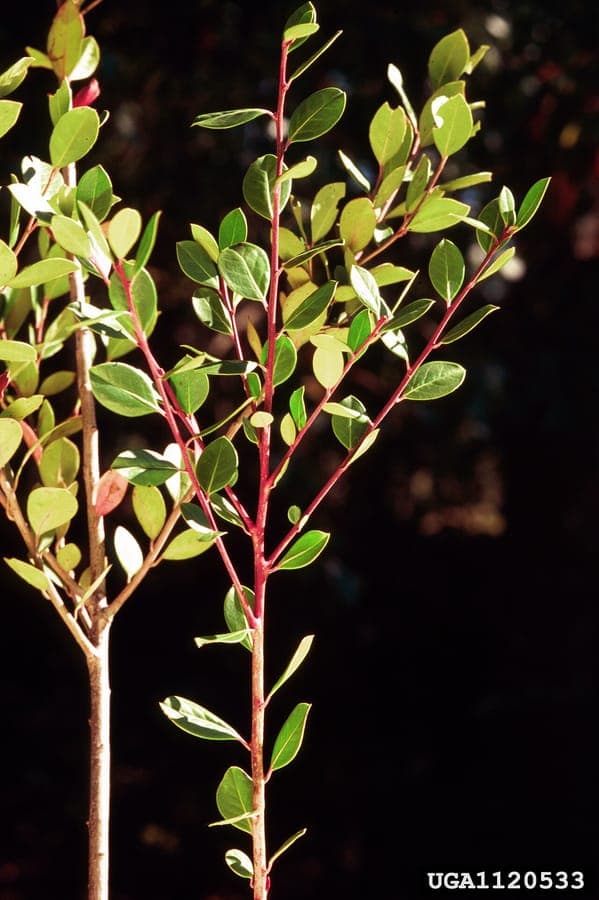
James H. Miller & Ted Bodner, Southern Weed Science Society, Bugwood.org / CC BY 3.0 us, via Wikimedia Commons
Ilex coriacea: complete guide
Ilex coriacea
Want to see Ilex coriacea: complete guide in your garden?
1 minute, no credit card
Overview
Ilex coriacea, known as the large gallberry or sweet gallberry, is a native American holly originating from the southeastern United States. This plant belongs to the Aquifoliaceae family and is renowned for its small, glossy black berries that provide bird food. In the wild, it grows in swamps, wet forests, and moisture-holding areas from Texas to North Carolina.
The large gallberry is a valuable plant for both gardeners and birds. With its attractive glossy fruit, evergreen foliage, and moderate growth, it's an excellent choice for moist gardens. Discover more inspiration for native American gardens on gardenworld.app.
Appearance and Bloom
Ilex coriacea grows as a shrub to small tree, usually 2-3 meters tall in gardens, though sometimes to 5 meters in the wild. The leaves are small to medium-sized, approximately 3-7 centimeters long, leathery, with a glossy dark-green surface. The leaves have a slightly curved edge and remain green year-round.
Flowers are small, white, approximately 5 millimeters in diameter, appearing in spring (March-May). They are not particularly conspicuous but attract small insects. Fruits form in summer and ripen in fall to glossy black berries, approximately 6-8 millimeters in diameter. These berries persist on the plant all winter, making them particularly valuable for overwintering birds.
Ideal Location
Ilex coriacea grows best in full sun to light shade. The plant needs at least 4-6 hours of direct sunlight daily, though more sun produces more fruit. In very hot climates, some afternoon shade may be beneficial.
The plant is very hardy and can withstand temperatures to -15 degrees Celsius. This makes it suitable for temperate climates. In hot climates, it prefers locations with some relief from midday heat.
Place the plant in a moist location. This is a plant that naturally grows in swamps and wet forests, so it thrives in moister conditions than many other plants.
Soil
Ilex coriacea prefers acidic to neutral soil with pH around 5.5 to 6.7. The plant grows well in moist to wet soils and can even thrive in muddy conditions. This distinguishes it from many other American hollies.
The plant prefers organically rich soil. Add substantial amounts of leaf mold, peat, and compost to the planting hole. This retains moisture while ensuring drainage. The plant cannot tolerate dry, poor soils.
For container cultivation, use a mixture of potting soil (50%), peat (30%), and perlite (20%). This provides sufficient moisture retention with some drainage.
Free design
Want to see Ilex coriacea: complete guide in your garden? Make a free design now.
Watering
Ilex coriacea prefers moist soil. This is not a plant for dry locations. Ensure soil stays moist but not waterlogged in standing water. Water regularly, especially during growing season and warm weather.
During dry periods, water deeply to encourage root development. The plant appreciates consistently moist soil but can also tolerate wet periods. This makes it ideal for low-lying gardens or wet spots.
Do not leave pots in standing water, as this causes root disease. However, provide consistent water supply.
Pruning
Ilex coriacea requires minimal pruning. The plant grows as a natural rounded shrub. Light pruning can be applied to maintain shape, especially in spring before new growth begins.
Remove dead branches in winter. Heavy pruning is not necessary but can be used to encourage more compact growth. Severe pruning limits fruiting in that season.
Do not remove flowers or fruit in winter as these provide bird food.
Maintenance Calendar
January-February: Winter period. Minimal maintenance. Monitor soil moisture.
March-April: Growing season begins. Light pruning if needed. Start regular feeding.
May-June: Flowering period. Regular watering. Continue feeding monthly.
July-August: Fruit development. Regular watering critical. No pruning.
September-October: Fruit ripens. Stop feeding. Water as needed.
November-December: Fruit persists for birds. No maintenance needed.
Winter Hardiness
Ilex coriacea is very hardy and can withstand temperatures to -15 to -20 degrees Celsius. This makes it an excellent choice for temperate climates. The plant does not die back in winter but may shed some leaves in very severe winters.
The plant is also very durable and can live for decades without much maintenance.
Companion Plants
Ilex coriacea grows well with other moisture-loving plants such as various related hollies, viburnum, and other evergreen shrubs. It works well in wet gardens and marsh/waterside designs.
Pair with other bird-feeding plants for maximum appeal. The plant itself is valuable for birds, so add regularly bird-friendly plants.
Conclusion
Ilex coriacea is a bird-feeding, native plant that works excellently in moist gardens. With regular water, moist soil, and winter protection in very cold climates, you'll enjoy evergreen foliage and bird-feeding berries for years. This is ideal for ecologically-conscious gardeners. Discover more American native plants on gardenworld.app!
Want to see Ilex coriacea: complete guide in your garden? Make a free design now.
Upload a photo, pick a style, and get a photorealistic design with plant list in under a minute.
No credit card required


Similar plants
Clustered holly: complete guide
Ilex aggregata
Clustered holly (Ilex aggregata) is a rare Andean holly with glossy foliage and bright red berry clusters, perfect for a sheltered, partly shaded corner.
Farges's holly: complete guide
Ilex fargesii
Farges's holly (Ilex fargesii) is an evergreen Chinese holly with glossy, spine-free foliage and bright red winter berries, ideal as a specimen or hedge.
Japanese Winterberry: complete guide
Ilex serrata
Discover Japanese winterberry: a deciduous holly with bright red berries that bring color to the garden deep into winter.