
Misolonax / CC BY-SA 4.0, via Wikimedia Commons
Ibicella lutea: complete guide
Ibicella lutea
Want to see Ibicella lutea: complete guide in your garden?
1 minute, no credit card
Overview
Ibicella lutea, known as the double-claw or yellow unicorn-plant, is a remarkable tropical annual from Brazil and northern Argentina. This fascinating plant is particularly notable for its distinctive seed pods that form two characteristic curved hooks - hence the double-claw name. The cheerful yellow flowers and exotic appearance make this plant an absolute showstopper in any front garden.
Although Ibicella lutea has tropical roots, it can be grown in temperate climates as a warm-loving annual. The plant is ideal for gardeners seeking something unusual and conversation-starting to add to their front garden.
Appearance and Bloom
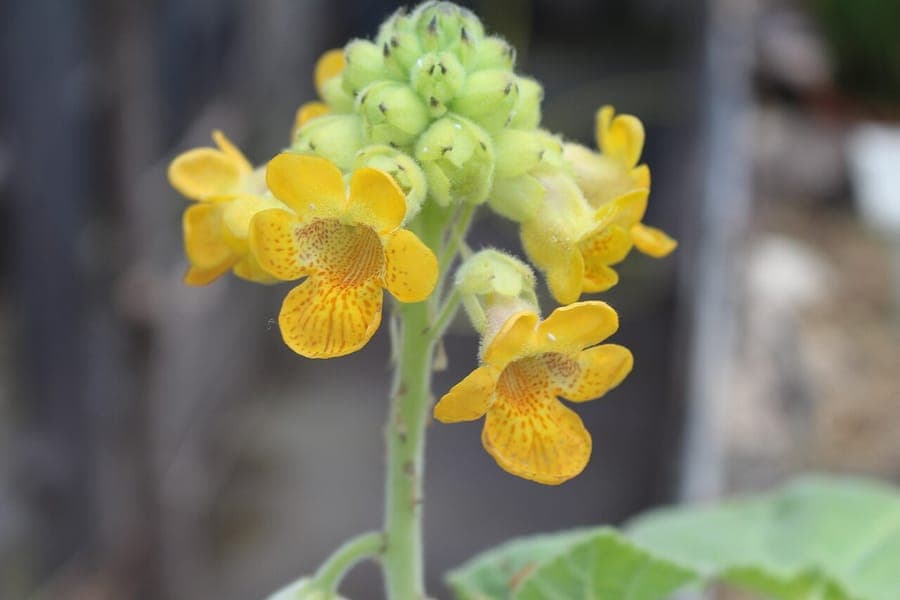
Ibicella lutea grows as a sprawling, bushy plant with rough-textured, heart-shaped leaves and abundant branching. The plant typically reaches 60-90 cm height with similar spread. The flowers are small, bright yellow to orange-yellow, about 2-3 cm across, appearing in numerous clusters along the stems.
The flowers attract pollinators and are followed by the famous seed pod: a greenish fruit that upon ripening unfolds two spectacular curved "claws" or hooks. This unique phenomenon occurs from summer through autumn, providing extended visual interest after blooming.
Ideal Location
Choose a warm, sunny spot with at least 6-8 hours of direct sunlight daily. Ibicella lutea grows optimally in locations protected from cold winds. The plant also tolerates partial shade but blooms more abundantly in full sun. Ensure good air circulation to help prevent fungal issues.
The plant can be grown in pots on a warm balcony or terrace as long as temperatures don't drop below 10 C. Protect from frost.
Soil
Ibicella lutea is not fussy about soil type and grows well in ordinary, fertile garden soil. Lightly sandy loam with normal to elevated fertility is ideal. Provide reasonable drainage to prevent waterlogging, but the plant tolerates normally moist soils better than lean, dry sand.
Add organic matter such as compost or manure to stimulate nutrients. pH can be neutral to slightly acidic (6.0-7.5).
Free design
Want to see Ibicella lutea: complete guide in your garden? Make a free design now.
Watering
Water regularly, especially during warm and dry periods. During the growing season (April-September), keep soil consistently moist but not waterlogged. Allow the soil surface to dry slightly between waterings.
During hot summer months, daily watering may be needed depending on rainfall. Reduce watering in autumn and winter as the plant grows less vigorously. Water at the root zone; wetting foliage can promote fungal growth.
Pruning
Pruning is optional but can be done to achieve a more compact plant. Pinch seedlings when 15-20 cm tall to encourage branching growth. After the growing season, you can remove old or damaged branches. This is a heat-loving plant; heavy pruning is best done in late winter before new growth begins.
Maintenance Calendar
March-April: Sow in warmth or plant seedlings May-June: Regular watering, support growth July-September: Flowering and seed pod formation, moderate water and fertilizer October-November: Collect seed, remove plant before frost December-February: Rest, store seed dry
Winter Hardiness
Ibicella lutea is not winter hardy and cannot tolerate frost. In freezing climates, treat it as a warm-loving annual: sow in spring and remove before frost arrives. In subtropical climates it can overwinter on protected sites.
In colder regions, collect seed from your best plants in autumn and store dry for next season's sowing.
Companion Plants
Combine Ibicella lutea with other heat-loving plants such as Cosmos, Zinnia, and Salvia. The bright yellow flowers contrast beautifully with purple or blue blooms. Dark green foliage plants like Ipomoea or Coleus also create attractive backdrops.
In Mediterranean front garden arrangements, it fits well with other South American flowering shrubs and annuals.
Closing
Ibicella lutea brings unexpected tropical flair to any front garden. Beyond the cheerful flowers grow the famous seed pods that catch every passerby's eye. With simple care - warmth, sun, and occasional watering - this plant rewards you with months of interest and conversation. Discover this specialty at tropical plant nurseries or find inspiration on gardenworld.app. For those who dare to experiment, Ibicella lutea is an absolute must.
With gardenworld.app you create a front garden full of tropical secrets and unexpected plant wonders.
Want to see Ibicella lutea: complete guide in your garden? Make a free design now.
Upload a photo, pick a style, and get a photorealistic design with plant list in under a minute.
No credit card required


Similar plants
Acer pycnanthum: complete guide
Acer pycnanthum
Acer pycnanthum, the Japanese swamp maple, is a fast-growing tree with early red flowers and brilliant autumn color, ideal for damp garden settings.
Freeman maple: complete guide
Acer × freemanii
Everything about the Freeman maple (Acer x freemanii): a fast-growing shade tree with spectacular autumn colour for large gardens.
Silver vine: complete guide
Actinidia polygama
Discover silver vine (Actinidia polygama): a hardy climbing plant with silvery foliage, loved by gardeners and cats alike.