
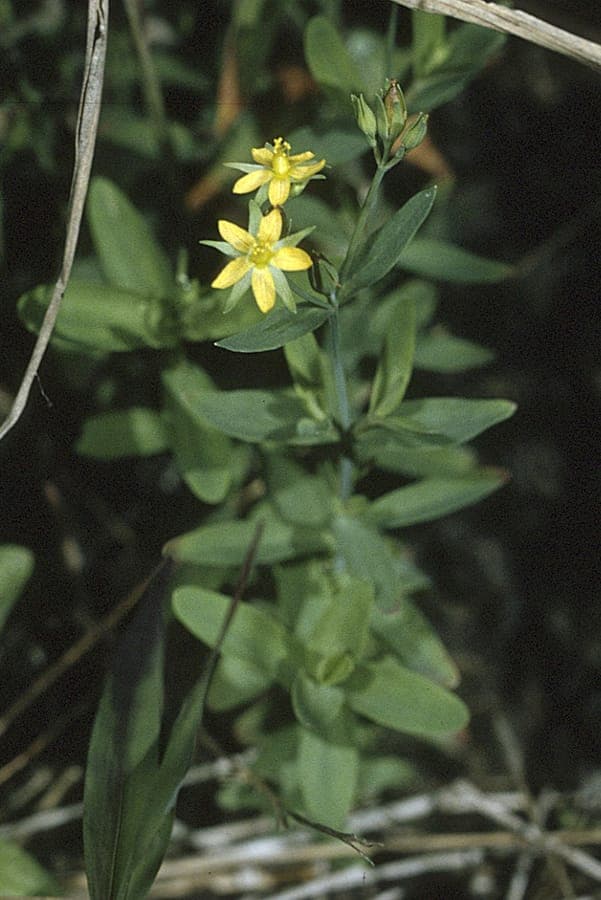
Robert H. Mohlenbrock. USDA NRCS. 1995. Northeast wetland flora: Field office guide to plant species. Northeast National Technical Center, Chester. Provided by USDA NRCS Wetland Science Institute (WSI). / Public domain, via Wikimedia Commons
Hypericum canadense: complete guide
Hypericum canadense
Want to see Hypericum canadense: complete guide in your garden?
1 minute, no credit card
Hypericum canadense, commonly known as Canadian St. John's-wort, Irish St. John's-wort, or Lesser Canadian St. Johnswort, is a low-growing herbaceous plant native to northeastern North America, from eastern Canada southward to North Carolina. This St. John's-wort species is valued for its cheerful yellow flowers and natural occurrence in wetland and marshy habitats, making it an excellent choice for rain gardens, bioswales, and constructed wetland landscapes where moisture-tolerant plants are essential.
Appearance and bloom
Canadian St. John's-wort grows as a compact, spreading ground cover typically 30 to 60 centimeters tall, with fine, wiry stems and narrow linear to lanceolate leaves that create an airy, feathery texture. The plant produces abundant small golden-yellow flowers from July through August, each bloom approximately 1 centimeter across with five petals and prominent yellow stamens that create a cheerful, open-faced appearance. The entire flowering period extends through late summer, providing extended color in wetland plantings. After flowering, the plant dies back to ground level in autumn, remaining dormant beneath snow and frost until spring growth resumes.
Ideal location
Canadian St. John's-wort thrives in full sun to partial shade, requiring at least 4 to 6 hours of direct sunlight daily for optimal flowering. The plant uniquely prefers moist to wet growing conditions, making it ideal for locations near water features, rain gardens, constructed wetlands, or even temporarily inundated areas. Plant near water bodies, in bioswales, or in any landscape situation where soil remains consistently moist to wet. Avoid placing in typical upland garden beds unless irrigation can be provided.
The plant is decidedly cool-season and extremely cold-hardy, thriving throughout northeastern North America's temperate climate.
Soil
Canadian St. John's-wort uniquely prefers consistently wet to very wet soils, unlike most garden plants. Acidic soils (pH 4.5-6.5) are optimal, making the plant valuable for naturally acid wetlands and peat-based soils. Heavy clay, peaty, and muddy soils pose no problems whatsoever; indeed, these are preferred growing conditions. The plant actively avoids dry soils and will struggle in conventionally drained garden beds.
Free design
Want to see Hypericum canadense: complete guide in your garden? Make a free design now.
Watering
Unlike most plants, Canadian St. John's-wort actually prefers more water rather than less. Keep soil consistently moist to wet throughout the growing season. In constructed wetlands, temporary inundation is tolerated. The only condition problematic to this plant is sustained drought. In conventional gardens, maintain consistent moisture through regular watering or locate the plant near water sources. This makes it invaluable for difficult low-lying, poorly drained areas that are challenging to landscape conventionally.
Pruning
Canadian St. John's-wort requires virtually no pruning. The plant is naturally low and compact. Remove any dead stems in late winter if desired, though this is optional as the plant dies back naturally. Deadheading spent flowers is not necessary, as the plant does not readily self-seed aggressively in cultivation.
Maintenance calendar
April-May: Growth begins; no feeding required; ensure consistent moisture. June-July: Flowering begins; maintain moisture levels; no intervention needed. August-September: Flowering continues; water as soil dries slightly. October-November: Plant dies back to ground; cease watering; allow dormancy. December-March: Winter dormancy; minimal care; plant remains below soil surface.
Winter hardiness
Canadian St. John's-wort is exceptionally cold-hardy throughout USDA zones 3 to 8, tolerating winter temperatures as low as -30 degrees Celsius without damage. This makes it invaluable for northern regions and cool mountain gardens where many moisture-loving plants fail.
Companion plants
Canadian St. John's-wort associates naturally with other wetland and moisture-loving plants:
Kalmia spp. (Mountain laurel): Evergreen foliage; pink-white flowers; acidic soil preference. Violet species: Delicate flowers; moisture-tolerant. Native sedges and rushes: Structural interest; moisture-loving. Marsh ferns: Fine textural contrast; moisture-dependent.
Conclusion
Canadian St. John's-wort is an invaluable native plant for wet gardens, rain gardens, constructed wetlands, and any landscape situation where persistent moisture is a characteristic or requirement. The cheerful yellow summer flowers, low compact form, and native range make it particularly suited to ecological restoration and sustainable landscape design. Purchase from native plant nurseries or specialty retailers specializing in wetland plants. Visit gardenworld.app for more native plant guides, ecological gardening strategies, and sustainable landscape designs that work with regional hydrology and native flora.
Want to see Hypericum canadense: complete guide in your garden? Make a free design now.
Upload a photo, pick a style, and get a photorealistic design with plant list in under a minute.
No credit card required


Similar plants
Hypericum coris: complete guide
Hypericum coris
Complete guide to Hypericum coris, the heath-leaved St John's wort from the Alps: location, soil, watering and rock gardens.
St. Peter's-wort: complete guide
Hypericum crux-andreae
St. Peter's-wort is a low-growing North American shrub with yellow flowers, ideal for acidic, damp soil and naturalistic borders.
Hypericum densiflorum: complete guide
Hypericum densiflorum
Hypericum densiflorum is a dense-flowering American shrub with bright yellow summer blooms, well suited to damp gardens, rain gardens, and pollinator borders.