
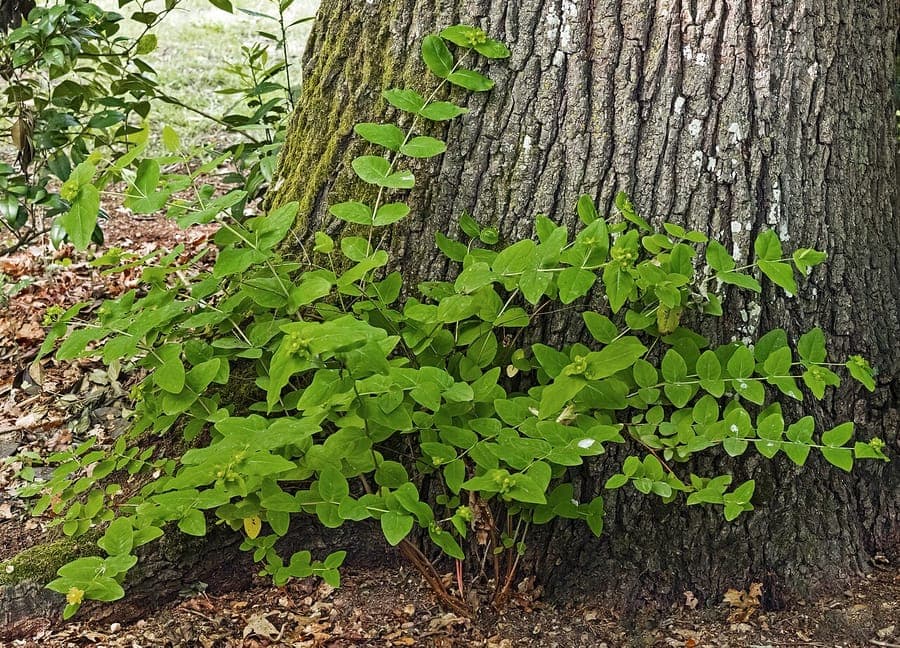
Northern bog st. john's-wort (Hypericum boreale): complete guide
Hypericum boreale
Want to see Northern bog st. john's-wort (Hypericum boreale): complete guide in your garden?
1 minute, no credit card
Overview
Northern bog st. john's-wort, scientifically Hypericum boreale, is a small native species distributed across the northeastern portion of North America. This plant thrives in moist, peaty soils from Canada to North Carolina. It holds considerable ecological importance as an insect food source and wildlife habitat.
Though small and modest in appearance, this plant plays an important role in wetland ecosystems. It is increasingly recognized as valuable for naturalistic gardens and ecologically-focused landscaping.
Appearance and Bloom
Northern bog st. john's-wort grows as a delicate herbaceous plant, usually 10-40 centimeters tall. The stems are slender and characteristically reddish-tinged. Leaves are small, narrow, and very fine-textured.
Flowers are small, bright yellow, and star-shaped, appearing July through October. This extended blooming period makes it valuable for late-season insect forage. Despite their modest size, flowers are numerous and attract numerous bees and butterflies.
Following bloom, brown seed pods form and ripen in autumn.
Ideal Location
Northern bog st. john's-wort performs best in locations receiving 4 to 6 hours of daily sunlight. It also tolerates shadier positions and actually thrives better in light shade than full sun.
The plant prefers moist to wet conditions. Locations with periodic water accumulation or even marshy spots are ideal. This is an unusual garden plant better suited to wetland environments.
Soil
Northern bog st. john's-wort prefers acidic, peaty soils rich in organic matter. This plant performs poorly in neutral or alkaline soils.
Add generous peat or acidic compost if your soil is not naturally acidic. Ensure excellent water retention; this plant thrives in chronically moist to wet soils.
Watering
Northern bog st. john's-wort requires very regular watering and actually grows better in moist soils than dry ones. This is a plant for marshy or boggy areas.
In typical garden settings, frequent watering may be needed to maintain sufficient moisture. This plant is unsuitable for dry areas.
Pruning
Northern bog st. john's-wort requires minimal pruning. Dead material can be removed in early spring. The plant grows as a compact, self-contained form without requiring shaping.
After flowering, seed can be left for natural dispersal or removed if you wish to prevent volunteer seedlings.
Maintenance Calendar
Spring (March-April): Remove dead material. Check soil moisture.
Summer (May-July): Active growth. Keep soil consistently moist.
Autumn (August-October): Blooming and seed development. Leave seed for propagation if desired.
Winter (November-February): Dormancy. Minimal maintenance needed.
Winter Hardiness
Northern bog st. john's-wort is exceptionally winter hardy in temperate to cold climates, tolerating temperatures to minus 20 degrees Celsius or lower. The plant handles autumn preparation well and typically does not die back from frost.
Companion Plants
Northern bog st. john's-wort works well with other wetland plants such as iris, sphagnum mosses, and other bog-loving herbs. Combinations with native sedges and grasses are attractive.
This plant is ideal at boggy pond margins and in areas subject to periodic flooding.
Propagation
Northern bog st. john's-wort can be propagated in several ways, though dividing the root clump is the fastest and most reliable method. Dig up the plant in early spring (March-April) or autumn (September), divide the clump into sections 8 to 12 centimeters wide with adequate root material, and replant immediately into moist, acidic soil.
Seed propagation also works well and is, in fact, the natural way this plant spreads in the wild. Collect seed pods in late autumn once they turn brown and dry. The fine seed requires light to germinate and should therefore be surface-sown on a moist, acidic seed mix. Cold stratification for 6 to 8 weeks in the refrigerator significantly improves germination rates.
Cuttings from young shoots can also root in a moist peat-sand mix, though this is less reliable than division or seed.
Free design
Want to see Northern bog st. john's-wort (Hypericum boreale): complete guide in your garden? Make a free design now.
Pests and Diseases
Northern bog st. john's-wort is a remarkably tough plant rarely seriously troubled by disease or insects, partly because its naturally moist growing conditions support fewer pathogens than one might expect. Rust can occasionally appear on foliage, recognizable as small orange pustules; remove affected material and ensure adequate spacing between plants for air circulation.
Slugs may nibble young shoots, especially in early spring when new growth remains tender. Since the plant prefers moist conditions where slugs thrive, this can be a recurring issue; hand-picking in the evening is often the most effective, environmentally friendly approach.
Leaf spot disease occurs sporadically in very dense plantings lacking sufficient air circulation. Thin plantings as needed to prevent this.
Garden Design and Cultivars
Northern bog st. john's-wort is ideal for rain gardens, pond margins, bog gardens, and natural water features where many other plants find conditions too wet. Space plants 15 to 25 centimeters apart for a naturalistic, scattered grouping.
Although Hypericum boreale itself is rarely sold under a cultivar name, the same genus offers some well-known, larger North American relatives that combine beautifully in moist gardens, such as Hypericum kalmianum 'Cobalt n Gold' with striking yellow flowers on a compact, winter-hardy shrub, or Hypericum 'Hidcote' for drier portions of the same border. These larger relatives provide structure alongside the low-growing, herbaceous northern species.
Combine northern bog st. john's-wort with moisture-loving ornamental grasses, forget-me-nots, and native iris for an ecologically valuable, naturalistic border around a pond. In July and August, during peak bloom, the plant attracts numerous pollinators that also benefit from nearby flowering water plants.
Frequently Asked Questions
Is northern bog st. john's-wort suitable for an ordinary garden border? Only if the soil can be kept consistently moist; in typical, well-drained borders the plant dries out too quickly and performs poorly.
Does this plant attract bees and butterflies? Absolutely, its numerous small flowers serve as an important late-summer food source for native bee species and butterflies, particularly in areas where few other plants bloom during that period.
Can I combine this plant with sphagnum moss in a miniature bog garden? Yes, this is an excellent pairing; both plants share the same preference for acidic, moist to wet conditions and together create an authentic wetland scene on a small scale.
Is this plant suitable for a pond with fish? Yes, the roots pose no danger to fish, and the plant can even serve as shelter for small aquatic insects and amphibians along the pond edge, as long as it is not fully submerged.
How much water does the plant need during a dry summer? Unlike most garden plants, northern bog st. john's-wort benefits from extra watering during dry spells; never let the soil dry out for more than a few days for optimal growth.
Conclusion
Northern bog st. john's-wort is a humble yet valuable plant for those committed to ecological gardening. Though diminutive, it plays an important role in supporting insect populations and natural ecosystems. For conservation-minded gardeners and those needing to plant marshy or wet areas, this plant is a perfect choice.
Visit specialized nurseries or native plant suppliers for seed or seedlings. For more inspiration on ecological gardening, explore gardenworld.app. Design your garden with nature in mind on gardenworld.app!
Want to see Northern bog st. john's-wort (Hypericum boreale): complete guide in your garden? Make a free design now.
Upload a photo, pick a style, and get a photorealistic design with plant list in under a minute.
10,000+ gardens designed already
No credit card required


Similar plants
Hypericum coris: complete guide
Hypericum coris
Complete guide to Hypericum coris, the heath-leaved St John's wort from the Alps: location, soil, watering and rock gardens.
St. Peter's-wort: complete guide
Hypericum crux-andreae
St. Peter's-wort is a low-growing North American shrub with yellow flowers, ideal for acidic, damp soil and naturalistic borders.
Hypericum densiflorum: complete guide
Hypericum densiflorum
Hypericum densiflorum is a dense-flowering American shrub with bright yellow summer blooms, well suited to damp gardens, rain gardens, and pollinator borders.