
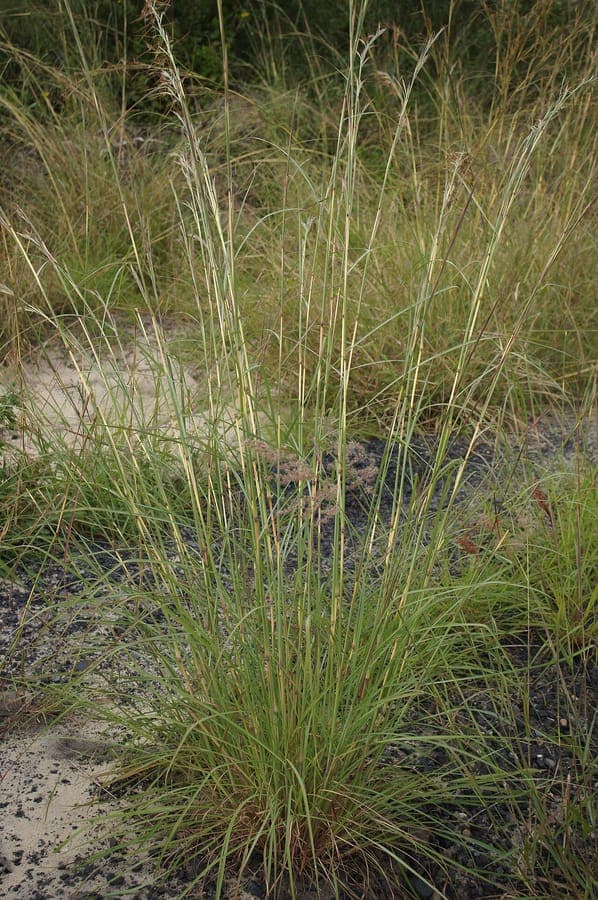
Macleay Grass Man / CC BY 2.0, via Wikimedia Commons
Hyparrhenia rufa: complete guide
Hyparrhenia rufa
Want to see Hyparrhenia rufa: complete guide in your garden?
1 minute, no credit card
Overview
Hyparrhenia rufa, commonly known as jaragua grass or red-brown thatch grass, is a striking grass species native to tropical and southern Africa. This robust plant has been introduced from these regions into numerous other parts of the world, including parts of North America and Asia. It reproduces through seed dispersal and spreads efficiently in suitable growing conditions.
The grass is known for its vigorous and rapid growth, making it a popular choice for soil stabilization, landscaping, and even livestock forage in various parts of the world. The fine texture and warm golden-brown color scheme of the flowers give any garden an exotic appearance.
Appearance and Bloom
Hyparrhenia rufa forms dense, undulating masses of long, narrow leaves with a fresh gray-green color. The grass typically reaches 1 to 1.5 meters in height, though under optimal conditions it can grow even taller. The plant produces striking reddish-brown flower plumes that rise above the foliage, providing a spectacular visual statement.
These flower plumes appear throughout the summer season and remain attractive well into autumn. They serve as food for birds and other wildlife, making this grass valuable for wild gardens. The dried grass tones of the flowers contrast beautifully with greener plant material.
Ideal Location
Hyparrhenia rufa thrives best in full sun to lightly shaded environments. Plant it in locations receiving at least 6-8 hours of direct sunlight daily for optimal flowering and development. The grass is highly adaptable and can grow in various terrains, provided it's in well-draining soils.
This plant is exceptionally drought-tolerant once established, making it an ideal choice for garden settings where water is limited. Use the grass as a focal point in mixed borders, as a background plant in arrangements, or as a windbreak element. The striking flowers make it a natural candidate for cutting and drying for floral arrangements.
Soil
Hyparrhenia rufa is not particular about soil properties. It grows best in well-draining soils, though it adapts to sandy, loamy, or even slightly clay-containing soils. Ensure the soil doesn't have poor drainage conditions, as this can cause root rot.
The plant needs no extra fertilization and is actually adapted to nutrient-poor soils. For best growth results, incorporate compost or organic matter when planting, but this is not essential. This grass tolerates slightly acidic to neutral pH levels well.
Free design
Want to see Hyparrhenia rufa: complete guide in your garden? Make a free design now.
Watering
Once established, Hyparrhenia rufa is highly drought-tolerant and requires minimal supplemental irrigation. During the first growing season, however, provide regular watering until the plant has well-established its root system, roughly 2-3 times weekly during dry periods.
After the grass moves beyond those critical first months, it can withstand extended periods of drought. In fact, overwatering is the greatest risk with this plant. Ensure good drainage between waterings and allow the soil to feel noticeably dry before watering again.
Pruning
Hyparrhenia rufa requires minimal pruning. However, it's advisable to cut the plant back to approximately 30 cm above ground in early spring, before new growth begins. This stimulates full, healthy growth patterns and helps remove dead or damaged leaves.
After the grass flowers and the plumes have shed, you can remove the previous season's stems. If you want to allow the plant to produce seed and self-seed naturally, keep the plumes intact and remove them only after seed dispersal.
Maintenance Calendar
Spring: Prune dead material from last year, apply compost or slow-release fertilizer.
Summer: Water regularly during very dry periods, monitor for pest spread.
Autumn: Reduce watering as growth slows, enjoy the spectacular blooms.
Winter: Minimal maintenance needed; in temperate climates, the grass can freeze back and regrow the following spring.
Winter Hardiness
Hyparrhenia rufa is primarily suited to subtropical to temperate tropical climates. It tolerates temperatures down to approximately -5 degrees Celsius, though prolonged frost can damage or kill it. In colder climates, it can be grown as an annual plant or in containers brought indoors for winter.
In areas with harsher winters, plant the grass in protected locations or in containers so it can be moved. The above-ground parts may die back in light frost, but the roots can survive and regrow in spring.
Companion Plants
Hyparrhenia rufa combines well with other drought-tolerant plants and structural elements. Try pairing it with yellow or orange bloomers like Echinops or Verbascum to create a radiant effect. Intermixing with dark green foliage plants like Phormium or Cordyline accentuates the warm tones of the flowers.
In informal, wild gardens, the grass looks stunning next to other native grass species and soft-textured perennials. The texture of Hyparrhenia rufa also works well as background material for shorter plants, helping it add structure and volume to borders.
Closing
Hyparrhenia rufa is a strong choice for gardeners seeking dramatic grass species that require minimal maintenance. With its impressive stature, striking flowers, and drought-tolerant capacities, it delivers years of beauty and interest. Whether you're creating a tropical garden or simply seeking a striking, energetic addition to your landscape design, this grass delivers. Available at major garden retailers, and discover more garden design inspiration on gardenworld.app.
Want to see Hyparrhenia rufa: complete guide in your garden? Make a free design now.
Upload a photo, pick a style, and get a photorealistic design with plant list in under a minute.
No credit card required


Similar plants
Sporobolus pungens: complete guide
Sporobolus pungens
Sporobolus pungens is a stoloniferous Mediterranean coastal grass with outstanding salt and drought tolerance, perfect for seaside and dry gardens.
Mediterranean aegilops: complete guide
Aegilops biuncialis
Everything about Aegilops biuncialis, a Mediterranean annual grass with ornamental spikes and outstanding drought tolerance for dry gardens.
Silver bluestem: complete guide
Bothriochloa saccharoides
Full guide to Bothriochloa saccharoides (silver bluestem): site, soil, watering, winter hardiness, pruning, and garden companions.