
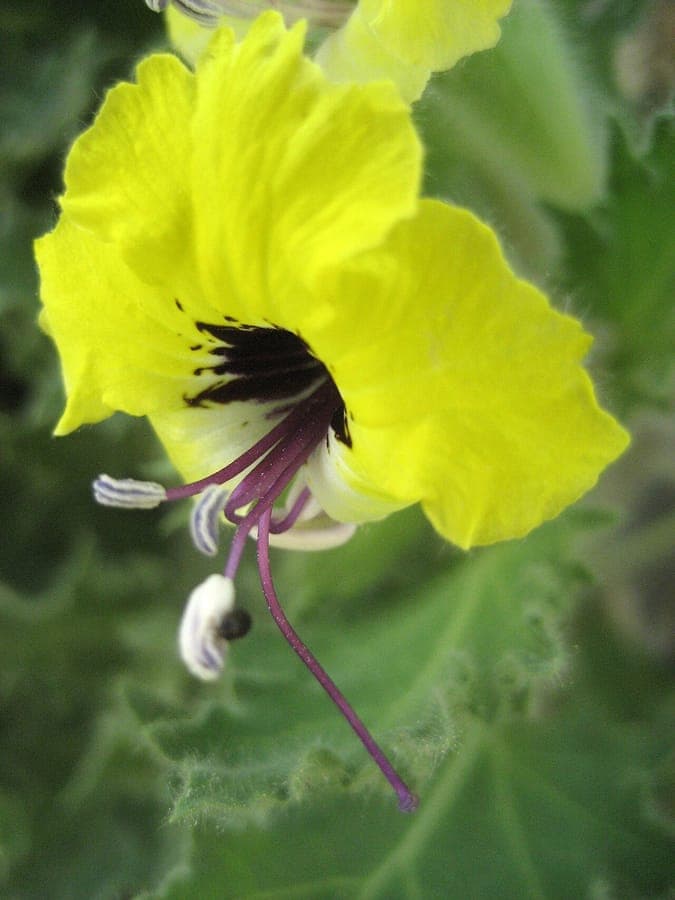
Maarten Sepp / CC BY-SA 3.0, via Wikimedia Commons
Hyoscyamus aureus: complete guide
Hyoscyamus aureus
Want to see Hyoscyamus aureus: complete guide in your garden?
1 minute, no credit card
Overview
Hyoscyamus aureus, known as golden henbane or golden-flowered henbane, is an unusual and botanically interesting plant native to the Eastern Mediterranean region. This plant belongs to the Solanaceae family (same family as tomatoes and peppers) and is renowned for its striking golden-yellow flowers. The plant naturally grows in dry, rocky areas of Cyprus, Turkey, Greece, and the Near East.
Hyoscyamus aureus is a plant for intrigued gardeners and plant collectors seeking something truly unique. It is important to note that this plant is toxic, so precautions are essential. Interested in unusual Mediterranean plants with botanical value? Explore gardenworld.app for more exotic garden ideas.
Appearance and Bloom
The flowers of Hyoscyamus aureus are its most striking feature. They measure approximately 2-3 centimeters in diameter and are bright golden-yellow in color. The flowers have a characteristic structure with five slightly folded petals. They grow in clusters along the stems.
The plant grows as an herb or small shrub, usually 30-60 centimeters tall, though it can grow larger under ideal conditions. The leaves are large, green, and slightly hairy, approximately 10-20 centimeters long. They have a slightly rough texture and characteristic odor.
The plant blooms April through June in its natural habitat, peaking in May. After flowering, the plant forms seed capsules containing mature seeds. All plant parts, including seeds, are toxic.
Ideal Location
Hyoscyamus aureus thrives best in full sun on warm, dry locations. The plant requires at least 6-8 hours of direct sun daily. It can tolerate some light shade, but flowering will be limited.
The plant is very hardy in temperate climates and can withstand temperatures to -10 degrees Celsius. However, it grows best in dry, warm summers, so in wet climates cultivation can be challenging. Place in a well-drained location with good air circulation.
Avoid excessively moist conditions. The plant is adaptable and can grow in suboptimal conditions, but prefers warm, dry locations.
Soil
Hyoscyamus aureus prefers light, well-draining, typically nutrient-poor soil. The plant actually grows better in poor soil types where other plants struggle. pH between 6.0 and 7.5 is ideal.
The plant cannot tolerate waterlogged conditions. Add sand or gravel to heavy soils to improve drainage. Organic material is not needed and can actually be unfavorable as it retains moisture.
For container cultivation, use a mixture of potting soil (30%), sand (40%), and perlite (30%). This ensures excellent drainage. The plant thrives in poor, dry conditions.
Free design
Want to see Hyoscyamus aureus: complete guide in your garden? Make a free design now.
Watering
Hyoscyamus aureus prefers dry conditions and requires minimal water. Both excessive and irregular watering can cause problems. Water only when soil feels distinctly dry.
After planting, water regularly until the plant is established (about 4-6 weeks). Thereafter, drastically reduce watering. During normal rainfall periods, additional water is usually unnecessary.
During very dry periods, light watering may be needed, but the plant tolerates long drought periods. Ensure water drains well. Waterlogging causes root rot and plant death.
Pruning
Hyoscyamus aureus requires minimal pruning. Remove dead material in spring and damaged leaves throughout the growing season. After flowering, seed capsules can be removed to prevent seed dispersal, though this is optional.
Remove dead branches in winter. Heavy pruning is usually unnecessary and can damage the plant. Let it grow in its natural form.
Maintenance Calendar
January-February: Winter period. No feeding, minimal water.
March-April: Growth begins. Light pruning of dead material. Regular watering for young plants.
May-June: Flowering period. No feeding, minimal water.
July-August: Seed formation. Remove seed capsules if desired. Water very limited.
September-October: Plant dies back. No water. Prepare for winter.
November-December: Complete rest period. No maintenance needed.
Winter Hardiness
Hyoscyamus aureus is very hardy and can withstand temperatures to -10 to -15 degrees Celsius. This is actually an advantage for growers in temperate climates. The plant dies back in winter and reappears in spring.
In very wet winter periods, good drainage is essential to prevent root rot. The plant tolerates frost but not bitter wet winters.
Companion Plants
Hyoscyamus aureus grows well with other Mediterranean dryland plants such as lavender, rosemary, and other drought-stress tolerant plants. Avoid wet-soil plants requiring abundant water.
Use it in rock garden designs or xeric gardens where drought-tolerant plants dominate. The yellow flowers contrast beautifully with purple Mediterranean plants.
Avoid placement where easily touched by children or pets due to toxicity.
Safety Precautions
It is essential to remember that Hyoscyamus aureus IS TOXIC. All plant parts are poisonous and can cause serious illness or death if ingested. Wear gloves when handling, wash hands thoroughly after contact, and keep away from children and pets.
Never consume any part of this plant. Do not allow children or pets to play with the plant or handle its fruits.
Conclusion
Hyoscyamus aureus is a fascinating addition for experienced plant collectors seeking unusual Mediterranean plants. With minimal maintenance, well-drained soil, and minimal water, you can enjoy this unique plant for years. However, ensure everything follows strict safety protocols due to toxicity. Discover more exceptional plants on gardenworld.app!
Want to see Hyoscyamus aureus: complete guide in your garden? Make a free design now.
Upload a photo, pick a style, and get a photorealistic design with plant list in under a minute.
No credit card required


Similar plants
Solanum dolichosepalum: complete guide
Solanum dolichosepalum
Discover Solanum dolichosepalum, an Andean nightshade with striking long sepals. Growing tips, hardiness, and companion planting for your patio.
Solanum ripense: complete guide
Solanum ripense
Discover Solanum ripense, a moisture-loving Andean nightshade for pond edges and conservatories. Growing tips, hardiness, and companions.
Solanum tomentosum: complete guide
Solanum tomentosum
Discover Solanum tomentosum, a thorny South African nightshade with felted leaves. Growing tips, hardiness, and companion planting ideas.