
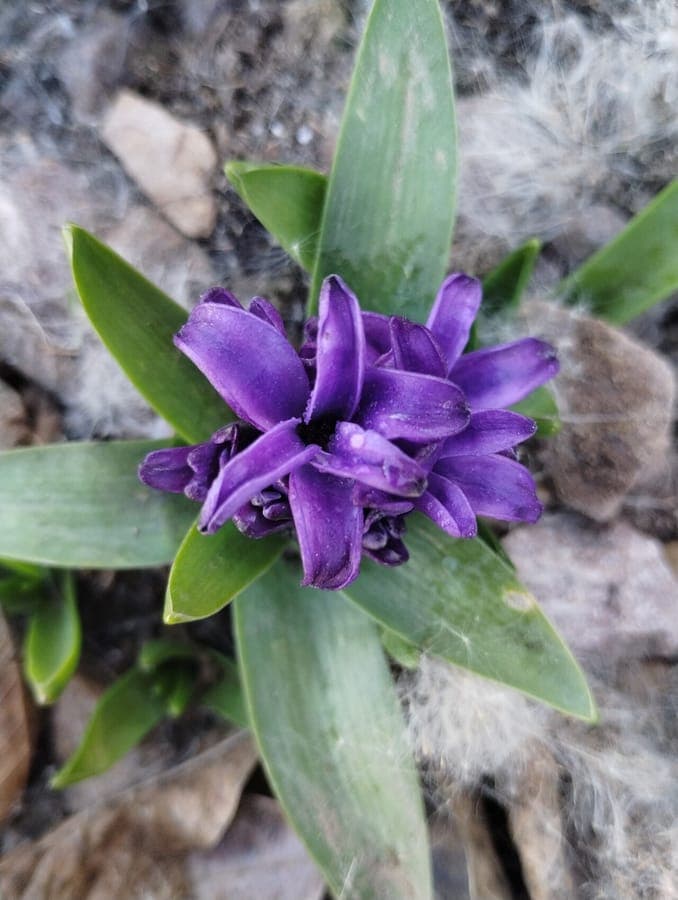
Plantman / CC BY-SA 4.0, via Wikimedia Commons
Hyacinth: complete guide
Hyacinthus orientalis
Want to see Hyacinth: complete guide in your garden?
1 minute, no credit card
Overview
Hyacinthus orientalis, commonly known as the hyacinth, is a cherished spring-flowering bulb that brings bold color and intense fragrance to gardens after a long winter. Native to regions like Turkey, Lebanon-Syria, Iraq, and Palestine, this plant has been cultivated for centuries in Europe for its striking floral spikes and hardy nature. Belonging to the Asparagaceae family, it thrives in temperate climates and is a staple in both formal and cottage-style gardens.
Hyacinths grow from bulbs and typically reach 15–25 cm in height, making them ideal for front borders, rock gardens, or container arrangements. Their dense, upright flower spikes bloom in early spring, often starting in February in milder zones. If you're planning a spring display, consider using gardenworld.app to visualize how hyacinths will fit into your garden layout and complement existing plants.
Appearance & bloom cycle
The plant produces a single, central flower spike densely packed with small, star-shaped florets. The classic blue variety is iconic, but cultivars now come in white, pink, purple, red, and yellow. The blooms emit a powerful, sweet fragrance that carries well on a spring breeze, making them excellent near patios or walkways.
Hyacinths bloom from February to March in USDA zones 7–8. In colder zones (4–6), flowering may start in late March. Each bloom lasts 1–2 weeks, depending on weather conditions. After flowering, the foliage persists for several weeks to help the bulb store energy for the next season.
Ideal location
Hyacinths prefer a spot with full sun to light shade, scoring a 7 out of 10 on the light scale. This means at least 5–6 hours of direct sunlight daily. South- or east-facing beds are ideal. In containers, place them in bright spots near windows or on balconies.
Avoid deep shade, as this leads to weak stems and poor flowering. While they tolerate full sun, in areas with intense spring sun, a little afternoon shade can prevent scorching. Use gardenworld.app to map sunlight patterns in your garden and pinpoint the best planting zones for optimal growth.
Soil requirements
Well-drained soil is essential. Hyacinths dislike soggy roots, which can lead to bulb rot. The ideal pH is neutral to slightly alkaline (7.0–7.5). Heavy clay soils should be amended with sand or grit to improve drainage. For containers, use a high-quality potting mix or a specialized bulb compost.
Avoid overly rich soils or fresh manure, as these encourage leafy growth at the expense of flowers. A light application of bone meal at planting time can support root and flower development.
Free design
Want to see Hyacinth: complete guide in your garden? Make a free design now.
Watering
Water newly planted bulbs thoroughly after planting in autumn (October to November). After that, rainfall is usually sufficient unless the season is unusually dry. During active growth (late winter to early spring), water weekly if the top 2 inches of soil feel dry.
In containers, monitor moisture more closely. Potted hyacinths dry out faster and may need watering every 5–7 days during growth. Reduce watering once blooming ends, and stop completely when foliage yellows.
Pruning
Hyacinths don't require pruning, but deadheading the flower spike after bloom helps the plant focus energy on the bulb. Cut the stalk just above the leaves, but leave the foliage intact. Let the leaves yellow naturally (usually by late May) before removing them.
If you plan to lift and store bulbs, do so after the foliage dies back. Clean and dry them in a cool, dark place for replanting in autumn.
Maintenance calendar
- September: Plan bulb layout. Check availability at garden centres.
- October–November: Plant bulbs 10–15 cm deep, 10 cm apart.
- December–January: Dormant period. Minimal care needed.
- February–March: Growth begins. Water during dry spells. Flowers emerge.
- April: Blooming ends. Cut flower stalks. Keep foliage.
- May: Foliage yellows. Lift bulbs if desired.
- June–August: Store bulbs in a cool, dry place.
Winter hardiness
Hyacinths are hardy in USDA zones 4–8. In zone 8 (like the UK and Pacific Northwest), they survive winter in the ground with little protection. In colder zones, a light mulch of straw or leaves can help insulate bulbs. Potted hyacinths are more vulnerable; move them to a sheltered spot or garage during hard freezes.
Companion plants
Pair hyacinths with early spring bloomers like crocuses, snowdrops, and daffodils. They also look great with pansies or dwarf irises. For containers, combine with ivy or heuchera for textural contrast.
A classic combination is blue hyacinths with white narcissi and purple muscari. For a modern look, plant them alongside ornamental grasses or early ferns.
Closing
Hyacinths are low-maintenance, fragrant, and visually striking-perfect for adding early color to your garden. Whether grown in borders, pots, or as cut flowers, they deliver reliable performance year after year. Purchase bulbs from trusted garden centres in autumn for spring blooms. With gardenworld.app, you can design a planting scheme that maximizes impact and ensures your hyacinths thrive in the right conditions.
Want to see Hyacinth: complete guide in your garden? Make a free design now.
Upload a photo, pick a style, and get a photorealistic design with plant list in under a minute.
10,000+ gardens designed already
No credit card required


Similar plants
Narrow-leaved dracaena: complete guide
Dracaena angustifolia
Everything about Dracaena angustifolia - the narrow-leaved dracaena: location, care, overwintering and use as a houseplant or patio plant.
Chaparral yucca: complete guide to Hesperoyucca whipplei
Hesperoyucca whipplei
Hesperoyucca whipplei (Our Lord's candle) is a dramatic rosette-forming plant from California that produces a towering flower spike, ideal for dry and gravel gardens.
False lily-of-the-valley: complete guide
Maianthemum dilatatum
Everything about Maianthemum dilatatum, the false lily-of-the-valley. Care, shade location, propagation and garden combinations for this popular shade ground cover.