
Wikimedia Commons / Public domain, via Wikimedia Commons
Water-violet: complete guide
Hottonia palustris
Want to see Water-violet: complete guide in your garden?
1 minute, no credit card
Overview
Hottonia palustris, commonly known as Water-violet, is a graceful, rooted aquatic perennial native to wetlands, ditches, and shallow ponds across central and northern Europe, including the UK and parts of Scandinavia. If you're aiming for a naturalistic pond design, this plant is a top contender. It's not flashy, but its subtle beauty and low maintenance make it a favourite among thoughtful gardeners. On gardenworld.app, you can design a pond layout that highlights the quiet elegance of Water-violet, blending it seamlessly with other marginal and submerged species.
This plant spreads slowly via rhizomes and seed, forming loose colonies over time. It grows primarily underwater, sending up flowering stems in late spring. Unlike aggressive pond invaders, Water-violet stays well-behaved, making it ideal for small to medium-sized ponds. It prefers still or slow-moving water and doesn't tolerate strong currents or heavy wave action.
Appearance & bloom cycle
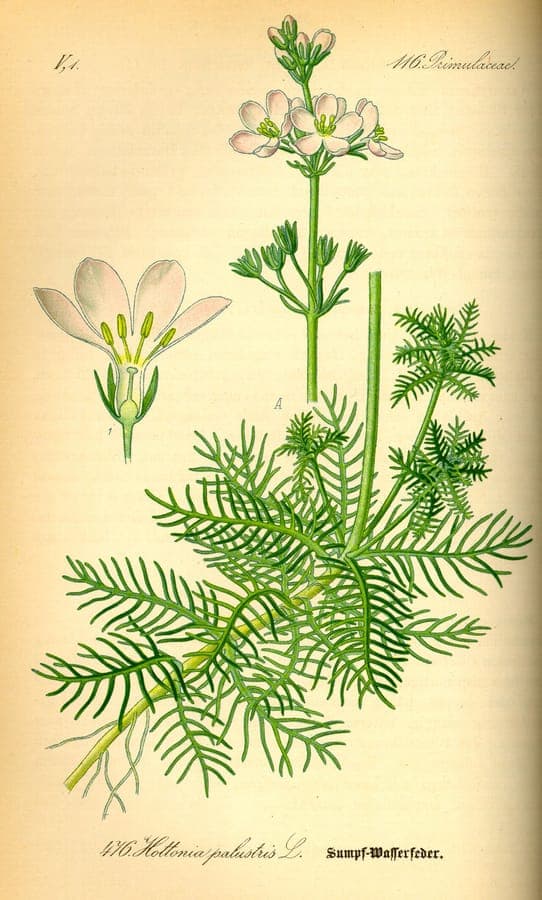
Water-violet is instantly recognisable by its finely divided, feather-like submerged leaves that emerge in whorls along the stem. These leaves are bright to mid-green and give the plant a soft, airy texture beneath the surface. In May and June, it sends up delicate, erect flowering stems that rise 20–30 cm above the waterline. At the tips, clusters of small, star-shaped white flowers appear, each about 1–1.5 cm across. The blooms have a faint, sweet fragrance and attract hoverflies and small pollinating insects.
After flowering, seed capsules form and may disperse naturally in the water. By late summer, flowering slows, and the plant focuses on vegetative growth. In autumn, the foliage thins out, and the plant retreats into its rhizomes for winter dormancy.
Ideal location
Choose a spot with partial shade to full sun, but aim for around 6 out of 10 on the light scale-meaning 4 to 5 hours of indirect sunlight daily. Full midday sun in hot climates can encourage algae and heat stress, so a sheltered position is best. The plant thrives in water depths of 20 to 50 cm, so place potted specimens on planting shelves in your pond.
Avoid areas with strong water movement, like near fountains or filters. Water-violet likes calm conditions. A quiet corner of the pond, perhaps near the edge where light filters in gently, is perfect.
Soil requirements
Water-violet prefers a humus-rich, slightly acidic substrate with a pH between 5.5 and 6.5. Use a heavy, loamy pond soil-never standard potting mix, which is too light and may float. You can amend garden soil with peat or composted leaf litter to improve organic content, but avoid lime or chalky materials that raise pH.
Top the soil with a thin layer of gravel or clay balls to prevent disturbance and root exposure. Do not fertilise heavily; excess nutrients promote algae and can harm delicate aquatic ecosystems. This plant is adapted to low-nutrient environments.
Free design
Want to see Water-violet: complete guide in your garden? Make a free design now.
Watering
As an aquatic species, Water-violet is always submerged, so 'watering' isn't a concern. However, water quality is critical. Maintain clear, cool, oxygen-rich water. Top up with rainwater when possible-tap water can be too alkaline or contain chlorine. In summer, monitor water levels closely; evaporation can concentrate nutrients and increase temperature, stressing the plant.
Weekly partial water changes (10–20%) help maintain balance. Avoid introducing fish in large numbers, as their waste can overload the system. A small population of goldfish is usually fine.
Pruning
Pruning needs are minimal. In autumn, trim back dead or decaying foliage to keep the pond clean and reduce sludge buildup. Use pond scissors or a rake-be gentle to avoid disturbing rhizomes. If the plant spreads beyond its space, thin it out in early spring before active growth resumes.
Avoid cutting flowering stems during May and June. Let seeds mature if you want natural reseeding. Otherwise, remove spent blooms to keep the pond tidy, though self-seeding is usually slow and manageable.
Maintenance calendar
- January: Dormant; no action needed
- February: Check for early growth, leave undisturbed
- March: Remove old foliage, inspect rhizomes
- April: Plant or divide rhizomes in pots or pond soil
- May: Flowers emerge; ensure cool, shaded conditions
- June: Peak bloom; monitor water clarity
- July: Flowering ends; watch for algae
- August: Maintain water levels, avoid disturbance
- September: Trim dying leaves
- October: Cut back and divide if needed
- November: Prepare for dormancy
- December: Fully dormant; protect from deep freeze
Use the seasonal planner on gardenworld.app to get custom reminders based on your local climate and USDA hardiness zone (ideal: 5–8).
Winter hardiness
Water-violet is fully hardy in USDA zones 5 to 8. Rhizomes survive winter under water as long as the pond doesn't freeze solid. A depth of at least 60 cm provides sufficient insulation. In shallow ponds, consider moving potted plants to deeper zones or storing them in a cool, frost-free, water-filled container.
Ensure gas exchange by keeping a hole in the ice. A pond heater or bubbler can prevent complete icing over.
Companion plants
Pair Water-violet with other slow-growing, non-invasive aquatics. Good companions include frogbit (Hydrocharis morsus-ranae), water starwort (Callitriche spp.), and slender sedge (Carex lasiocarpa). These share similar pH and light needs and won't outcompete it.
Avoid fast-spreading plants like water hyacinth or parrot's feather unless you have a large pond with containment strategies. Marginal plants like marsh marigold (Caltha palustris) or purple loosestrife (Lythrum salicaria) add seasonal colour nearby.
Closing
Hottonia palustris brings understated beauty to any water garden. Its feathery foliage and delicate spring blooms create movement and interest below and above the surface. It's easy to grow, winter-hardy, and ecologically sound. Buy potted plants from reputable garden centres-look for healthy green growth and firm rhizomes. With proper placement and care, Water-violet will return reliably each year, enhancing your pond's natural charm.
Want to see Water-violet: complete guide in your garden? Make a free design now.
Upload a photo, pick a style, and get a photorealistic design with plant list in under a minute.
No credit card required


Similar plants
Primula incana: complete guide to silvery alpine primrose
Primula incana
Silvery primrose (Primula incana), a delicate alpine flower with white blooms and powdered grey-green leaves. Growing, care, and cultivation guide.
Mealy cowslip: complete guide
Primula pulverulenta
Grow the Mealy cowslip (Primula pulverulenta): striking candelabra flowers in red and purple tones, moisture-loving and ideal for shady, damp garden corners.
Cliff dwarf-primrose: complete guide
Androsace laevigata
Full guide to growing Androsace laevigata, a rare Pacific Northwest alpine cushion plant. Planting, care, and garden design tips explained.