
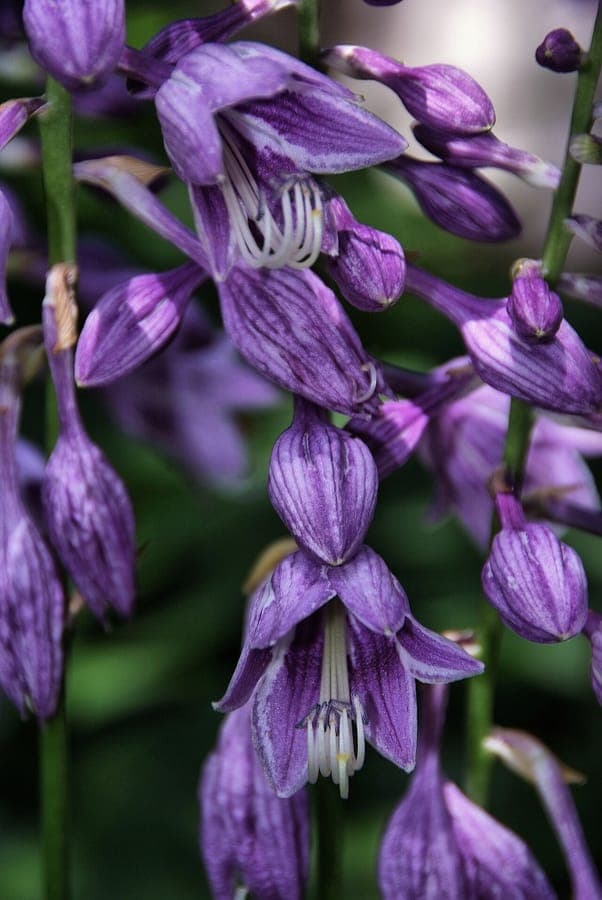
Carl Wycoff from Nevada, USA / CC BY 2.0, via Wikimedia Commons
Blue plantain-lily: complete guide
Hosta ventricosa
Want to see Blue plantain-lily: complete guide in your garden?
1 minute, no credit card
Overview
Hosta ventricosa, commonly known as the Blue plantain-lily, is a dependable, herbaceous perennial that brings lush texture and quiet elegance to shaded garden areas. Native to south-central and southeastern China, this member of the Asparagaceae family thrives in USDA hardiness zones 3 through 9, making it a solid choice for temperate and cooler climates across the UK, North America, and northern Europe. Its robust growth habit and resistance to common garden stressors have earned it a loyal following among gardeners who value both beauty and practicality.
This hosta forms dense, spreading clumps over time, reaching maturity in a few growing seasons. It's particularly valued for its ability to fill in bare spots under trees or along woodland borders without becoming invasive. If you're planning a shady border, gardenworld.app offers smart layout tools to help you position Hosta ventricosa for maximum visual impact and healthy growth.
Appearance & bloom cycle
Mature plants typically grow 50–60 cm tall with a spread of 60–80 cm. The leaves are broad, heart-shaped, and held on sturdy, upright petioles. They unfurl in spring with a rich, dark green hue that often develops a subtle blue-grey sheen in summer, especially in partial shade. The surface is smooth and slightly waxy, contributing to its resilience.
From July to early September, tall scapes rise above the foliage, reaching 60–70 cm in height. These bear drooping, bell-shaped flowers in a soft purple-blue shade. Each inflorescence carries multiple blooms arranged in a loose raceme. The flowers have a faint, sweet fragrance, most noticeable in the evening, and attract pollinators like bumblebees and moths. Bloom duration averages three to four weeks.
Ideal location
Blue plantain-lily performs best in partial to full shade. A spot beneath a deciduous tree with dappled light - think silver birch or hornbeam - provides the ideal microclimate. While it can tolerate morning sun, intense afternoon rays will scorch the leaves, causing browning at the edges. North- or east-facing borders are perfect.
Avoid deep, dry shade under dense evergreens, as the combination of root competition and low light hinders growth. Using gardenworld.app, you can simulate sun and shade patterns in your garden to pinpoint the best planting spot based on seasonal light changes.
Soil requirements
This hosta prefers moist, well-drained, humus-rich soil. A pH between 6.0 and 7.5 is optimal. Heavy clay soils benefit from the addition of compost or well-rotted manure to improve drainage and aeration. Sandy soils need organic matter like leaf mould or compost to increase water retention.
When planting, amend the hole with a generous amount of compost. Avoid compacted or waterlogged soils - Hosta ventricosa dislikes sitting in soggy conditions, which can lead to root rot.
Free design
Want to see Blue plantain-lily: complete guide in your garden? Make a free design now.
Watering
Consistent moisture is key. Water deeply once or twice a week during the growing season (April to September), especially in dry spells. Young plants in their first year need extra attention - aim for 10–15 litres per plant weekly during droughts.
Use soaker hoses or water at the base to keep foliage dry and reduce the risk of fungal diseases like anthracnose. Mulching with leaf mould or shredded bark helps retain moisture and suppress weeds.
Pruning
No formal pruning is required, but removing damaged, diseased, or dead leaves improves appearance and hygiene. Cut back foliage in late autumn or early spring, leaving about 5 cm of stem above ground. This prevents pest harbourage and tidies the garden.
Spent flower stalks can be trimmed after blooming to redirect energy into root and leaf development. Use clean, sharp secateurs to avoid spreading pathogens.
Maintenance calendar
- January–February: Inspect for lingering debris; protect emerging shoots from late frosts with fleece if needed.
- March: Clear old foliage. Apply a layer of compost around the base.
- April–May: New shoots emerge. Begin monthly feeding with a balanced liquid fertiliser.
- June–July: Monitor for slugs, snails, and aphids. Water regularly during dry periods.
- August–September: Peak bloom. Remove faded flower spikes if desired.
- October–December: Let foliage die back naturally. Apply a light mulch of compost or leaf litter for winter protection.
Winter hardiness
Fully hardy down to -35°C (USDA zone 3). The plant dies back to the crown in winter and re-emerges strongly in spring. Established clumps need little protection, but young plants benefit from a 5 cm mulch layer to insulate roots.
In containers, move pots to a sheltered spot or wrap with hessian in harsh winters, as root balls are more exposed to freezing.
Companion plants
Pair Hosta ventricosa with other shade lovers like Astilbe, Heuchera, ferns, and Pulmonaria. Their contrasting textures and heights create visual interest. Use low growers like Brunnera macrophylla or Epimedium to fill gaps at the base.
Avoid aggressive spreaders like mint or goutweed, which can overwhelm the hosta. Stick to well-behaved perennials that allow space for the clump to expand.
Closing
Hosta ventricosa is a quiet achiever in the shade garden - undemanding, long-lived, and visually satisfying. With minimal care, it forms a lush, architectural presence that evolves beautifully through the seasons. Its bloom adds a touch of delicate colour when many other perennials are winding down.
You can find Blue plantain-lily at most garden centres, including well-known retailers like B&Q, Wyevale, and local independents. For layout inspiration and planting combos, check out gardenworld.app - it's a smart way to design a garden that works as hard as you do.
Want to see Blue plantain-lily: complete guide in your garden? Make a free design now.
Upload a photo, pick a style, and get a photorealistic design with plant list in under a minute.
No credit card required


Similar plants
Narrow-leaved dracaena: complete guide
Dracaena angustifolia
Everything about Dracaena angustifolia - the narrow-leaved dracaena: location, care, overwintering and use as a houseplant or patio plant.
Chaparral yucca: complete guide to Hesperoyucca whipplei
Hesperoyucca whipplei
Hesperoyucca whipplei (Our Lord's candle) is a dramatic rosette-forming plant from California that produces a towering flower spike, ideal for dry and gravel gardens.
False lily-of-the-valley: complete guide
Maianthemum dilatatum
Everything about Maianthemum dilatatum, the false lily-of-the-valley. Care, shade location, propagation and garden combinations for this popular shade ground cover.