
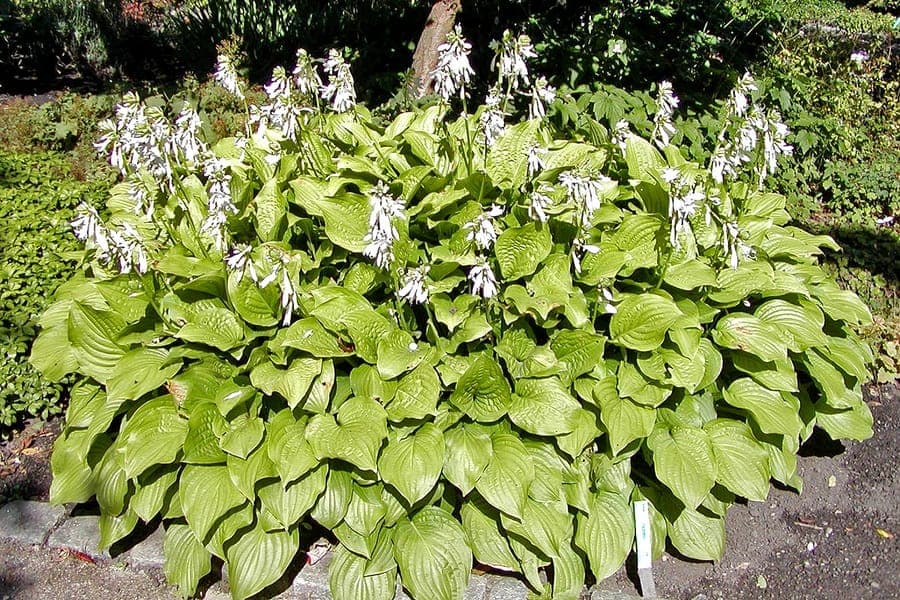
Stan Shebs / CC BY-SA 3.0, via Wikimedia Commons
August-lily: complete guide
Hosta plantaginea
Want to see August-lily: complete guide in your garden?
1 minute, no credit card
Overview
Hosta plantaginea, commonly known as August-lily, stands out in the hosta family for one rare trait: fragrance. While most hostas are grown for their foliage, this species earns its place in the garden with powerful, sweet-scented blooms that open in mid to late summer. Native to south-central and southeast China, it thrives as a herbaceous perennial in temperate climates. Its bold, lush clumps and evening perfume make it a standout in shaded borders and woodland gardens across the UK, US, and northern Europe.
What sets it apart is not just the scent – reminiscent of gardenia or lily – but the timing. When many perennials are past their peak, August-lily steps in with a bold floral display. On gardenworld.app, you can design a planting scheme that highlights fragrant plants like this one, placing them near patios or pathways for maximum impact.
Appearance & bloom cycle
The leaves of Hosta plantaginea are large, oval, and smooth with a slightly puckered texture, reaching up to 30 cm long and 15 cm wide. They emerge light green in spring and mature to a rich medium green. Unlike many hostas with variegated or blue-toned foliage, this species keeps a simple, elegant look all season.
Flowering occurs from late July through August on sturdy scapes that rise 60–80 cm above the foliage. The flowers are pure white, trumpet-shaped, and 7–10 cm in length. Each bloom opens in the evening and releases a strong, sweet fragrance that intensifies at night. The flowering period lasts 3–4 weeks, making it one of the longest-blooming hostas. Deadheading isn't necessary, but removing spent scapes keeps the plant tidy.
Ideal location
August-lily performs best in partial to full shade. A spot with morning sun and afternoon shade is ideal, especially in USDA zones 7 and higher where summer heat can scorch leaves. Avoid hot, dry south-facing sites. Instead, plant under deciduous trees, along north- or east-facing walls, or in shaded mixed borders.
Good air circulation helps prevent fungal issues, but protect the tall flower stalks from strong winds. If your garden is exposed, plant near shrubs or low structures for shelter. Use gardenworld.app to map sunlight patterns in your garden and identify the best microclimates for shade-loving plants like Hosta plantaginea.
Soil requirements
This hosta prefers fertile, moist, well-drained soil rich in organic matter. A pH between 6.0 and 7.5 is optimal. Heavy clay soils should be amended with compost and coarse sand to improve drainage. Sandy soils benefit from added compost or leaf mould to retain moisture.
Before planting, work in a generous amount of compost. Apply a 5 cm layer of organic mulch in spring to conserve moisture and suppress weeds. Keep mulch a few inches away from the crown to avoid rot.
Free design
Want to see August-lily: complete guide in your garden? Make a free design now.
Watering
Consistent moisture is key. Hosta plantaginea dislikes drought and will show stress through leaf scorch or stunted growth. Water deeply once a week during dry spells, more often in containers or sandy soils. Early morning watering reduces the risk of fungal diseases.
Avoid overhead watering when possible – wet foliage, especially at night, encourages powdery mildew. Use soaker hoses or water at soil level. Rainwater is preferred, as the plant is sensitive to high levels of chlorine and fluoride in tap water.
Pruning
Pruning is minimal. After flowering, cut back the flower stalks to the base to redirect energy. Leave the foliage intact through autumn and winter. The leaves provide insulation and slowly decompose to feed the soil. In early spring, remove any dead or damaged leaves before new growth emerges.
Do not cut back too early – waiting ensures the plant stores enough energy for the next season.
Maintenance calendar
- January: Check for crown damage; top up mulch if needed.
- February: No action required.
- March: Remove old foliage; apply compost.
- April: Inspect for slugs and snails; begin light feeding.
- May: Monitor soil moisture; watch for emerging flower spikes.
- June: Water regularly; protect from heat stress.
- July: Flowers open; enjoy evening fragrance.
- August: Peak bloom; avoid disturbing flower stalks.
- September: Reduce watering; let foliage stand.
- October: Leave leaves for winter protection.
- November: Check for disease; refresh mulch.
- December: Minimal care; ensure good drainage.
Winter hardiness
Hosta plantaginea is hardy in USDA zones 3–9. It tolerates winter temperatures down to -25°C. The plant dies back completely in winter and re-emerges in spring. No special winter protection is needed in most regions, but a layer of mulch helps in zone 3 or exposed sites.
Avoid planting in areas prone to winter wetness, as soggy soil leads to crown rot. Raised beds or sloped areas are ideal in damp climates.
Companion plants
Pair August-lily with other shade-tolerant perennials like ferns, Astilbe, or Heuchera. For scent synergy, plant near Nicotiana alata or night-blooming Phlox. Low growers like Tiarella or Epimedium work well as ground cover and reduce slug access.
Give each plant at least 50 cm of space to prevent overcrowding. Avoid invasive spreaders like mint or ground elder that could smother the hosta.
Closing
Hosta plantaginea brings rare fragrance and late-season interest to shaded gardens. With its bold foliage and elegant white blooms, it's a reliable performer year after year. Provide rich soil, consistent moisture, and a quiet spot in partial shade, and it will reward you with years of beauty.
You can find this hosta at garden centres across the UK and US. Retailers like OBI and Hornbach in Germany, Truffaut and Jardiland in France, and local garden centres in the UK and US often stock it in spring. When planning your layout, use gardenworld.app to visualise how Hosta plantaginea fits into your existing garden or to create a new shady border that celebrates scent and texture.
Want to see August-lily: complete guide in your garden? Make a free design now.
Upload a photo, pick a style, and get a photorealistic design with plant list in under a minute.
No credit card required


Similar plants
Narrow-leaved dracaena: complete guide
Dracaena angustifolia
Everything about Dracaena angustifolia - the narrow-leaved dracaena: location, care, overwintering and use as a houseplant or patio plant.
Chaparral yucca: complete guide to Hesperoyucca whipplei
Hesperoyucca whipplei
Hesperoyucca whipplei (Our Lord's candle) is a dramatic rosette-forming plant from California that produces a towering flower spike, ideal for dry and gravel gardens.
False lily-of-the-valley: complete guide
Maianthemum dilatatum
Everything about Maianthemum dilatatum, the false lily-of-the-valley. Care, shade location, propagation and garden combinations for this popular shade ground cover.