
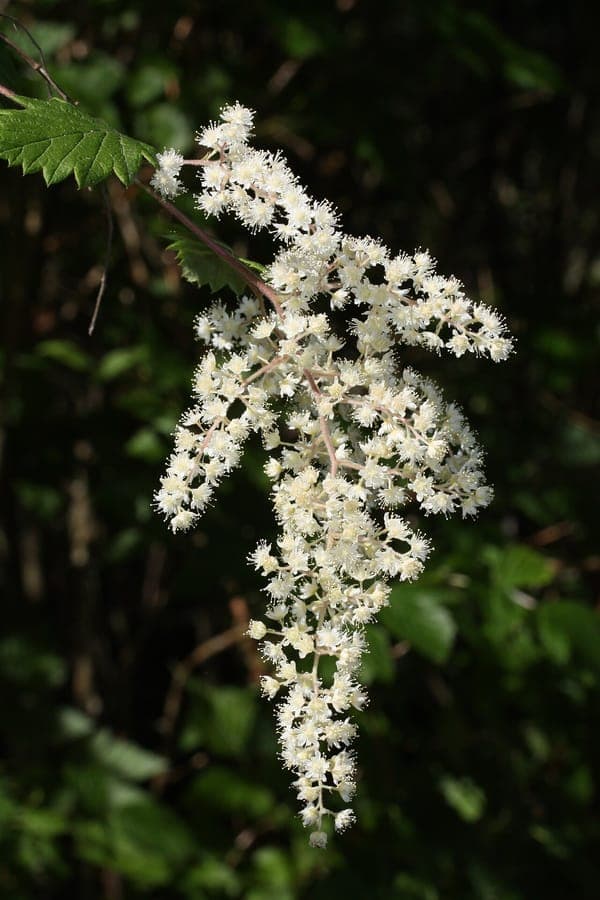
Walter Siegmund (talk) / CC BY-SA 3.0, via Wikimedia Commons
Holodiscus discolor: complete guide
Holodiscus discolor
Want to see Holodiscus discolor: complete guide in your garden?
1 minute, no credit card
Holodiscus discolor, commonly known as oceanspray, creambush, or hillside oceanspray, is a deciduous flowering shrub native to western North America from British Columbia to Mexico. This member of the Rosaceae (Rose) family is celebrated for its delicate, drooping plumes of small white flowers that appear in June through July, creating a cloud-like effect in the landscape. The plant is highly drought-tolerant once established and requires minimal ongoing maintenance.
Appearance and bloom
Oceanspray grows as a multi-stemmed shrub reaching 2 to 3 meters in height and spread. Foliage consists of small, linear to ovate leaves with pale green upper surfaces and hairy undersides. The most distinctive feature is the flower display: airy, drooping panicles of tiny white flowers cascade from branch tips, often reaching 20 to 25 centimeters in length. Individual flowers are minuscule, but their combined mass creates a spectacular creamy-white cloud effect. After bloom, the flower panicles dry to tan-brown, remaining attractive on the plant throughout autumn and winter, adding texture and interest to the dormant landscape.
Ideal location
Oceanspray demands full sun exposure for optimal flowering and form. Plant in locations receiving at least 6 to 8 hours of direct sunlight daily. In shaded positions, the plant becomes leggy with sparse flowering. The shrub is extremely wind-tolerant, thriving on exposed hillsides and ridges where few plants survive. Provide protection from severely desiccating winds that may cause branch damage or foliage scorch.
The plant is highly adaptable regarding elevation and latitude, growing from sea level to high mountain slopes across its native range.
Soil
Oceanspray is remarkably soil-tolerant, thriving in everything from poor, gravelly, drought-prone soils to rich, moist loams. Slightly acidic to neutral soils (pH 5.5-7.5) are optimal. The plant does not require soil amendment or fertilization; indeed, excessively rich soils may promote weak, vegetative growth at the expense of flowering. Once established, oceanspray requires virtually no supplemental irrigation even in semi-arid climates, making it invaluable for water-wise gardens.
Free design
Want to see Holodiscus discolor: complete guide in your garden? Make a free design now.
Watering
Watering requirements depend on regional climate and soil type. In areas receiving 500+ millimeters annual precipitation, supplemental watering is rarely needed. In drier climates, water regularly during the establishment period (first year) to encourage deep rooting, then reduce frequency significantly. Mature plants rarely require supplemental water except in exceptional drought years.
Pruning
Oceanspray requires minimal pruning once established. Remove deadwood and any crossing or wayward branches. After flowering, spent inflorescences can be removed for neatness, or left in place for their winter interest. Occasionally older canes can be thinned to rejuvenate growth, but heavy pruning is rarely necessary. The plant naturally assumes an attractive, fountain-like shape without intervention.
Maintenance calendar
January-March: Minimal care; no feeding required. April-May: Water during establishment period; growth begins. June-July: Peak flowering; no intervention needed. August-September: Growth slows; reduce watering in arid climates. October-December: Dormancy; minimal care; enjoy dried inflorescences.
Winter hardiness
Oceanspray is exceptionally hardy throughout USDA zones 5 to 8, tolerating winter temperatures as low as -30 degrees Celsius without damage. This makes it ideal for cold mountain regions and harsh climates where many shrubs struggle.
Companion plants
Oceanspray associates well with other drought-tolerant, native shrubs:
Ceanothus species: Brilliant blue flowers; also western North American natives. Garrya elliptica: Evergreen foliage; attractive catkin-like inflorescences. Native willows and dogwoods: Graceful forms; compatible growing requirements.
Conclusion
Oceanspray is a pragmatic choice for gardeners seeking a refined, hardy, drought-tolerant native shrub. The ethereal cream-white flower plumes and persistent seed heads provide multi-season interest. Once established, the plant demands virtually no maintenance, thriving on rainfall alone in most climates. Purchase from native plant nurseries or specialized retailers. Visit gardenworld.app for more native plant guides and sustainable landscape designs that celebrate regional flora.
Want to see Holodiscus discolor: complete guide in your garden? Make a free design now.
Upload a photo, pick a style, and get a photorealistic design with plant list in under a minute.
No credit card required


Similar plants
Siberian crab apple: complete guide
Malus x robusta
Complete guide to the Siberian crab apple (Malus x robusta): location, soil, pruning, winter hardiness and the best companion plants for your garden.
Chinese flowering crabapple (Malus x spectabilis): complete guide
Malus x spectabilis
Meet the Chinese flowering crabapple (Malus x spectabilis): a classic spring bloomer with carmine buds and pink blossom.
Potentilla crassinervia: complete guide
Potentilla crassinervia
Potentilla crassinervia, the Corsican cinquefoil, grows wild on Corsica and Sardinia's peaks. Discover how to grow this hardy alpine rock garden gem.