
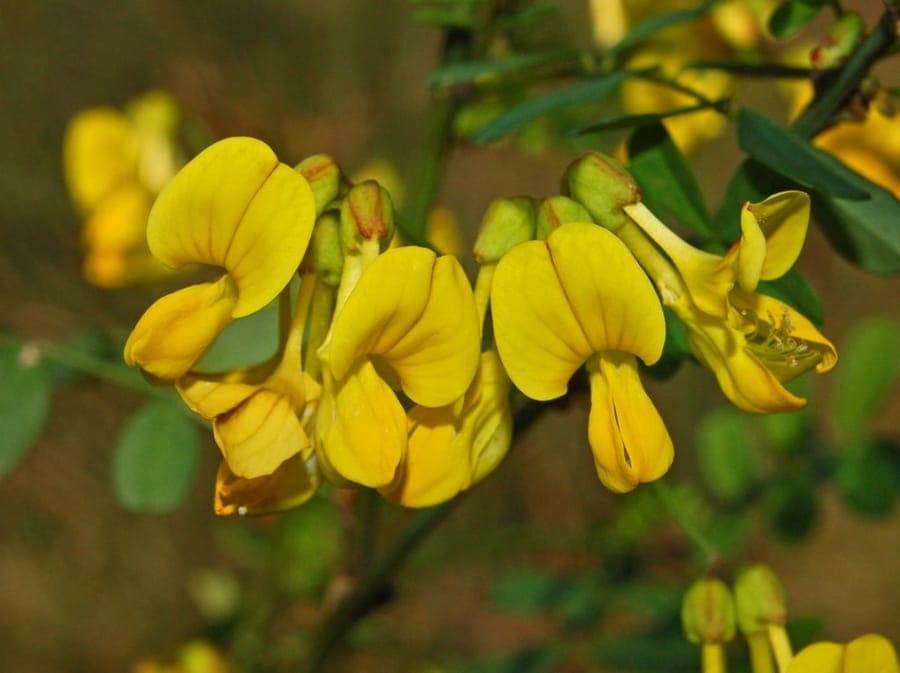
Hectonichus / CC BY-SA 3.0, via Wikimedia Commons
Hippocrepis emerus: complete guide
Hippocrepis emerus
Want to see Hippocrepis emerus: complete guide in your garden?
1 minute, no credit card
Overview
The Scorpion senna (Hippocrepis emerus), also known as Yellow horseshoe vetch, is an elegant Mediterranean shrub with glossy green foliage and yellow flowers. This compact shrub grows to about 1 meter tall and is especially renowned for its long blooming period from April to June. The plant is very low-maintenance and perfect for front garden designs on gardenworld.app.
Appearance and Bloom
Hippocrepis emerus has fine, compound leaves with 7-15 small leaflets per leaf. The plant forms a compact, ball-shaped silhouette about 80-120 cm tall and equally wide. The flowers are bright yellow and grow in small clusters of 3-8 florets. The pods have a characteristic horseshoe shape (hence the name 'hippo-crepis'), which is very decorative. Blooming period: April-June.
Ideal Location
Scorpion senna thrives best in full sun to partial shade with well-draining soil. In your front garden design from gardenworld.app, a sunny spot with at least 6 hours of direct sunlight daily is ideal. The plant tolerates partial shade but blooms most profusely in full sun.
Soil
This plant prefers alkaline to neutral soil (pH 7.5-8). The soil can be poor to moderately fertile and must absolutely drain well. On heavy clay soils, add sand and gravel. Scorpion senna performs well in stony, dry soil types that many other shrubs cannot survive.
Watering
Once established, this shrub is very drought-tolerant. Water regularly during the first growing year, but after establishment, only water during prolonged dry periods. Excessive moisture is harmful. Winter watering is not needed.
Free design
Want to see Hippocrepis emerus: complete guide in your garden? Make a free design now.
Pruning and Maintenance
Prune after blooming (June) to remain compact. Remove dead wood annually. Scorpion senna tolerates heavy pruning well, even if you cut it back significantly. Seedlings develop spontaneously under a flowering plant.
Maintenance Calendar
- March: Pruning, winter check
- April-June: Blooming period, no fertilizing needed
- July: Prune after blooming
- August-September: No maintenance
- October-February: Minimal maintenance, check drainage
Winter Hardiness
Hippocrepis emerus is fully hardy to -12°C (USDA zone 6-7). In temperate regions, no winter protection needed. The plant is adapted to Mediterranean winters and handles short frost periods easily. On wet sites, however, it's more vulnerable, so ensure perfectly draining soil.
Companion Plants
Pairs well with:
- Lavender: blooms slightly later, contrasts nicely
- Trochecène: similar requirements and growth pattern
- Cistus (Rock rose): similar conditions
- Rosemary: same water requirements
- Ornamental grasses like Stipa: provide texture
Closing Thoughts
Scorpion senna is an underrated jewel in Mediterranean and dry front garden designs. With its glossy foliage, long yellow blooming period, and minimal maintenance needs, it perfectly follows gardenworld.app's philosophy for sustainable garden design. Plant this beautiful shrub in full sun on well-draining soil, and enjoy years of blooming with minimal effort.
Want to design your front garden with Mediterranean plants? Discover gardenworld.app for inspiration and personalized advice.
Want to see Hippocrepis emerus: complete guide in your garden? Make a free design now.
Upload a photo, pick a style, and get a photorealistic design with plant list in under a minute.
No credit card required


Similar plants
Tall Silky Lupine: complete guide
Lupinus elatus
Tall silky lupine is a fast-growing Californian perennial with silvery foliage and blue-purple flower spikes, ideal for a prairie-style garden.
Garfield Lupine: complete guide
Lupinus garfieldensis
The Garfield lupine is a rare, fast-growing American perennial for alkaline, dry grassland gardens, with striking blue flower spikes.
Lupinus elegans: complete guide
Lupinus elegans
Lupinus elegans, the elegant lupine, is a spectacular blooming plant from Mexico with blue flower spikes. Care, cultivation and garden use.