
Wikimedia Commons / CC BY-SA 3.0, via Wikimedia Commons
Horseshoe-vetch: complete guide
Hippocrepis comosa
Want to see Horseshoe-vetch: complete guide in your garden?
1 minute, no credit card
Overview
Horseshoe-vetch (Hippocrepis comosa) is a resilient, herbaceous perennial that thrives in dry, exposed conditions. Native to chalky grasslands across southern and central Europe, this plant is a quiet performer in the garden but deserves more attention. It's not flashy in the way some showy perennials are, but it brings subtle beauty, long bloom time, and excellent value for pollinators. It's perfect for rock gardens, dry borders, or as a ground cover on poor soils where little else survives.
On gardenworld.app, you can design a low-water garden layout that highlights drought-tolerant species like horseshoe-vetch, reducing irrigation needs and supporting local biodiversity.
Appearance & bloom cycle
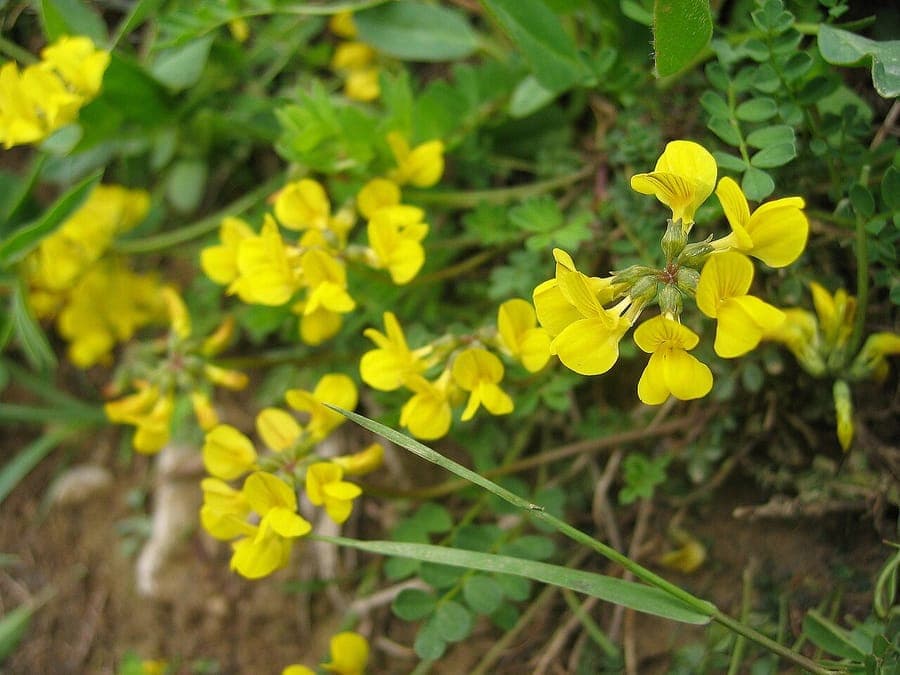
Horseshoe-vetch grows 15 to 30 cm tall and spreads up to 40 cm wide. Its foliage is fine-textured, pinnate, and dark green with a slight greyish tinge. The plant blooms from June through late August, producing clusters of bright yellow, globe-shaped flowers. Each cluster can contain dozens of small pea-like blooms, typical of the Fabaceae family.
The flowers attract a wide range of pollinators, particularly bees and bumblebees, and are a valuable nectar source during midsummer. After flowering, the plant develops distinctive curved seed pods that resemble a horseshoe-hence the common name. These pods persist into winter, adding structural interest.
Ideal location
Full sun is essential. Horseshoe-vetch needs at least 6 hours of direct sunlight daily and performs best on south- or southwest-facing slopes, rockeries, or dry stone walls. It struggles in shade, where it becomes leggy and floppy.
In the UK and similar climates (USDA zones 6–9), it does best in well-drained, calcareous soils. Avoid shady corners or damp, heavy clay. It's ideal for gravel gardens, alpine beds, or between paving stones where moisture drains quickly.
Soil requirements
This plant prefers lean, well-drained soils. Sandy, chalky, or loamy-sandy substrates with a pH of 6.5 to 8.0 are ideal. It thrives in poor soils and actually performs worse in rich, fertile ones, where it produces more foliage than flowers.
Do not add compost or manure. Excessive nutrients lead to weak, floppy growth. If your soil is heavy, amend it with grit or horticultural sand to improve drainage. A thin top layer of gravel helps prevent rot and mimics its natural habitat.
Watering
Once established, horseshoe-vetch is highly drought-tolerant. During the first few weeks after planting (May–June), water lightly once or twice a week if there's no rain. After that, it rarely needs supplemental watering, even in long dry spells.
Overwatering is a bigger threat than drought. Soggy soil leads to root rot, especially in winter. In average UK summers, natural rainfall is sufficient. Only water during extreme heatwaves if the foliage starts to wilt severely - but even then, it often recovers on its own.
Free design
Want to see Horseshoe-vetch: complete guide in your garden? Make a free design now.
Pruning
Pruning isn't required, but cutting back after flowering encourages a neater shape and may trigger a second, smaller bloom in September. Trim the plant down to about 10 cm in late August.
Remove dead stems or spent seed pods in autumn if desired, but leaving some in place provides winter interest and food for insects. Avoid heavy mulching-organic matter retains too much moisture.
Maintenance calendar
- Jan: Check for frost heave, especially in wet soils
- Feb: No action needed
- Mar: Lightly rake around base to aerate soil
- Apr: Watch for new growth
- May: Plant or transplant, water sparingly if dry
- Jun: Bloom begins, avoid fertilizing
- Jul: Peak bloom, monitor for prolonged drought
- Aug: Cut back after flowering
- Sep: Possible second bloom, seeds disperse naturally
- Oct: Leave seed pods, minimal care
- Nov: Let plant stand through winter
- Dec: Protect only in areas with prolonged wet-freeze cycles
Winter hardiness
Hippocrepis comosa is hardy in USDA zones 6 to 9. In the UK (zone 8), it survives most winters without protection. The crown usually stays green and resumes growth early in spring.
In regions with heavy, waterlogged winters, crown rot can occur. Improve drainage with grit or gravel mulch. Avoid organic mulches like bark or leaf litter, which hold moisture and promote rot.
Companion plants
Pair horseshoe-vetch with other drought-tolerant perennials like Thymus vulgaris, Sedum spectabile, Achillea millefolium, or Stachys lanata. These share similar soil and light needs. The yellow flowers contrast beautifully with purple salvias or silvery foliage like Artemisia.
It's also effective as a ground cover between stones or in crevices. On gardenworld.app, explore planting schemes for sunny, dry borders where horseshoe-vetch fits naturally with other low-water species.
Closing
Horseshoe-vetch is an underrated gem for low-maintenance, eco-friendly gardens. It asks for little-just sun, sharp drainage, and neglect-and gives back months of bloom and pollinator support. Perfect for gardeners who value resilience and natural beauty over high-input ornamentals.
You can find it at specialist nurseries or occasionally at major garden centres in the UK. While not always in stock, it's worth seeking out at retailers like local independents or online growers. With the right spot, it'll thrive for years with minimal effort.
Want to see Horseshoe-vetch: complete guide in your garden? Make a free design now.
Upload a photo, pick a style, and get a photorealistic design with plant list in under a minute.
No credit card required


Similar plants
Tall Silky Lupine: complete guide
Lupinus elatus
Tall silky lupine is a fast-growing Californian perennial with silvery foliage and blue-purple flower spikes, ideal for a prairie-style garden.
Garfield Lupine: complete guide
Lupinus garfieldensis
The Garfield lupine is a rare, fast-growing American perennial for alkaline, dry grassland gardens, with striking blue flower spikes.
Lupinus elegans: complete guide
Lupinus elegans
Lupinus elegans, the elegant lupine, is a spectacular blooming plant from Mexico with blue flower spikes. Care, cultivation and garden use.