
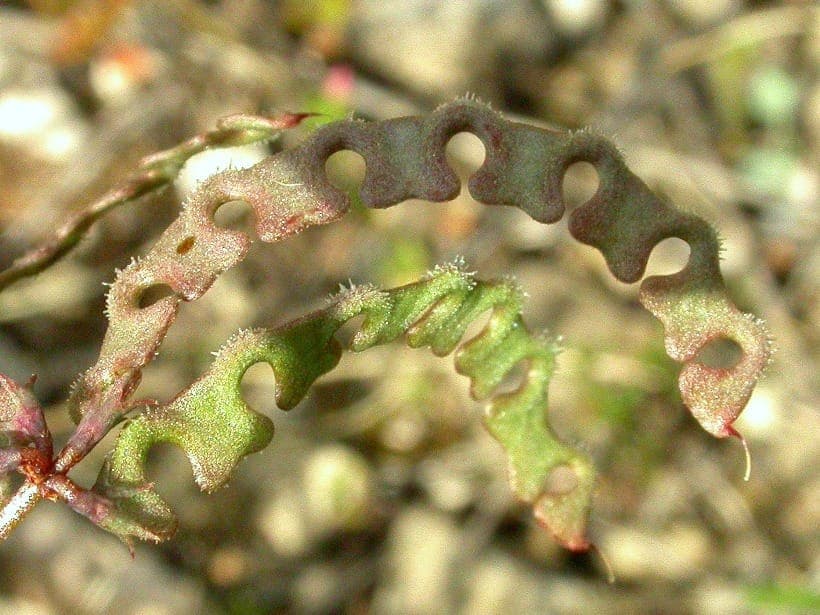
Vojtěch Zavadil / CC BY-SA 3.0, via Wikimedia Commons
Hippocrepis ciliata: complete guide
Hippocrepis ciliata
Want to see Hippocrepis ciliata: complete guide in your garden?
1 minute, no credit card
Overview
Hippocrepis ciliata, also known as eyelash horseshoe vetch or fer-a-cheval cilié in French, is an interesting small legume naturally occurring in the Mediterranean region. This low-growing plant produces yellow-orange flowers in spring-April through May-making it an early herald of the growing season. With fine foliage and compact growth, it's perfect for rocky gardens, between paving, or in alpine troughs. It's a plant asking little yet delivering considerable visual interest.
Appearance & Bloom
Hippocrepis ciliata is a low, spreading plant usually reaching no more than 20-30 centimeters tall, with similar or slightly greater width. Foliage is compound, with many small, gray-green leaflets together creating delicate, airy appearance. The unique plant characteristic is the fruit: seed pods shaped like horseshoes-hence the English name horseshoe vetch. Flowers themselves are small, bright yellow to orange-yellow, grouped in small clusters.
The flowering period extends from April through June, peaking in May. This timing is perfect for early season color in Mediterranean and dry gardens.
Ideal Location
Hippocrepis ciliata demands full sun. Minimum 6-8 hours direct daily sunlight is essential for healthy growth and abundant blooming. This is a true sun-lover that absolutely shines in warm, sunny garden corners. In shade the plant becomes weak and less floriferous.
The plant loves warm conditions-against south walls or in stone gardens that store heat is ideal.
Soil
Hippocrepis ciliata prefers well-draining soil. It's not particularly fussy and thrives in poor, rocky soils. A mixture of garden soil with 40-50% sand and small stones is ideal. Neutral to slightly alkaline pH (7.0-8.0) is preferred.
Like many legumes, this plant can fix nitrogen from air via root nodules, so rich nutrition is unnecessary.
Free design
Want to see Hippocrepis ciliata: complete guide in your garden? Make a free design now.
Watering
Once established, Hippocrepis ciliata needs minimal watering. This is a very drought-tolerant plant typically loving Mediterranean conditions. During first growing season water regularly until plant is well-established. After that, watering can be drastically reduced.
During the flowering period (spring) some extra water is helpful, but once weather warms, the plant needs virtually no water. Overwatering is more damaging than underwatering.
Pruning
Pruning is not really necessary for this compact plant. Spent flowers can be removed for neater appearance, but this is optional. The plant maintains its compact form naturally.
If the plant becomes too large or sparse, you can carefully thin older shoots in spring, but this need not be done regularly.
Maintenance Calendar
March-April: Plant in well-draining soil April-May: Flowering period, regular watering for establishment May-June: Continued blooming, reduced watering Summer: Minimal watering, plant rests Autumn: Very minimal watering Winter: Keep dry
Winter Hardiness
Hippocrepis ciliata is winter hardy in temperate climates in zone 7-9, meaning it can remain outdoors in many European regions. In harsher climates (zone 6 and colder) it tolerates light frosts, but heavy frosts with moisture can be problematic. In very wet winters, growing in an alpine trough or raised bed is better.
The plant prefers dry winter conditions.
Companion Plants
Hippocrepis ciliata looks wonderful paired with other Mediterranean and rocky garden plants:
- Lavender (Lavandula) for fragrance and color
- Stonecrops (Sedum) for texture and red accent
- Thyme (Thymus) for fragrance and fine texture
- Houseleek (Sempervivum) for decorative foliage
- Edelweiss (Leontopodium) for silver texture
In alpine gardens it fits perfectly at front of borders. At gardenworld.app find inspiration creating Mediterranean and rocky gardens. Visit gardenworld.app for more tips on drought-tolerant planting.
Closing Thoughts
Hippocrepis ciliata is perfect for anyone loving simple, low-maintenance Mediterranean planting. With its yellow spring blooms and minimal demands, it fits perfectly in modern, practical gardens. Plant in small groups for best effect, and enjoy years of flowering with virtually no effort.
Want to see Hippocrepis ciliata: complete guide in your garden? Make a free design now.
Upload a photo, pick a style, and get a photorealistic design with plant list in under a minute.
No credit card required


Similar plants
Tall Silky Lupine: complete guide
Lupinus elatus
Tall silky lupine is a fast-growing Californian perennial with silvery foliage and blue-purple flower spikes, ideal for a prairie-style garden.
Garfield Lupine: complete guide
Lupinus garfieldensis
The Garfield lupine is a rare, fast-growing American perennial for alkaline, dry grassland gardens, with striking blue flower spikes.
Lupinus elegans: complete guide
Lupinus elegans
Lupinus elegans, the elegant lupine, is a spectacular blooming plant from Mexico with blue flower spikes. Care, cultivation and garden use.