
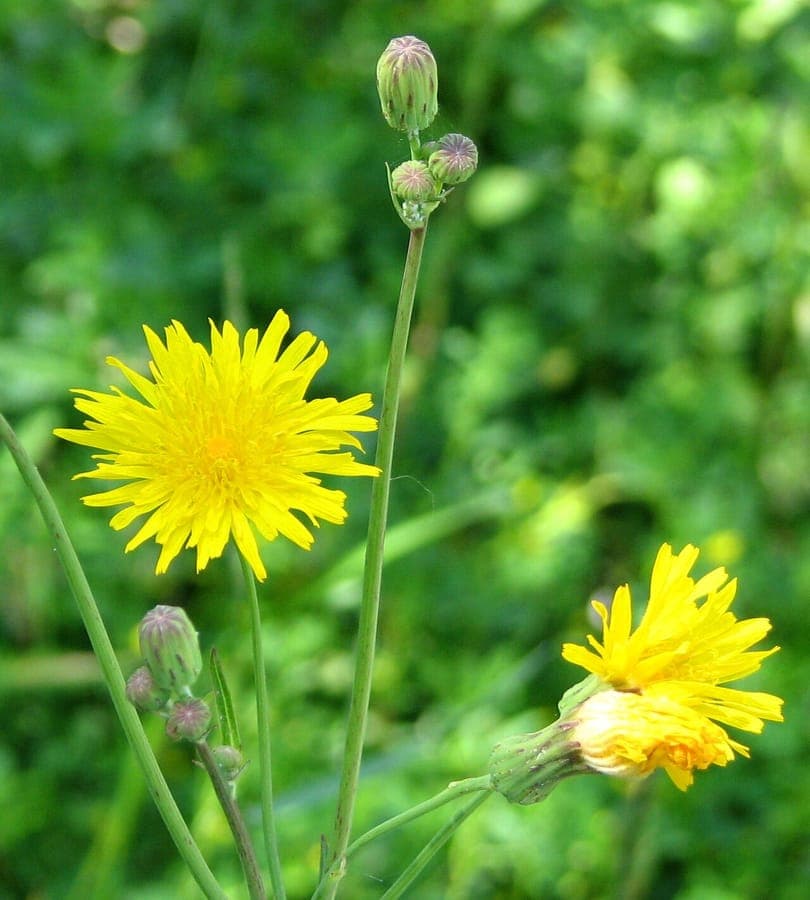
D. Gordon E. Robertson / CC BY-SA 3.0, via Wikimedia Commons
Narrow-leaf hawkweed: complete guide
Hieracium umbellatum
Want to see Narrow-leaf hawkweed: complete guide in your garden?
1 minute, no credit card
Overview
Narrow-leaf hawkweed (Hieracium umbellatum) is a resilient, low-growing forb native to temperate regions across Europe, Asia, and northern North America. It thrives in dry, open habitats like grasslands, forest edges, and rocky slopes. As a member of the Asteraceae family, it shares visual traits with dandelions and other hawkweeds, but its growth habit and flowering pattern set it apart. This plant spreads by seed and forms rosettes that slowly expand over time. It's not commonly found in mainstream gardens, but for those who value low-maintenance, ecologically sound plantings, it's a quiet winner. On gardenworld.app, you can design a naturalistic garden layout that integrates narrow-leaf hawkweed seamlessly into native plant communities.
Appearance & bloom cycle
Narrow-leaf hawkweed typically reaches 15 to 30 cm in height, with a basal rosette of narrow, lance-shaped leaves that are 5 to 10 cm long. The leaves are slightly hairy and often have toothed margins. A single, leafless flowering stem rises in late summer, bearing a flat-topped cluster of small, bright yellow flowers - usually 1.5 to 2 cm wide. Bloom time runs from August into September, peaking on warm, sunny days. Each flower head lasts a day or two, but the plant produces multiple heads over several weeks. After flowering, fluffy seed heads form and disperse via wind, much like dandelions. The overall effect is subtle but effective in naturalistic designs.
Ideal location
This plant prefers full sun to light shade, thriving in light level 6 - roughly 4 to 6 hours of direct sunlight daily. Choose open areas in your garden, such as rock gardens, dry slopes, or the front of a sunny border. It grows well in poor soils where other perennials might struggle. Avoid dense shade, as this leads to leggy growth and reduced flowering. For gardeners in USDA zones 4 to 8, narrow-leaf hawkweed adapts well to seasonal changes. You can use gardenworld.app to visualize how this plant fits into a low-water, high-biodiversity garden scheme with native grasses and late-blooming forbs.
Soil requirements
The ideal soil is well-drained, slightly acidic, with a pH between 5 and 5.5. Sandy or gravelly soils are perfect; clay-heavy soils should be amended with coarse sand or composted pine bark to improve drainage. Avoid rich, fertile soils - they promote competition from aggressive species. This plant is adapted to nutrient-poor conditions, so don't fertilize. It's a classic pioneer species, colonizing disturbed ground, but in the garden, it performs best when given space and minimal competition.
Free design
Want to see Narrow-leaf hawkweed: complete guide in your garden? Make a free design now.
Watering
Once established, narrow-leaf hawkweed is highly drought-tolerant. Water only during extended dry spells in the first growing season. Overwatering leads to root rot and poor performance. Use rainwater if possible, as tap water with high mineral content can alter pH over time. A light soak every few weeks during hot, dry August weeks is usually sufficient. The plant's deep taproot helps it survive dry conditions.
Pruning
No regular pruning is needed. If you want to limit self-seeding, deadhead spent flowers before seeds form. Cut stems just above the basal rosette using clean, sharp shears. Leaving a few seed heads allows natural reseeding, which can fill in bare spots over time. Avoid heavy mulching, which may trap moisture and encourage rot.
Maintenance calendar
- January: Dormant; no action required.
- February: Monitor for early seedlings in milder climates.
- March: Check soil drainage; remove competing weeds.
- April: Seedlings may emerge; thin or transplant as needed.
- May: Minimal care; watch for invasive grasses.
- June: Plant matures; no supplemental watering.
- July: Prepares for bloom; inspect for pests.
- August: Peak flowering; water only if extremely dry.
- September: Continue blooming; consider seed control.
- October: Cut back seed heads if desired.
- November: Leave foliage for winter interest and insulation.
- December: Dormant; avoid fertilizing.
Winter hardiness
Hardy in USDA zones 4 to 8, narrow-leaf hawkweed survives temperatures down to -34°C. It overwinters as rosettes, often under snow cover or leaf litter. In colder zones, a light mulch of pine needles or straw can help protect crowns, but avoid thick layers that retain moisture. In milder areas, it remains semi-evergreen.
Companion plants
Pair with late-summer bloomers like Festuca ovina, Eryngium planum, or Aster novae-angliae. These share similar soil and light preferences. Avoid heavy feeders like hostas or daylilies, which outcompete it. In rock gardens or gravel beds, it combines well with Thymus species or Sedum. You'll find compatible natives at garden centres like those stocking eco-friendly or wildflower mixes.
Closing
Narrow-leaf hawkweed isn't flashy, but it brings quiet resilience to the garden. It asks for little and gives back in ecological value - supporting pollinators, stabilizing soil, and adding seasonal texture. Whether tucked into a stone wall or dotting a meadow, it earns its place. Let it find its niche, and over the years, you'll appreciate its steady presence. With tools like gardenworld.app, you can plan a garden that works with nature, not against it, using plants like narrow-leaf hawkweed to build quiet beauty.
Want to see Narrow-leaf hawkweed: complete guide in your garden? Make a free design now.
Upload a photo, pick a style, and get a photorealistic design with plant list in under a minute.
No credit card required


Similar plants
Calendula stellata: complete guide
Calendula stellata
Complete guide to Calendula stellata, the star-flowered marigold from Sicily: location, soil, watering and companion planting tips.
Korean chrysanthemum: complete guide
Chrysanthemum x rubellum
Chrysanthemum x rubellum is a hardy autumn perennial with single pink to copper flowers from August to November. Care and combinations.
Helianthus divaricatus: complete guide
Helianthus divaricatus
Helianthus divaricatus is a North American woodland sunflower with yellow summer blooms, ideal for naturalistic borders and shady edges.