
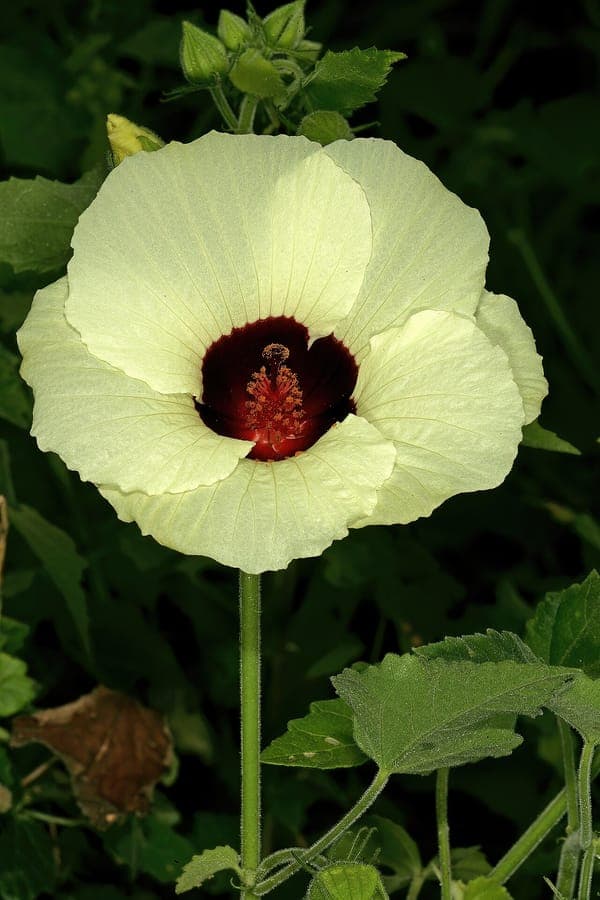
SAplants / CC BY-SA 4.0, via Wikimedia Commons
Hibiscus vitifolius: complete guide
Hibiscus vitifolius
Want to see Hibiscus vitifolius: complete guide in your garden?
1 minute, no credit card
Overview
Hibiscus vitifolius, known as tropical rose-mallow or grape-leaved hibiscus, is a stunning tropical shrub from the Malvaceae family. Native to tropical and subtropical regions of the Old World, from Africa to Asia, this species captivates with large, showy blooms and distinctive grape-like foliage.
Under ideal conditions, this plant reaches 6-13 feet (2-4 meters) in height, forming a dense, lush shrub. In cooler climates, it requires container cultivation with indoor overwintering. This is truly a plant for tropical enthusiasts willing to invest extra care.
Appearance and Bloom
Hibiscus vitifolius features remarkable foliage of large, deeply lobed leaves resembling grape leaves, hence its botanical epithet. These leaves reach 3-6 inches (8-15 cm) and create a lush, opulent appearance.
The flowers are truly spectacular: large, rose-like blooms measuring 2.4-4 inches (6-10 cm) across in color variations from yellow, orange to red, depending on the individual plant. Each petal often features a dark center and characteristic constriction. Flowers appear abundantly during warm months.
Ideal Location
This tropical hibiscus demands abundant sunlight for optimal flowering. Provide full sun with at least six hours of direct daily exposure. In warm climates, afternoon shade may be beneficial, but in temperate zones, full sun is essential.
The plant is highly frost-sensitive. Even in southern Netherlands, frost causes serious damage. This is truly a plant for Mediterranean climates or container cultivation in cooler regions with indoor winter storage.
Provide wind protection where possible, as strong winds damage young foliage.
Soil
Use fertile, well-draining potting or garden soil. Unlike desert hibiscus species, this tropical form appreciates moisture and nutrition. Amend standard garden soil with organic matter (compost) to approximately 25-30%.
Preferred pH is slightly acidic to neutral (6.0-7.0). Container cultivation often uses equal parts peat, compost, and perlite.
Watering
Hibiscus vitifolius requires more water than desert cousins. Keep soil consistently moist (not waterlogged) during the growing season. In hot, dry periods, daily watering may be necessary.
During winter dormancy, significantly reduce watering frequency. While the plant tolerates drier conditions, drought reduces flowering. Maintain good drainage to prevent root rot. Water at the base to prevent fungal issues on foliage.
Free design
Want to see Hibiscus vitifolius: complete guide in your garden? Make a free design now.
Pruning
Regular pruning promotes bushy form and abundant flowering. In early spring, cut back to approximately two-thirds of previous year's growth. This stimulates branching and increases flower buds.
Throughout the season, remove spent flowers and weak or crossing branches. In warm climates, light pruning two to three times per season encourages continuous flowering.
Strong pruning of young plants during the first two seasons helps establish strong basal structure.
Maintenance Calendar
Spring (March-May): Prune heavily, resume regular watering, begin feeding.
Summer (June-September): Regular watering, weekly feeding, pest monitoring, deadheading.
Fall (October-November): Gradually reduce feeding and water, prepare for dormancy.
Winter (December-February): Minimal feeding and water (indoors in cool climates), await transport back outside.
Winter Hardiness
Hibiscus vitifolius is completely frost-tender. It dies below 41-50 Fahrenheit (5-10 Celsius) and cannot survive frozen conditions. In cooler regions:
- In Mediterranean climates (southern France, Spain, southern Italy), outdoor cultivation is possible with winter protection
- In northern zones, treat as a container plant, moving indoors for winter
Overwinter indoors in warm locations (minimum 50-59 Fahrenheit/10-15 Celsius) with maximum light. Slow winter growth is normal.
Companion Plants
In tropical settings, pair with:
- Other tropical Hibiscus species: Matching care requirements
- Bougainvillea: Spectacular flowering, similar heat needs
- Plumbago: Blue flowers, tropical appeal
- Passiflora: Exotic passion flowers, climbing character
- Bromeliads: Tropical foliage, complementary form
Closing Thoughts
Hibiscus vitifolius is a true treasure for tropical gardens. If you possess a warm greenhouse or south-facing room, you can maintain this spectacular plant year-round. The reward for your effort is spectacular blooms that bring authentic tropics indoors.
When cultivating from seed, ensure consistent warmth (68-77 Fahrenheit/20-25 Celsius) and abundant light. This is not a casual houseplant, but for dedicated plant lovers, it offers pure tropical joy.
Want to see Hibiscus vitifolius: complete guide in your garden? Make a free design now.
Upload a photo, pick a style, and get a photorealistic design with plant list in under a minute.
No credit card required


Similar plants
Crimean linden: complete guide
Tilia × euchlora
Crimean linden is an elegant, fast-growing shade tree ideal for large gardens. Discover cultivars, spacing, maintenance tips and winter hardiness.
California flannelbush: complete guide
Fremontodendron californicum
Everything about California flannelbush (Fremontodendron californicum): sunny placement, drainage, pruning and care for this spectacular yellow-flowering shrub.
Hairy rose mallow: complete guide
Hibiscus moscheutos subsp. lasiocarpos
Full growing guide for hairy rose mallow (Hibiscus moscheutos subsp. lasiocarpos): location, soil, watering, winter hardiness and garden design tips.