
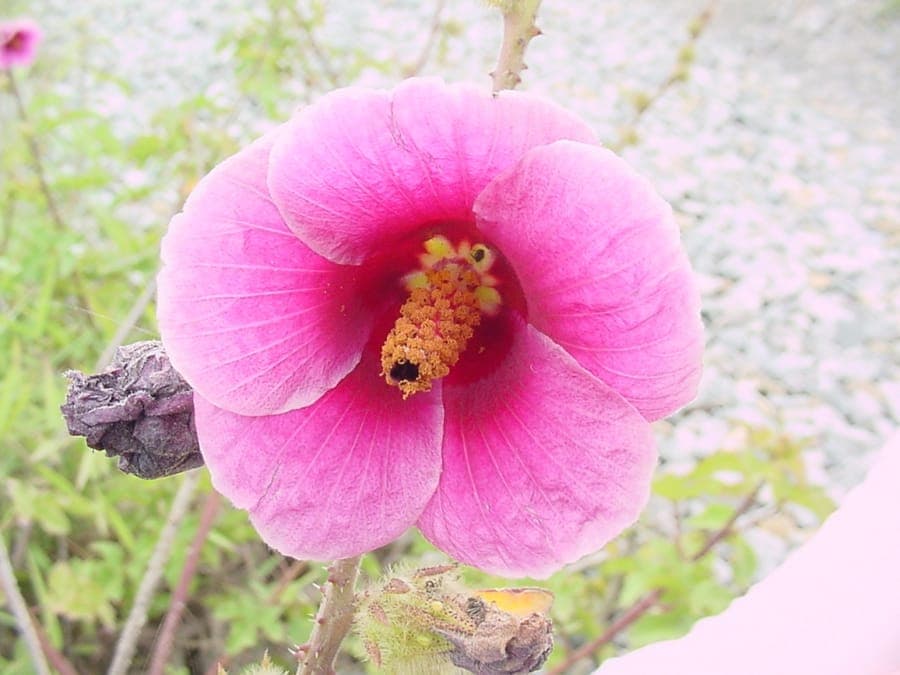
Marcia Stefani / CC BY 2.0, via Wikimedia Commons
Hibiscus striatus: complete guide
Hibiscus striatus
Want to see Hibiscus striatus: complete guide in your garden?
1 minute, no credit card
Overview
Hibiscus striatus, commonly known as the striped rosemallow or striped rose-mallow, is an impressive tropical shrub native to Central and South America. This plant belongs to the Malvaceae family and is renowned for its striking flowers with characteristic lines and stripes. In its natural habitat, it thrives in warm, humid climates and has spread to tropical and subtropical regions worldwide.
The striped rosemallow is a popular choice for gardens in warm climates due to its extended flowering period and attractive blooms. If you're seeking an exotic shrub to transform your garden, hibiscus striatus is certainly worthwhile. Discover more inspiration for tropical garden designs on gardenworld.app.
Appearance and Bloom
The flowers of Hibiscus striatus are the most striking feature of this plant. They measure 7-10 centimeters in diameter and display deep, glossy colors with characteristic stripes running from the heart toward the petal edges. The petals typically feature shades of red, pink, or orange with darker veins creating a striped pattern. The prominent stamen extends from the flower's center with its yellow stamens.
The leaves are lance-shaped to oval, approximately 5-10 centimeters long, with a smooth, glossy surface. They grow alternately along the stems with clearly visible veins. The plant grows as a shrub and can reach 1.5-2 meters in height depending on growing conditions. In warm climates, hibiscus striatus may bloom year-round, with peaks in spring and summer.
Ideal Location
Hibiscus striatus thrives in locations with abundant sunlight. The plant requires at least 6-8 hours of direct sun daily to bloom optimally. In regions with very hot climates, light afternoon shade may be beneficial but is not essential.
The plant is sensitive to cold and cannot tolerate frost. In climates where temperatures drop below 10 degrees Celsius, hibiscus striatus should be grown in containers and moved indoors during winter. Place the plant in a sheltered location protected from strong winds that could damage branches.
Avoid positioning near walls or paved surfaces radiating excessive heat, as this can cause dehydration. However, good air circulation is important for disease prevention.
Soil
Hibiscus striatus prefers well-draining, fertile soil. Heavier clay soils should be amended with compost or peat to improve drainage. The ideal pH ranges from 6.0 to 7.0.
Prepare the planting hole by making it at least twice the size of the root ball. Generously add organic material such as peat, leaf mold, and well-rotted manure. This not only improves drainage but also adds nutrients the plant needs during early growth.
For container cultivation, use a light mixture of potting soil (40%), coconut coir (30%), and perlite (30%). This ensures excellent drainage while retaining adequate moisture. Annually replace the top 5-10 centimeters of potting soil in spring.
Free design
Want to see Hibiscus striatus: complete guide in your garden? Make a free design now.
Watering
Hibiscus striatus enjoys regular water, especially during the growing and flowering season. Ensure the soil stays moist but not waterlogged. Water when the soil feels dry about 5 centimeters deep.
During warm periods, you may need to water daily, especially for container plants. In winter, significantly reduce watering frequency. Water in the morning to prevent disease. Avoid wetting foliage when possible.
Never leave pots in trays with standing water, as this causes root rot. Use lukewarm water since cold water can shock the plant. In hard water areas, rainwater is preferable.
Pruning
Regular pruning encourages bushier growth and better flowering on hibiscus striatus. The best pruning time is spring, just before active growth begins. Cut branches back to approximately one-third of their current length.
During the growing season, remove dead or weak branches and water sprouts. Usually new flower buds emerge from fallen or damaged buds. Regularly deadhead spent flowers to encourage more bloom production.
Careful pruning outside the season is acceptable, but avoid fall or late-year pruning as this encourages tender new growth vulnerable to frost damage.
Maintenance Calendar
January-February: Winter rest period. Minimal water, no fertilizer. Daily check for pests, especially spider mites.
March-April: Growing season begins. Prune, add fresh potting soil, thorough inspection. Start regular feeding every 2 weeks.
May-August: Peak flowering period. Regular feeding and watering. Daily deadheading. Monitor for pest outbreaks.
September-October: Gradually reduce feeding. Water as needed.
November-December: Prepare for rest. No more feeding, limited water. Bring container plants indoors.
Winter Hardiness
Hibiscus striatus is very temperature-sensitive and cannot tolerate frost. This tropical plant can grow outdoors in warm climates but must be container-grown and brought indoors during winter in temperate zones.
The plant can briefly tolerate temperatures just above freezing, but below 0 degrees Celsius it will likely die. Temperatures below 10 degrees Celsius cause leaf drop, growth slowdown, and possible plant death.
In Mediterranean and warmer subtropical climates, hibiscus striatus can remain outdoors. Plant against a south-facing wall for extra warmth and protection.
Companion Plants
Hibiscus striatus grows well alongside other tropical plants with similar warmth and light requirements. Combine it with flamboyant (Delonix regia), frangipani (Plumeria), or other tropical flowering shrubs.
For groundcover, use tropical plants like Plumbago or similar heat-loving species. These create a lower layer improving garden depth without shading the hibiscus.
Avoid planting hibiscus striatus near deep-rooted trees as they compete for water. Maintain at least 1.5 meters spacing from other plants.
Conclusion
Hibiscus striatus is a beautiful addition to warm gardens and an absolute showstopper when properly cultivated. With abundant sunlight, well-draining soil, regular watering, and winter protection in cold climates, you'll enjoy spectacular flowers for years.
Whether creating a tropical garden or adding exotic elegance to your landscape, hibiscus striatus delivers essential color and form. Find it at quality garden retailers for the best selection. Explore gardenworld.app for more companion plant suggestions and garden design inspiration. Transform your garden with this breathtaking hibiscus!
Want to see Hibiscus striatus: complete guide in your garden? Make a free design now.
Upload a photo, pick a style, and get a photorealistic design with plant list in under a minute.
No credit card required


Similar plants
Crimean linden: complete guide
Tilia × euchlora
Crimean linden is an elegant, fast-growing shade tree ideal for large gardens. Discover cultivars, spacing, maintenance tips and winter hardiness.
California flannelbush: complete guide
Fremontodendron californicum
Everything about California flannelbush (Fremontodendron californicum): sunny placement, drainage, pruning and care for this spectacular yellow-flowering shrub.
Hairy rose mallow: complete guide
Hibiscus moscheutos subsp. lasiocarpos
Full growing guide for hairy rose mallow (Hibiscus moscheutos subsp. lasiocarpos): location, soil, watering, winter hardiness and garden design tips.