
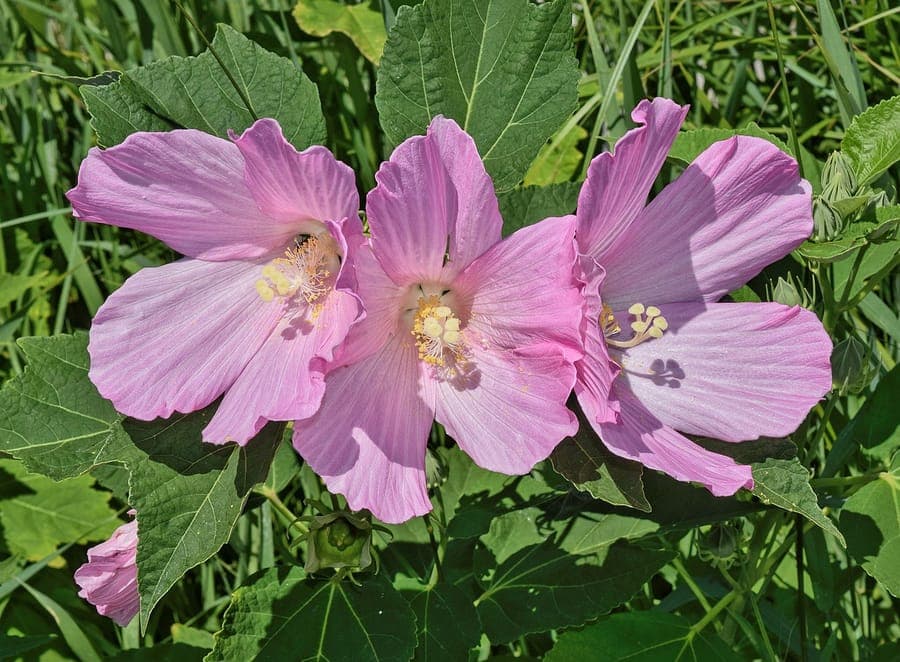
The Cosmonaut / CC BY-SA 2.5 ca, via Wikimedia Commons
Mallow-rose: complete guide
Hibiscus moscheutos
Want to see Mallow-rose: complete guide in your garden?
1 minute, no credit card
Overview
Hibiscus moscheutos, commonly called Mallow-rose, is a standout in any summer garden. Native to wetlands across the eastern and southern US, this herbaceous perennial or subshrub brings tropical flair without the tender care. It thrives in USDA zones 5 to 9, making it a solid choice for gardens in the UK, Pacific Northwest, and much of central and eastern North America. In the garden, it reaches 4 to 6 feet tall with a spread of about 3 feet, forming an upright, bushy presence.
On gardenworld.app, you can design a planting scheme that highlights the vertical impact of Mallow-rose, especially in moist borders or near water features. It's not a plant that fades into the background - its size and bold blooms demand attention. Unlike tropical hibiscus, this one dies back to the ground each winter and re-emerges in late spring, so patience is key. Don't panic if it's late to show signs of life - it often waits until soil temperatures are consistently warm.
Appearance & bloom cycle
The flowers are the main event. Large, saucer-shaped blooms, 6 to 8 inches across, open from mid-July through September. They come in shades of white, soft pink, and pale red, always with a prominent dark red or maroon central eye. Each flower lasts just one day, but the plant produces so many buds that blooming appears continuous. On calm, sunny days, the flowers fully unfurl; on cloudy or windy days, they may stay half-closed.
The leaves are coarse-textured, triangular to ovate, with serrated edges and a deep green color. They emerge late - often not until late May or early June - and are prone to mildew in dry, crowded conditions. Proper spacing and airflow are essential. The plant grows on thick, hairy stems that become somewhat woody at the base, supporting the weight of the large blooms.
Ideal location
Full sun is non-negotiable for best flowering. Aim for at least 6 to 8 hours of direct sunlight daily. In partial shade, the plant becomes leggy, flops over, and produces fewer flowers. A south- or west-facing spot works best. It also benefits from some wind protection - those big blooms don't hold up well in strong gusts.
This hibiscus loves moisture, so plant it near pond edges, rain gardens, or in low-lying areas that stay damp. It handles occasional flooding well, which makes it a great choice for wet spots where other perennials fail.
Soil requirements
It tolerates a wide pH range - from 4.0 to 7.5 - so both slightly acidic and neutral soils are fine. The key is consistent moisture. Heavy clay soils are ideal because they retain water. If you're working with sandy soil, amend it with compost or well-rotted manure to improve water retention. A 2- to 3-inch layer of organic mulch (like composted leaves or bark) in spring helps keep roots cool and moist.
Avoid letting the soil dry out completely, especially in the first growing season. Once established, it's more resilient but still performs best with regular moisture.
Free design
Want to see Mallow-rose: complete guide in your garden? Make a free design now.
Watering
Keep the soil evenly moist, especially during the first summer. In dry spells, water deeply once or twice a week, applying at least 10 litres per plant. Drip irrigation or soaker hoses work well to deliver water directly to the roots without wetting the foliage, which reduces the risk of fungal diseases.
Signs of underwatering include wilting leaves and bud drop. Overwatering is rarely an issue unless the soil is compacted and doesn't drain.
Pruning
Prune in early spring, just as new growth begins to emerge. Cut back last year's stems to about 6 to 8 inches above ground level. This encourages strong, upright growth and prevents floppiness. Use clean, sharp pruners to avoid disease transmission.
If you prefer a more natural garden look, leave the stems standing over winter. They add structure and provide shelter for beneficial insects. Cut them back in March, before new shoots push through.
Maintenance calendar
- Jan: Check mulch layer; ensure root zone is protected
- Feb: Prepare tools for spring pruning
- Mar: Cut back old stems; apply fresh compost
- Apr: Watch for emerging shoots; protect from late frost
- May: Mulch again; monitor for pests
- Jun: Keep soil moist; check for mildew
- Jul: Peak bloom begins; water during dry spells
- Aug: Continue watering; deadhead if desired
- Sep: Flowers fade; reduce watering gradually
- Oct: Let foliage die back naturally
- Nov: Cut down if not done in spring; mulch heavily
- Dec: Dormant period; avoid disturbing soil
Winter hardiness
Hardy in USDA zones 5–9, Hibiscus moscheutos reliably survives winter with minimal care. In zone 5, a thick mulch layer (4–6 inches of leaves or straw) helps prevent root heaving. In containers, move pots to a sheltered area or wrap with burlap for insulation. The plant dies back completely in winter, so don't expect greenery until late spring.
Companion plants
Pair Mallow-rose with moisture-loving perennials like Eutrochium fistulosum, Iris laevigata, or Ligularia. For contrast, plant with goldenrod (Solidago), coneflowers (Echinacea), or black-eyed Susan (Rudbeck moving northward). These combinations create depth and extend seasonal interest.
Use gardenworld.app to visualise planting combinations that thrive in damp, sunny borders. Try grouping Mallow-rose with tall grasses and structural plants for a modern cottage look.
Closing
Mallow-rose is more than just a pretty face - it's a magnet for pollinators, especially bumblebees and hummingbirds. Its bold blooms and upright form make it a focal point in any border. With the right conditions - sun, moisture, and well-prepared soil - it becomes a dependable performer year after year. Pick up a healthy plant from well-stocked garden centres in early summer. Look for stocky stems and fresh green shoots. Avoid plants with yellowing leaves or signs of powdery mildew. Plant it where you can enjoy its summer spectacle - near a patio, path, or window - because when it blooms, it stops people in their tracks.
Want to see Mallow-rose: complete guide in your garden? Make a free design now.
Upload a photo, pick a style, and get a photorealistic design with plant list in under a minute.
10,000+ gardens designed already
No credit card required


Similar plants
Crimean linden: complete guide
Tilia × euchlora
Crimean linden is an elegant, fast-growing shade tree ideal for large gardens. Discover cultivars, spacing, maintenance tips and winter hardiness.
California flannelbush: complete guide
Fremontodendron californicum
Everything about California flannelbush (Fremontodendron californicum): sunny placement, drainage, pruning and care for this spectacular yellow-flowering shrub.
Hairy rose mallow: complete guide
Hibiscus moscheutos subsp. lasiocarpos
Full growing guide for hairy rose mallow (Hibiscus moscheutos subsp. lasiocarpos): location, soil, watering, winter hardiness and garden design tips.