
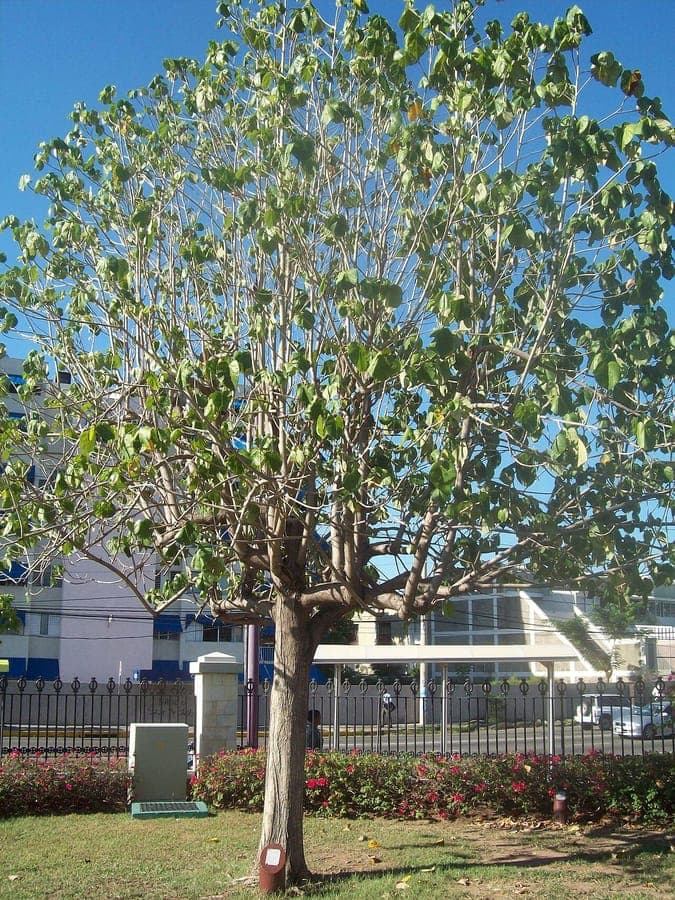
Jamrock1962 / Public domain, via Wikimedia Commons
Cuban bast (Hibiscus elatus): complete guide
Hibiscus elatus
Want to see Cuban bast (Hibiscus elatus): complete guide in your garden?
1 minute, no credit card
Overview
Hibiscus elatus, commonly known as Cuban bast or Blue Mahoe, is an impressive tropical to subtropical shrub native to Cuba and Jamaica. This plant is celebrated for its strong wood fiber traditionally used for bast production, earning it its common name. With its robust growth habits and attractive flowering, it is a valuable addition to warm gardens and landscape designs in more temperate climates where overwintering is possible.
Appearance & Bloom
Hibiscus elatus develops into an elegantly shaped shrub or small tree with an upright form. The plant reaches heights of 5-8 meters under optimal conditions. The leaves are large, glossy, and alternately arranged with a leathery texture. During the growing season, the plant produces stunning hibiscus flowers with five petals. The flowers vary in color from yellow to orange to red, depending on the specific cultivar. Each flower lasts just one day, but the plant continuously produces new flowers throughout the warm season.
Ideal Location
This tropical shrub thrives best in warm, sunny weather. Provide a location receiving at least 6-8 hours of direct sunlight daily. Shelter from strong winds is important, especially in coastal areas where salt wind can cause damage. In temperate climates, it is best grown in greenhouses or containers that can be brought indoors for winter. Plant it in zones where winter temperatures do not fall below 10-12 degrees Celsius.
Soil
Hibiscus elatus prefers well-draining, nutrient-rich soil. A light, sandy to clayey soil with added organic matter is ideal. The pH should be neutral to slightly acidic (pH 5.5-7.0). It is crucial to avoid waterlogging, so ensure good drainage. Mix perlite or coarse sand into potting soil if growing the plant in containers. Annual addition of compost improves soil structure and nutrition.
Watering
During the growing season (spring to fall), the plant needs regular watering. Keep the soil moist but not waterlogged. Water when the top 2 centimeters of soil feel dry. In hot periods, this may mean daily watering, especially for container plants. In winter, as growth slows, you can reduce watering. However, ensure the soil does not dry out completely. For regions with heavy rainfall, drip irrigation is recommended to prevent waste and maintain consistent moisture.
Free design
Want to see Cuban bast (Hibiscus elatus): complete guide in your garden? Make a free design now.
Pruning
Pruning promotes a fuller, more branched growth pattern. Begin in early spring by removing dead or damaged branches. Cut back overgrown wood to about one-third of its original length. This stimulates new flowering shoots. Remove crossing branches and those growing inward. For container plants, prune to shape as desired. Avoid heavy pruning in fall, as the plant approaches dormancy.
Maintenance Calendar
Spring: Begin growth with full feeding. Cut back older branches. Check for pests after winter rest. May to September: Regular watering and monthly feeding during the growing season. Top young plants for more branching. October: Lower feeding as growth slows. October to March: Minimal watering during winter dormancy. Regularly check for indoor fungi if kept indoors. Remove spent flowers (deadheading) to promote further blooming.
Winter Hardiness
Hibiscus elatus is not winter hardy in temperate zones. In regions where temperatures can fall below 5 degrees Celsius, it is best grown in pots that can be moved indoors. Place it in a bright, cool room with temperatures around 5-15 degrees Celsius during winter. In more southern regions, such as along the Mediterranean, it can remain outdoors with frost protection. A thick mulch layer around the base can help protect the roots.
Companion Plants
Cuban bast thrives alongside other Malvaceae family members and tropical specimens. Combine it with simultaneously blooming plants such as Lantana, Plumbago, or other hibiscus species for a staged blooming period. Lower-growing plants with yellow tones contrast beautifully with red to orange flowers. For container cultivation, add Scaevola, Iresine, or Portulaca for filling and cascading effects. In warm climates with lower frost risk, combine with Mediterranean plants such as rosemary or lavender for a Mediterranean character.
Conclusion
Hibiscus elatus offers years of tropical beauty and practical benefits with its strong fiber. With proper care, regular watering, and a sunny location, you can enjoy continuous blooms for many years. In temperate climates, this requires some preparation for overwintering, but the attractive flowers and interesting history make it worthwhile. For more information on acquisition and support, consult your local garden center or visit gardenworld.app for detailed garden design suggestions. Enjoy this beautiful tropical shrub!
Want to see Cuban bast (Hibiscus elatus): complete guide in your garden? Make a free design now.
Upload a photo, pick a style, and get a photorealistic design with plant list in under a minute.
No credit card required


Similar plants
Crimean linden: complete guide
Tilia × euchlora
Crimean linden is an elegant, fast-growing shade tree ideal for large gardens. Discover cultivars, spacing, maintenance tips and winter hardiness.
California flannelbush: complete guide
Fremontodendron californicum
Everything about California flannelbush (Fremontodendron californicum): sunny placement, drainage, pruning and care for this spectacular yellow-flowering shrub.
Hairy rose mallow: complete guide
Hibiscus moscheutos subsp. lasiocarpos
Full growing guide for hairy rose mallow (Hibiscus moscheutos subsp. lasiocarpos): location, soil, watering, winter hardiness and garden design tips.