
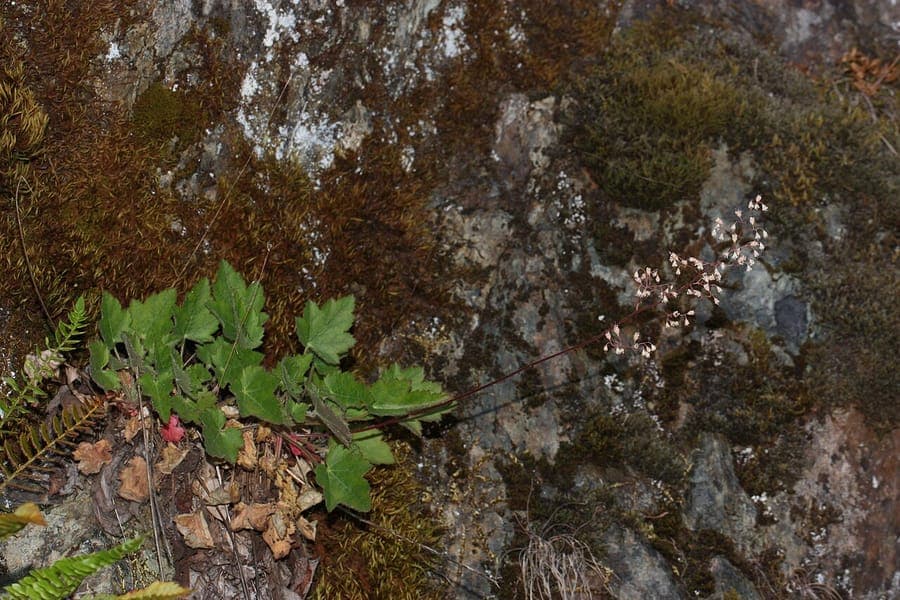
Walter Siegmund (talk) / CC BY-SA 3.0, via Wikimedia Commons
Alumroot: complete guide
Heuchera micrantha
Want to see Alumroot: complete guide in your garden?
1 minute, no credit card
Overview
Heuchera micrantha, commonly known as alumroot, is a graceful perennial that brings quiet elegance to shaded corners of the garden. Native to western North America - from British Columbia down through Oregon and California - this herbaceous forb thrives in cool, moist woodland settings. In cultivation, it reaches 30–45 cm in height, including flower stalks, and forms neat, mounding clumps of foliage that persist through much of the year. As a member of the Saxifragaceae family, it shares traits with close relatives like Tiarella and Saxifraga, but stands out for its adaptability and refined texture.
What makes alumroot a favourite among UK and US gardeners is its resilience and ornamental foliage. It doesn't demand constant attention, yet delivers reliable beauty in borders, rock gardens, or containers. Whether your garden is compact or sprawling, Heuchera micrantha fits naturally into shaded schemes. On gardenworld.app, you can design a custom planting plan that matches this plant's growth pattern and light needs.
Appearance & bloom cycle
The leaves of Heuchera micrantha are rounded to kidney-shaped, softly hairy underneath, and grow in a basal rosette. They range from pale green to silvery-grey, often with a faint netted veining pattern. In ideal conditions, the foliage remains fresh-looking from spring through autumn. In fall, some forms take on subtle yellow or cream tints, adding gentle seasonal interest.
From late spring to midsummer - typically June through August - slender, wiry stems rise above the leaves, bearing tiny bell-shaped flowers in soft green or creamy white tones. While not particularly showy, these blooms attract small pollinators like hoverflies and native bees. The flowering stems are airy and unobtrusive, so they don't disrupt the plant's overall form.
Ideal location
Choose a spot with partial shade, ideally with morning sun and dappled light or afternoon shade. Full sun, especially in hotter inland areas, can scorch the leaves and cause them to wilt. A north- or east-facing border, or a spot beneath light-canopy trees like birch or dogwood, is perfect.
In smaller gardens or on patios, alumroot does well in containers. Use a pot at least 25 cm deep with good drainage. Pair it with other shade-tolerant perennials like ferns or epimediums. On gardenworld.app, you can create container combinations that balance moisture needs and mature size.
Soil requirements
Heuchera micrantha thrives in humus-rich, well-drained soil. It prefers a slightly acidic to neutral pH (6.0–7.0). Avoid heavy clay soils that stay wet, as they promote root rot. If your soil is dense, amend it with compost, leaf mould, or fine grit to improve structure and drainage.
A light mulch of shredded bark or leaf litter in spring helps retain moisture and suppress weeds. Keep the mulch away from the crown to prevent rot. This plant doesn't like to sit in soggy soil, so raised beds or sloped areas can be ideal.
Free design
Want to see Alumroot: complete guide in your garden? Make a free design now.
Watering
Keep the soil consistently moist but never waterlogged. During dry spells in summer, water deeply once a week, especially for plants in containers or shallow soil. Water at the base to avoid wetting the foliage, which can encourage powdery mildew.
Container-grown plants dry out faster, so check them every few days in warm weather. Use a moisture-retentive but free-draining potting mix, and ensure pots have drainage holes.
Pruning
Minimal pruning is needed. In early spring, remove any dead, damaged, or tattered leaves with clean snips. This encourages fresh growth and improves air circulation. Leave healthy leaves intact over winter for insulation.
Cut back spent flower stems after blooming ends in late summer. Don't cut too close to the crown - leave a small stub to avoid damaging new growth.
Maintenance calendar
- January–February: Check for frost heave; protect exposed crowns with a thin mulch.
- March: Clear dead leaves; apply a light compost top-dressing if desired.
- April–May: Monitor soil moisture; watch for slugs on young growth.
- June–July: Flowers emerge; avoid overhead watering.
- August: Trim faded flower spikes.
- September–October: Reduce watering; let old foliage provide winter cover.
- November–December: Leave plant undisturbed; mulch lightly in cold zones.
Winter hardiness
Heuchera micrantha is hardy in USDA zones 4–9. It can survive winter temperatures down to -30°C, but the real threat comes from repeated freeze-thaw cycles, which can heave the plant out of the soil. A light, airy mulch (such as pine needles or shredded bark) applied in late autumn helps stabilise soil temperature. Avoid heavy, wet mulches that smother the crown.
In colder zones, avoid fertilising in late summer to prevent tender new growth before winter.
Companion plants
Pair alumroot with other shade-loving perennials like hostas, ferns (Dryopteris, Athyrium), and hellebores. It works well as a mid-layer plant in woodland gardens. Combine with Carex or Tiarella for textural contrast.
Avoid aggressive spreaders like mint or bishop's weed, which can overwhelm Heuchera. Stick to well-behaved neighbours that won't compete for space or moisture.
Closing
Heuchera micrantha is a quiet achiever in the shade garden - undemanding, long-lived, and consistently attractive. Its subtle foliage and delicate flowers bring year-round structure without fuss. For gardeners seeking low-maintenance beauty, it's a top choice. Buy healthy plants from trusted garden centres, where you'll often find robust, nursery-grown stock. And remember: on gardenworld.app, you can build a planting scheme tailored to your garden's light and soil, with alumroot as a standout performer.
Want to see Alumroot: complete guide in your garden? Make a free design now.
Upload a photo, pick a style, and get a photorealistic design with plant list in under a minute.
No credit card required


Similar plants
Korean astilbe: complete guide
Astilbe grandis
Discover Korean astilbe (Astilbe grandis): a tall shade plant with elegant flower plumes for pond edges and borders.
Heuchera pilosissima: complete guide to seaside alumroot
Heuchera pilosissima
Seaside alumroot (Heuchera pilosissima), an elegant North American dwarf perennial with hairy red-tinged foliage and red flower spikes.
Starry saxifrage: complete guide
Micranthes stellaris
Full guide to Micranthes stellaris, the starry saxifrage: location, soil, blooming and garden use. A tough alpine plant for moist, shady rock faces and pond margins.