
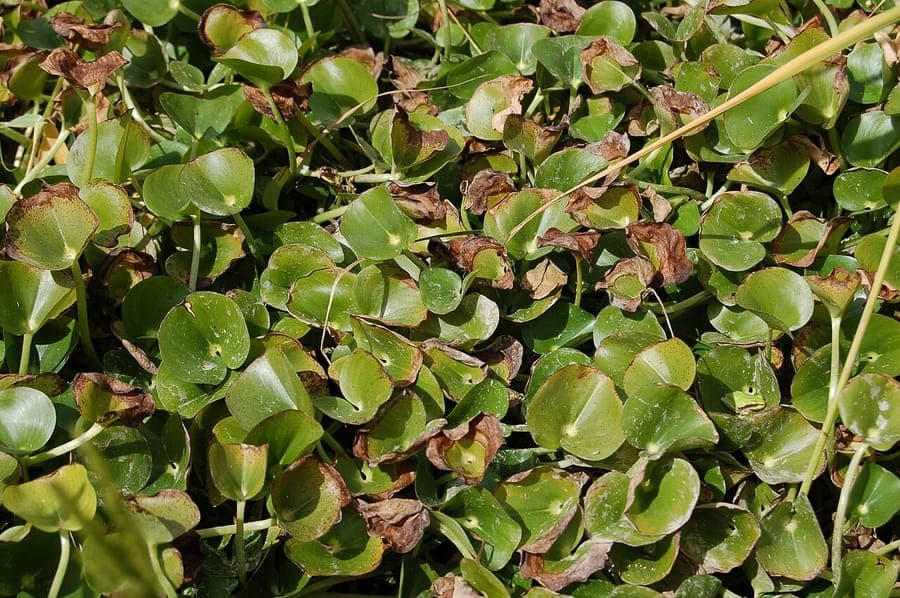
Michel Chauvet / CC BY-SA 4.0, via Wikimedia Commons
Mud plantain: complete guide
Heteranthera reniformis
Want to see Mud plantain: complete guide in your garden?
1 minute, no credit card
Overview
Heteranthera reniformis, commonly called mud plantain or kidneyleaf mudplantain, is a unique aquatic plant native to tropical and subtropical Americas. Belonging to the Pontederiaceae family, this species is prized for its distinctive kidney-shaped leaves and attractive flowers.
Mud plantain is ideal for gardeners seeking to enhance their pond with aquatic vegetation. Serving as marginal or submersed vegetation, this species plays an important ecological role in water ecosystems.
Appearance & bloom
Heteranthera reniformis is characterized by distinctive kidney-shaped leaves that float at the water surface for most of the year. The leaves are dark green and can reach up to 5 centimeters wide.
Flowering is quite rare in temperate climates. When blooms appear, small blue or violet flowers emerge on short stems. These flowers are attractive though short-lived.
Ideal location
Mud plantain is cultivated in shallow ponds, marshes, and slow-moving waters. The plant can grow either fully submerged or with floating leaves. For optimal growth, position in high-light locations receiving at least 4 hours direct sunlight daily.
The plant is ideal for pond margins and shallow water areas 10-30 centimeters deep.
Soil
In ponds, Heteranthera reniformis grows in silty substrates and muddy areas. For pot cultivation, use nutrient-rich aquatic potting soil or a 1:1 mixture of garden loam and sand.
The plant is not particularly demanding and grows even in clean water without supplemental nutrients, though it grows faster with regular fertilization.
Watering
As an aquatic plant, Heteranthera reniformis requires constant water contact. The submerged portion must remain permanently submerged. For floating forms, water depth of 15-30 centimeters works best.
Ensure regular water changes to maintain water quality. Use soft water where possible.
Free design
Want to see Mud plantain: complete guide in your garden? Make a free design now.
Pruning
Regularly removing damaged leaves and thinning overgrown sections promotes healthy growth. The plant grows fairly rapidly and can become aggressive - plan regular maintenance accordingly.
Clean filter systems regularly to prevent accumulation of organic matter.
Maintenance calendar
Spring: Plant or transplant. Provide starter fertilization. Summer: Monitor growth regularly. Thin overcrowded areas. Weekly water changes. Fall: Thin carefully. Reduce fertilization. Winter: Minimal maintenance. Plant dies if water temperature drops below 10 C.
Winter hardiness
Heteranthera reniformis is frost-sensitive and dies at water temperatures below approximately 10 degrees Celsius. In temperate climates, cultivate as a warm-water aquatic plant.
For indoor overwintering, move young plants to a heated aquarium (18-20 C). Protect outdoor ponds with water heating systems.
Companion plants
Mud plantain combines well with:
- Pistia stratiotes (water lettuce)
- Eichhornia crassipes (water hyacinth)
- Nymphaea species (water lilies)
- Azolla species (water fern)
- Myriophyllum species (watermilfoil)
Closing
Heteranthera reniformis brings underwater beauty to your pond through distinctive kidney-shaped leaves and attractive flowers. With proper water temperature and maintenance, this plant establishes a healthy aquatic ecosystem.
Build your dream water feature with professional advice. Discover gardenworld.app for water garden design consultation.
Available at major aquatic retailers. Inquire about Heteranthera reniformis and start your water garden project on gardenworld.app.
Want to see Mud plantain: complete guide in your garden? Make a free design now.
Upload a photo, pick a style, and get a photorealistic design with plant list in under a minute.
No credit card required


Similar plants
Acer pycnanthum: complete guide
Acer pycnanthum
Acer pycnanthum, the Japanese swamp maple, is a fast-growing tree with early red flowers and brilliant autumn color, ideal for damp garden settings.
Freeman maple: complete guide
Acer × freemanii
Everything about the Freeman maple (Acer x freemanii): a fast-growing shade tree with spectacular autumn colour for large gardens.
Silver vine: complete guide
Actinidia polygama
Discover silver vine (Actinidia polygama): a hardy climbing plant with silvery foliage, loved by gardeners and cats alike.