
Huw Williams (Huwmanbeing) / Public domain, via Wikimedia Commons
Damask-violet: complete guide
Hesperis matronalis
Want to see Damask-violet: complete guide in your garden?
1 minute, no credit card
Overview
Hesperis matronalis, commonly known as Damask-violet, is a hardy, fragrant perennial that brings old-world charm to modern gardens. Native to southeastern Europe - including Greece, Bulgaria, and Albania - it has naturalised across temperate regions, including the UK and northern Europe. It belongs to the Brassicaceae family, sharing lineage with cabbages and wallflowers, but its value lies purely in beauty and scent, not edibility. Growing as a forb or herbaceous plant, it reaches 60–90 cm in height and blooms in late spring with flowers that intensify in fragrance at dusk.
This plant thrives in cottage-style gardens, informal borders, and along pathways where its evening perfume can be enjoyed. It's easy to grow from seed and often returns year after year through self-seeding. While not evergreen, its upright growth and bold flower spikes make it a reliable mid-border presence. In the US, it grows well in USDA zones 3–8, making it suitable for most temperate climates.
Appearance & bloom cycle
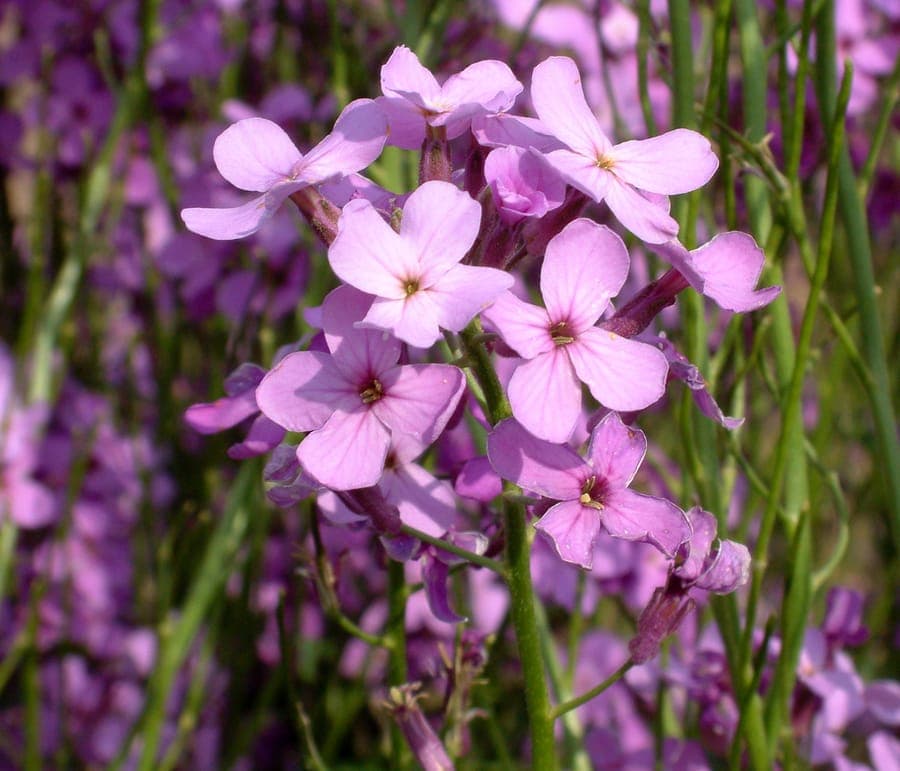
Damask-violet produces stiff, upright stems with lance-shaped, slightly toothed leaves. The basal foliage forms a rosette in early spring, followed by tall flowering stalks. The blooms appear in terminal racemes, opening from the bottom up. Each flower has four petals in shades of purple, mauve, pink, or white, arranged in a classic cross shape typical of the mustard family.
Flowering runs from late April through June, depending on local climate. In milder springs, blossoms may appear as early as mid-April. The scent - strongest in the evening - resembles violets or heliotrope and carries well across short distances. After blooming, seed pods form and split open, scattering seeds nearby. This self-sowing habit can be managed by deadheading or embraced for a naturalised look.
Ideal location
Aim for a spot with a light rating of 7 - full sun to light shade. Damask-violet blooms most abundantly in full sun, where stems stay upright and flowers open fully. In heavy shade, plants become leggy and prone to flopping. A south- or southeast-facing border works best. It fits well in mixed perennial beds, cottage gardens, or along gravel paths. Plant it where you walk in the evening to catch its fragrance.
On gardenworld.app, you can design a border layout that highlights fragrant plants like Damask-violet, with optimal spacing and sun exposure.
Soil requirements
This plant prefers well-drained soil with a pH between 5.0 and 7.0. It tolerates clay if not waterlogged, but thrives in loamy or sandy loam. Amend heavy soils with compost or grit to improve drainage. Avoid overly rich soil - excessive fertility leads to lush foliage but fewer flowers. A light mulch in spring helps retain moisture and suppress weeds.
Free design
Want to see Damask-violet: complete guide in your garden? Make a free design now.
Watering
Water regularly during the first growing season to establish strong roots. Once settled, Damask-violet is fairly drought-tolerant. Water only during prolonged dry spells, especially if leaves begin to wilt. Water at the base to prevent fungal issues on foliage. Morning watering is ideal, allowing leaves to dry before nightfall.
Pruning
Deadhead spent flower spikes to reduce self-seeding if desired. Cut stems back to about 10 cm above ground after flowering. Leaving some seed heads can encourage natural reseeding, useful for filling gaps. In late autumn, remove any remaining dead stalks or leave them for winter structure and habitat.
Maintenance calendar
- February–March: Check for emerging rosettes. Clear away winter debris.
- April: Watch for slugs and snails. Apply light compost side-dressing.
- May–June: Peak bloom period. Stake tall plants if needed. Water during dry spells.
- July: Cut back flowered stems. Monitor for mildew in humid conditions.
- August–September: Keep area weed-free. Replenish mulch if needed.
- October–November: Cut down remaining stalks or leave for winter interest.
- December–January: Dormant period. No action required.
On gardenworld.app, you can set up a seasonal care schedule that sends reminders for pruning, watering, and mulching.
Winter hardiness
Damask-violet is hardy to USDA zone 3, surviving temperatures down to -40°C with snow cover. The crown remains intact through winter, resprouting in spring. In exposed sites, a light mulch of straw or leaf litter offers extra protection, though rarely necessary.
Companion plants
Pair Damask-violet with early-blooming perennials like Salvia nemorosa, Alliums, or catmint. It works well with late tulips - their bloom times overlap in May. The fragrance complements herbs such as thyme or oregano. Avoid aggressive spreaders like mint or goldenrod that may outcompete it. Good spacing - 40–50 cm between plants - ensures good air circulation and reduces disease risk.
Closing
Damask-violet is a dependable, fragrant addition to any garden seeking charm and low effort. Its dusk perfume, easy care, and resilience make it a favourite among seasoned and novice gardeners alike. Whether used as a structured border feature or allowed to self-sow in wilder areas, it adds warmth and nostalgia. Visit gardenworld.app to explore garden designs that make the most of scent and texture with plants like Damask-violet.
Want to see Damask-violet: complete guide in your garden? Make a free design now.
Upload a photo, pick a style, and get a photorealistic design with plant list in under a minute.
No credit card required


Similar plants
Brassica cretica: complete guide
Brassica cretica
Brassica cretica, the Cretan cabbage, grows wild on Aegean cliffs. Discover how to grow this drought-tolerant, yellow-flowered Mediterranean perennial.
Corsican cabbage: complete guide
Brassica insularis
Corsican cabbage is a rare Mediterranean rock cabbage with white flowers and blue-green leaves. Location, soil and winter protection.
Prostrate cabbage: complete guide
Brassica procumbens
Prostrate cabbage is a creeping North African cliff plant with yellow flowers. Discover location, soil type and winter protection.