
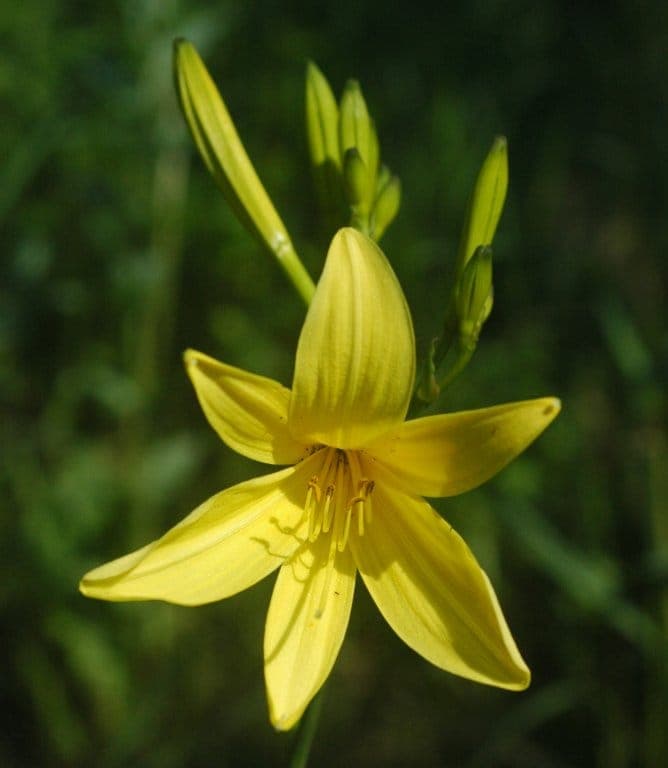
Doronenko / CC BY 2.5, via Wikimedia Commons
Lemon day-lily: complete guide
Hemerocallis lilioasphodelus
Want to see Lemon day-lily: complete guide in your garden?
1 minute, no credit card
Overview
The Lemon day-lily (Hemerocallis lilioasphodelus) is a timeless perennial that brings cheerful, pale yellow blooms to the summer garden. Native to regions stretching from Albania to Korea, this species thrives in temperate climates and adapts easily to a range of garden conditions. Unlike many hybrid daylilies, it has a more relaxed, wild appearance - perfect for cottage gardens, naturalistic plantings, or structured borders that still feel alive.
On gardenworld.app, you can design a planting scheme that works with the plant's spreading habit, using its rhythm to fill gaps between shrubs or along pathways. It grows slowly via rhizomes, forming small colonies over time without becoming invasive. That makes it ideal for long-term planting plans where stability and beauty go hand in hand.
Appearance & bloom cycle
This daylily reaches 60–90 cm in height with a spread of about 45 cm. Its narrow, strap-like leaves grow 30–70 cm long, arching gently from the base. The foliage is deep green, almost glossy, creating a lush backdrop for the flowers.
From May to June, it produces clusters of pale yellow, bell-shaped blooms, each about 5–7 cm across. The flowers have a faint, sweet fragrance, most noticeable in the evening. Though each individual flower lasts only one day, the plant produces dozens of buds per stem, ensuring a long and consistent display.
The bloom cycle lasts 4–6 weeks, depending on climate and care. Deadheading spent scapes helps maintain a tidy look but isn't essential for rebloom.
Ideal location
Lemon day-lily performs best in full sun to light shade (light level 7/10). It blooms most abundantly in at least 6 hours of direct sun, but in hotter zones (7–9), afternoon shade helps prevent scorching and flower fade.
It works well in mixed borders, along fence lines, or in open woodland edges. Avoid deep shade or crowded spots where air circulation is poor. Plant at least 40–50 cm apart to allow for airflow and gradual spreading.
On gardenworld.app, you can simulate how this plant develops over three years, helping you plan spacing and companion choices with confidence.
Soil requirements
This plant tolerates a wide pH range - from 4.8 to 8.0 - and grows well in loamy to sandy soils. It prefers well-drained conditions and doesn't like sitting in waterlogged clay. If your soil is heavy, amend it with compost or fine grit to improve drainage.
While adaptable, it benefits from organic matter. A light top-dressing of compost in early spring supports healthy growth. Avoid overly rich soils, which can lead to excessive foliage at the expense of blooms.
Free design
Want to see Lemon day-lily: complete guide in your garden? Make a free design now.
Watering
During active growth (April–August), water deeply once a week during dry spells. Young plants need more frequent watering in their first season to establish strong roots. Mature clumps are drought-tolerant but look best with consistent moisture.
Avoid overhead watering if possible - it can promote fungal issues. Water at the base instead. In winter, no supplemental watering is needed.
Pruning
No heavy pruning is required. Simply remove spent flower scapes by cutting them back to the base after blooming. This keeps the plant tidy and redirects energy to root development.
In late autumn or early spring, trim back any damaged or dead foliage. Don't cut too early in fall, as the leaves help protect the crown during winter. Use clean, sharp shears to prevent disease spread.
Maintenance calendar
- January–February: Monitor for heaving in freeze-thaw cycles. Leave foliage intact.
- March: Remove old leaves if ragged. Add a thin compost layer.
- April: Begin regular watering. Watch for emerging shoots.
- May–June: Peak bloom. Deadhead as needed. Ensure consistent moisture.
- July–August: Cut back spent scapes. Avoid fertilizing.
- September–October: Let plant die back naturally. Mulch lightly if desired.
- November–December: Leave standing for winter protection. No action needed.
Winter hardiness
Lemon day-lily is extremely cold-hardy (USDA zones 3–9). It survives temperatures as low as -35°C. The top growth dies back in winter, but the rhizomatous roots remain viable underground.
No winter protection is required, even in harsh climates. However, ensure the planting site doesn't collect standing water, as wet soil in winter can cause crown rot.
Companion plants
This day-lily combines beautifully with:
- Salvia nemorosa – adds purple spikes and attracts pollinators
- Echinacea purpurea – extends bloom time into late summer
- Allium 'Globemaster' – provides early-summer structure
- Geranium macrorrhizum – acts as a drought-tolerant ground cover
Avoid overly aggressive spreaders like mint or bishop's weed. Stick to plants with similar water and light needs.
Closing
The Lemon day-lily is a resilient, easy-care perennial that earns its place in any garden. It asks for little but gives back with reliable blooms and elegant form. Available at most garden centres across the UK and US, it's an excellent choice for both new and experienced gardeners. Plant it where it gets sun and space, and let it settle in for years of quiet beauty. With the right plan - like those you can build on gardenworld.app - it becomes a steady anchor in your seasonal rhythm.
Want to see Lemon day-lily: complete guide in your garden? Make a free design now.
Upload a photo, pick a style, and get a photorealistic design with plant list in under a minute.
No credit card required


Similar plants
Aloe castanea: complete guide
Aloe castanea
Discover Chestnut aloe, a South African succulent. Growth, nutrition, and garden integration for warm climates and container culture.
Aloe pratensis: complete guide
Aloe pratensis
Learn how to grow Meadow aloe, a South African succulent. Nutrition, propagation, and front yard integration for warm climates or containers.
Pretoria aloe: complete guide
Aloe pretoriensis
Discover Aloe pretoriensis, an elegant South African succulent with striking red blooms. Learn care tips, ideal conditions, and companion planting for this hardy, drought-tolerant plant.