
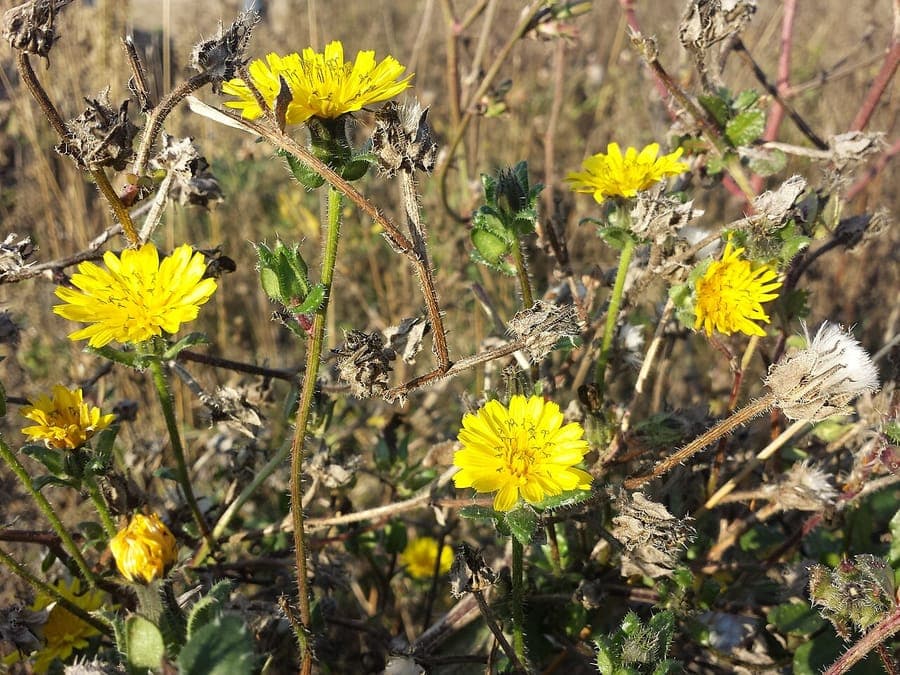
Stefan.lefnaer / CC BY-SA 4.0, via Wikimedia Commons
Oxtongue: complete guide
Helminthotheca echioides
Want to see Oxtongue: complete guide in your garden?
1 minute, no credit card
Overview
Oxtongue (Helminthotheca echioides) might not be the first plant you'd pick for a formal border, but in the right setting, it's a resilient and ecologically valuable addition. Native to southern Europe and naturalised in parts of the UK and northern Europe, this annual plant thrives in dry, sunny conditions and poor soils. It grows between 30 and 80 cm tall and blooms from June through September, offering bright yellow flowers that attract bees and hoverflies. While some gardeners consider it a weed, its rugged charm makes it ideal for wildflower meadows, gravel gardens, or neglected corners.
On gardenworld.app, you can create a garden plan that uses Oxtongue as a structural plant in low-maintenance designs. Its ability to self-seed and grow in harsh conditions is something that can be leveraged intentionally, not fought against.
Appearance & bloom cycle
Oxtongue has stiff, upright stems covered in bristly, rough leaves - hence the name, which refers to the texture resembling a cow's tongue. The leaves are lance-shaped, deeply veined, and greyish-green. From June to September, it produces solitary yellow daisy-like flowers, 2–3 cm in diameter, atop long stalks. Each bloom lasts several days, and the flowering period is prolonged in sunny locations with minimal competition.
After blooming, the flower heads develop into fluffy seed heads, similar to dandelions, which are easily dispersed by wind. This makes it a prolific self-seeder, which can be a pro or con depending on your garden philosophy.
Ideal location
Oxtongue thrives in full sun - aim for at least 8 hours of direct light daily. It scores an 8 on the light scale, making it perfect for hot, exposed sites. Ideal spots include gravel driveways, rock gardens, dry stone walls, or any area with minimal shade. It's particularly useful in urban gardens where soil compaction and pollution are issues, as it tolerates poor conditions well.
In the UK and northern Europe (USDA zones 7b–8a), it performs best in open, unshaded areas. Avoid planting it in shaded borders or moist, rich beds - it simply won't thrive. For help visualising where it fits best, check gardenworld.app's design tool to map sun exposure and plant compatibility.
Soil requirements
This plant prefers well-drained, alkaline soils with a pH between 7.5 and 8. It does exceptionally well in chalky, stony, or sandy soils. Avoid heavy clay or water-retentive substrates, as these promote root rot. Oxtongue doesn't need fertile soil - in fact, it grows better in nutrient-poor conditions. Adding compost or manure will only encourage weak growth and fewer flowers.
If your soil is acidic, consider adding garden lime to raise the pH slightly. But don't overdo it - this plant isn't fussy and will adapt to minor imbalances as long as drainage is good.
Free design
Want to see Oxtongue: complete guide in your garden? Make a free design now.
Watering
Once established, Oxtongue is extremely drought tolerant. Water only during extended dry spells in the first few weeks after germination. After that, it relies on natural rainfall. Overwatering leads to leggy growth and fungal issues. Use rainwater when possible, as tap water with high mineral content can affect soil pH over time.
Pruning
Pruning isn't necessary for health, but you can deadhead spent flowers to prevent excessive self-seeding. If you want to keep it contained, cut back the stems before seeds form. Wear gloves - the stems are prickly and can irritate skin. Alternatively, leave some seed heads for goldfinches and other birds to enjoy in autumn.
Maintenance calendar
- January: No action needed
- February: Prepare for spring sowing indoors
- March: Sow seeds directly outdoors after frost risk passes
- April: Thin seedlings; protect from late frosts
- May: Monitor growth; avoid overfeeding
- June: Flowers appear; watch for pests
- July: Peak bloom; excellent for pollinators
- August: Continue flowering; seeds start maturing
- September: Final blooms; decide on seed collection
- October: Cut back or leave for winter interest
- November: Clear debris if needed; check for seedlings
- December: Dormant period; no care required
Winter hardiness
As an annual, Oxtongue doesn't survive winter. It dies back after setting seed. However, the seeds overwinter in the soil and germinate the following spring. In USDA zones 7–8, this cycle repeats reliably. No winter protection is needed - let nature take its course.
Companion plants
Pair Oxtongue with other drought-tolerant perennials like Sedum spectabile, Echinacea purpurea, or Gaura lindheimeri. These share similar needs for sun and drainage. Avoid moisture-loving plants like Astilbe or Hosta, which will outcompete it in fertile soil.
In cottage-style or wildlife gardens, it works well with Erigeron karvinskianus or Teucrium chamaedrys. These combinations create a naturalistic look that supports biodiversity. Find suitable companions at local garden centres like those in the UK, where native and adaptive species are increasingly available.
Closing
Oxtongue may not win any beauty contests, but its resilience and ecological value are unmatched in tough spots. Use it where other plants fail - on poor soil, in full sun, with little water. It's a testament to smart gardening: working with nature, not against it.
By integrating Oxtongue into your planting scheme thoughtfully, you create a garden that's not only low-maintenance but also beneficial to pollinators. Use gardenworld.app to model how this plant fits into your space, ensuring harmony between aesthetics and function.
Want to see Oxtongue: complete guide in your garden? Make a free design now.
Upload a photo, pick a style, and get a photorealistic design with plant list in under a minute.
No credit card required


Similar plants
Calendula stellata: complete guide
Calendula stellata
Complete guide to Calendula stellata, the star-flowered marigold from Sicily: location, soil, watering and companion planting tips.
Korean chrysanthemum: complete guide
Chrysanthemum x rubellum
Chrysanthemum x rubellum is a hardy autumn perennial with single pink to copper flowers from August to November. Care and combinations.
Helianthus divaricatus: complete guide
Helianthus divaricatus
Helianthus divaricatus is a North American woodland sunflower with yellow summer blooms, ideal for naturalistic borders and shady edges.