
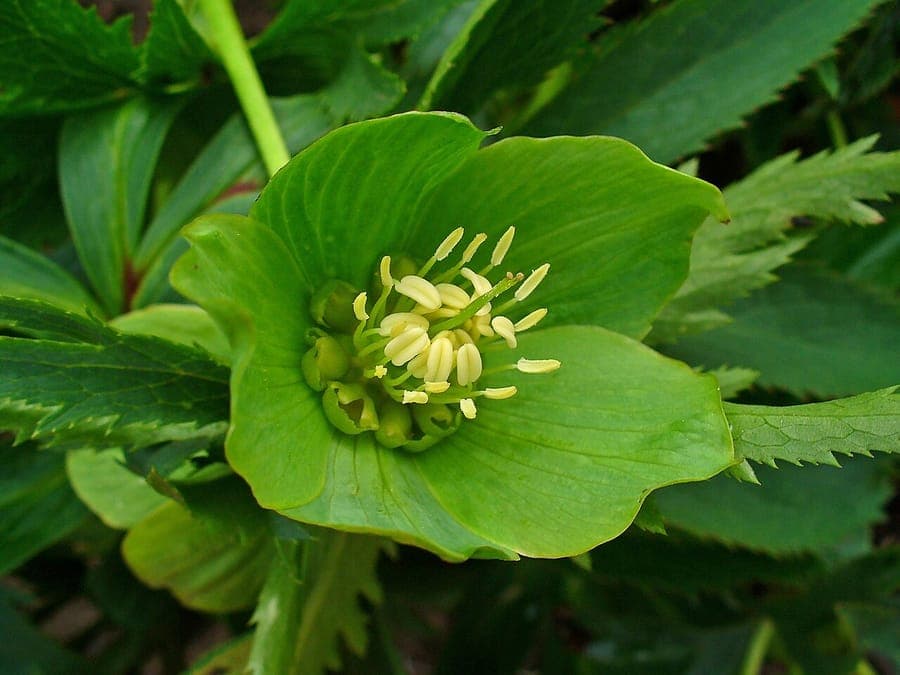
H. Zell / CC BY-SA 3.0, via Wikimedia Commons
Green hellebore: complete guide
Helleborus viridis
Want to see Green hellebore: complete guide in your garden?
1 minute, no credit card
Overview
Helleborus viridis, commonly known as green hellebore, is one of those quiet achievers that brings life to the garden when little else is stirring. Native to woodland areas across central and western Europe - including parts of Germany, France, and the UK - this perennial thrives in cool, shaded corners and blooms reliably from January through April. It's a member of the buttercup family (Ranunculaceae), and like many of its kin, it's toxic if ingested, so keep it away from pets and curious children.
Despite its toxicity, green hellebore is a tough, resilient plant with a lifespan of 15 years or more. It's rarely troubled by slugs or deer, and once established, it asks for almost nothing. If you're looking for a plant that adds subtle beauty to the dormant months, this one's a top contender.
On gardenworld.app, you can design a winter garden scheme that highlights late bloomers like green hellebore, ensuring your borders stay interesting even in January.
Appearance & bloom cycle
The flowers of Helleborus viridis are its standout feature - deep green, cup-shaped, and waxy to the touch. They emerge from tight buds in late winter, usually starting in January, and last well into spring. Unlike showier hellebores, this species doesn't have large petals; instead, the sepals do the work, turning from bright lime green to a richer, olive tone as they age. Each flower sits atop a sturdy stem, 30 to 50 cm tall, and faces slightly downward.
The foliage is palmate, dark green, and leathery, with each leaf reaching up to 25 cm across. It's semi-evergreen, meaning it holds its leaves through most of the winter but sheds the oldest ones in early spring. This trait helps protect the crown from frost, making it a smart survivor in colder zones.
Ideal location
Green hellebore thrives in partial shade - think dappled light under deciduous trees like beech, hornbeam, or birch. Avoid full sun, especially between 11 a.m. and 3 p.m., as it dries out the soil and scorches the leaves. A north- or east-facing border works best.
It also dislikes being disturbed, so choose a permanent spot where you won't need to dig or replant often. Under shrubs, along woodland edges, or in shaded perennial beds are all ideal. Give each plant about 40–50 cm of space to spread.
Soil requirements
This plant likes rich, moisture-retentive soil that drains well. Heavy clay is fine as long as it doesn't stay waterlogged. Amend the planting hole with leaf mould or well-rotted compost - but skip the high-nitrogen fertilisers, which encourage soft growth and disease.
The ideal pH range is slightly acidic to neutral: 6.0 to 7.0. If your soil is sandy or thin, mulch annually with organic matter to build up humus over time.
Free design
Want to see Green hellebore: complete guide in your garden? Make a free design now.
Watering
Once established, green hellebore is fairly drought-tolerant in winter and spring, thanks to its deep roots. But during dry spells in late spring or early summer - especially for plants under two years old - give them a deep soak once a week. Aim for about 5 litres per plant, applied slowly at the base.
Avoid wetting the foliage to reduce the risk of fungal diseases. Rainwater is best, as hellebores can be sensitive to lime in tap water.
Pruning
Pruning is minimal. In late winter or early spring, snip off the oldest, tattered leaves at ground level to make way for the flowers and improve air circulation. Use clean, sharp secateurs, and wear gloves - the sap can irritate sensitive skin.
Don't cut the flower stems unless they're damaged. Let the blooms fade naturally; they'll often self-seed modestly, giving you a few surprise seedlings nearby.
Maintenance calendar
- January: Check for signs of leaf spot or aphids; remove any damaged foliage
- February: Trim old leaves; inspect for emerging buds
- March: Keep soil moist; avoid disturbing roots
- April: Watch for seedlings; thin if needed
- May: Water young plants in dry weather
- June–August: Monitor for drought stress; mulch if needed
- September: No maintenance required
- October: Apply a light mulch of leaf mould
- November: Protect from heavy leaf fall; ensure drainage
- December: Leave undisturbed; flowers may begin forming
Winter hardiness
Green hellebore is reliably hardy in USDA zones 6 to 9. In the UK (zone 8), it handles temperatures down to -15°C with ease. The semi-evergreen foliage often stays intact through winter, adding structure to the garden when most perennials have died back.
In heavy snow, the leaves may flatten, but they usually rebound in spring. Avoid covering the plant - it doesn't need winter protection.
Companion plants
Pair green hellebore with other shade-tolerant early bloomers: snowdrops (Galanthus), winter aconite (Eranthis), or wood anemone (Anemone nemorosa). It also works well with spring bulbs like Chionodoxa or Scilla. Keep companion plants spaced at least 30–40 cm apart to prevent overcrowding.
On gardenworld.app, you can visualise how green hellebore fits into a woodland-style planting scheme with complementary textures and bloom times.
Closing
Green hellebore isn't flashy, but it's dependable - the kind of plant that earns your respect over time. It asks for little, gives much, and blooms when the garden needs it most. Look for potted plants in autumn at garden centres like Wyevale or Dobbies, and plant them in a quiet corner where they can settle in. Within two years, you'll have a clump that brings quiet dignity to your winter garden.
Want to see Green hellebore: complete guide in your garden? Make a free design now.
Upload a photo, pick a style, and get a photorealistic design with plant list in under a minute.
No credit card required


Similar plants
Drummond's anemone: complete guide
Anemone drummondii
Discover Drummond's anemone (Anemone drummondii): a silvery-grey mountain plant for cool rock gardens and alpine troughs.
Korean clematis: complete guide
Clematis serratifolia
Clematis serratifolia is a hardy climber with fragrant yellow bell flowers in August-September. Pruning group 3, location and care tips.
Aquilegia brevistyla: complete guide
Aquilegia brevistyla
Discover Aquilegia brevistyla, the elegant North American columbine. Growing tips, shade tolerance, and design ideas for woodland and shadowed gardens.