
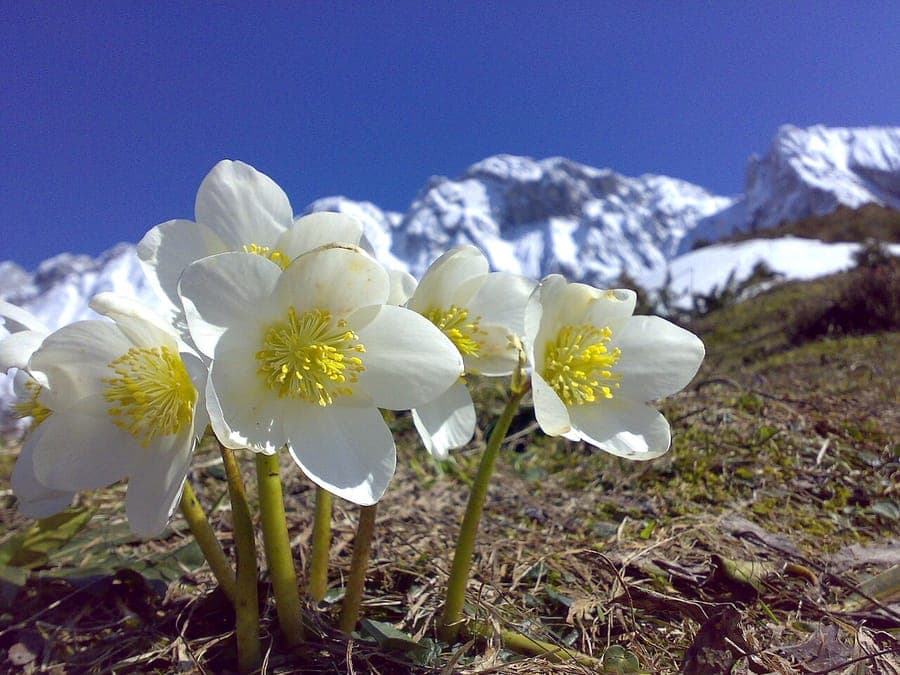
Robert Hundsdorfer / CC BY-SA 2.0 de, via Wikimedia Commons
Christmas-rose: complete guide
Helleborus niger
Want to see Christmas-rose: complete guide in your garden?
1 minute, no credit card
Overview
Helleborus niger, commonly known as the Christmas-rose, is one of the few garden plants that truly blooms in the depths of winter. Native to alpine regions of Austria, Germany, northern Italy, and the former Yugoslavia, this perennial forb brings life to otherwise dormant borders. Despite its name, it's not a rose at all, but a member of the buttercup family, Ranunculaceae. Still, its pristine white flowers and upright habit command attention, especially when framed by frost or light snow.
The plant forms a clump of evergreen to semi-evergreen leaves, with flower stems emerging directly from the base. It's a slow grower, reaching maturity over several years, but once established, it can persist for a decade or more with minimal intervention. In the UK and North America, it's a staple in woodland gardens and shaded rockeries. Garden centres often stock it from late autumn through winter, making it an easy choice for seasonal planting.
On gardenworld.app, you can design a shaded garden layout that highlights the Christmas-rose alongside complementary winter performers like snowdrops and hellebores.
Appearance & bloom cycle
The Christmas-rose blooms from December through April, depending on climate and microclimate. Flowers appear as early as late December in milder zones (USDA 7+), often pushing through snow. Each bloom is 6–8 cm wide, cup-shaped, and pure white. The outer sepals (often mistaken for petals) may develop a soft pink or green tinge as they age, especially in cooler weather.
Flowers are held on stiff, upright stems 25–30 cm tall. They emerge facing outward but gradually nod forward as they mature. The true petals are small, nectar-producing structures hidden inside. Foliage follows the bloom: leathery, dark green, palmate leaves that grow 15–20 cm wide. These persist through winter, adding structure to the garden.
Ideal location
This plant thrives in partial to full shade. A spot under deciduous trees or on the north side of a building is ideal. It prefers a light value of 5/10, meaning dappled sunlight rather than direct exposure. Avoid hot afternoon sun, which can scorch leaves and fade flowers prematurely. In exposed gardens, wind protection is crucial-strong gusts can damage delicate blooms.
In USDA zones 6–8, the Christmas-rose fits perfectly into woodland-style plantings. Use gardenworld.app to simulate seasonal light patterns and find the best spot in your garden.
Free design
Want to see Christmas-rose: complete guide in your garden? Make a free design now.
Soil requirements
Helleborus niger demands well-drained, humus-rich soil with a pH between 7.5 and 8.0. It loves alkaline conditions and struggles in acidic soils. If your soil is too acidic, amend it with garden lime or crushed oyster shells. Heavy clay can work if it's not waterlogged; add grit or compost to improve drainage.
Plant at the same depth it was in the pot-shallow planting leads to crown rot. Space plants 30–40 cm apart to allow air circulation and prevent fungal issues.
Watering
Water regularly during the first growing season, especially if planted in autumn or winter. Once established, it's moderately drought-tolerant but dislikes prolonged dry spells in spring. Water deeply but infrequently in March and April if rainfall is low.
Avoid wetting the foliage to reduce the risk of hellebore leaf spot. Use a soaker hose or water at soil level.
Pruning
Pruning is minimal. Remove old, tattered leaves in late winter (February–March) before new flower buds emerge. This improves air circulation and highlights the blooms. Don't cut back flowering stems until they wither, as they continue to feed the rhizome.
If you want self-seeding, leave some spent flowers. Seedlings may appear 1–2 years later, often near the parent plant.
Maintenance calendar
- Dec: Monitor for early blooms, protect from heavy snow.
- Jan: Check for pests like aphids, remove damaged foliage.
- Feb: Prune old leaves, watch for emerging buds.
- Mar: Water if dry, inspect for fungal spots.
- Apr: Allow flowers to fade, apply light compost mulch.
- May–Aug: Dormant phase-little to no care needed.
- Sep: Plant or divide established clumps.
- Oct–Nov: Top-dress with compost, check spacing.
Winter hardiness
Hardy in USDA zones 6–8, Helleborus niger tolerates temperatures down to -15°C. In zone 5, apply a light mulch of shredded leaves or bark to insulate the crown. Avoid heavy mulching, which can trap moisture and cause rot.
Companion plants
Pair with early bulbs like Crocus tommasinianus, Galanthus nivalis, or Chionodoxa. Underplant with evergreen groundcovers such as Pachysandra or Asarum europaeum. Later bloomers like Pulmonaria or Epimedium provide spring interest without competing.
Avoid aggressive spreaders like mint or goldenrod that can overwhelm slow-growing hellebores.
Closing
The Christmas-rose is a quiet achiever-unspectacular at first glance, but deeply rewarding over time. Its ability to flower through snow, combined with evergreen foliage and low upkeep, makes it a garden essential. You'll find it at most garden centres from November onward, often in 1-litre pots. Choose healthy plants with firm leaves and no signs of spotting. With the right conditions, Helleborus niger becomes a long-term resident, marking the slow turn of the seasons year after year.
Want to see Christmas-rose: complete guide in your garden? Make a free design now.
Upload a photo, pick a style, and get a photorealistic design with plant list in under a minute.
No credit card required


Similar plants
Drummond's anemone: complete guide
Anemone drummondii
Discover Drummond's anemone (Anemone drummondii): a silvery-grey mountain plant for cool rock gardens and alpine troughs.
Korean clematis: complete guide
Clematis serratifolia
Clematis serratifolia is a hardy climber with fragrant yellow bell flowers in August-September. Pruning group 3, location and care tips.
Aquilegia brevistyla: complete guide
Aquilegia brevistyla
Discover Aquilegia brevistyla, the elegant North American columbine. Growing tips, shade tolerance, and design ideas for woodland and shadowed gardens.