
Sten Porse / CC BY-SA 3.0, via Wikimedia Commons
Blue oat-grass: complete guide
Helictotrichon sempervirens
Want to see Blue oat-grass: complete guide in your garden?
1 minute, no credit card
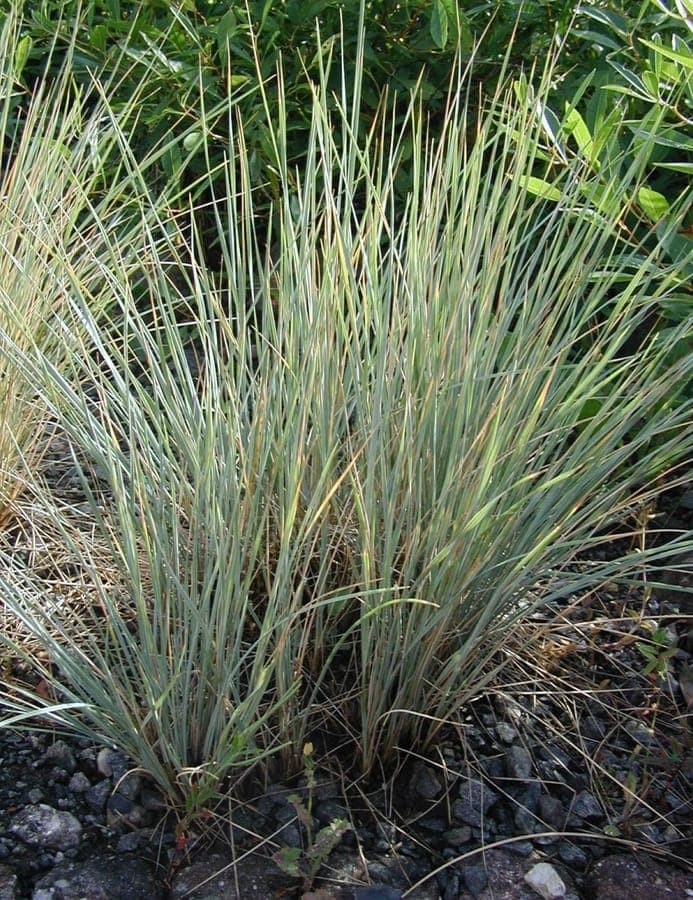
Helictotrichon sempervirens, commonly known as Blue oat-grass or Evergreen oat-grass, is a clump-forming ornamental grass prized for its distinctive blue-grey foliage. Native to the Alps and mountain regions of southeastern France and Italy, this hardy perennial thrives where summer heat meets alpine coolness. The plant matures to 45-60 cm in height with a compact, upright growth habit that resists flopping. During June through August, thin panicles of yellowish-brown flowers emerge above the foliage, adding soft texture without overwhelming the plant's primary feature: its remarkable steel-blue color that persists through winter. This grass excels in full sun conditions and well-draining soils; it tolerates drought exceptionally well once established, requiring minimal water input compared to annual grasses. Winter hardiness extends to USDA zone 5, making it suitable for continental and northern maritime climates. The plant dislikes heavy clay, waterlogged conditions, and afternoon shade; performance declines noticeably under these stressors. Pruning in late winter (February to early March) removes dead foliage and encourages fresh growth. Propagation occurs through seed or spring division of mature clumps. In landscape design, use Blue oat-grass as a focal point in rock gardens, Mediterranean borders, or mixed herbaceous plantings where its cool tones contrast beautifully with warm-colored companion plants like ornamental sedums or terracotta-flowered salvias. Its compact size suits container cultivation on sunny patios and terraces.
Want to see Blue oat-grass: complete guide in your garden? Make a free design now.
Upload a photo, pick a style, and get a photorealistic design with plant list in under a minute.
No credit card required


Similar plants
Sporobolus pungens: complete guide
Sporobolus pungens
Sporobolus pungens is a stoloniferous Mediterranean coastal grass with outstanding salt and drought tolerance, perfect for seaside and dry gardens.
Mediterranean aegilops: complete guide
Aegilops biuncialis
Everything about Aegilops biuncialis, a Mediterranean annual grass with ornamental spikes and outstanding drought tolerance for dry gardens.
Silver bluestem: complete guide
Bothriochloa saccharoides
Full guide to Bothriochloa saccharoides (silver bluestem): site, soil, watering, winter hardiness, pruning, and garden companions.