
Wikimedia Commons / CC BY-SA 3.0, via Wikimedia Commons
Jersey cudweed: complete guide
Helichrysum luteoalbum
Want to see Jersey cudweed: complete guide in your garden?
1 minute, no credit card
Overview
Helichrysum luteoalbum, commonly known as Jersey cudweed or Weedy Cudweed, is a fascinating papery-textured plant from the Asteraceae family (daisy family). This annual or short-lived biennial originates from southwestern Europe and grows in dry, sandy habitats. With its fine, hairy foliage and interesting yellowish-white flowers, it makes a perfect addition to Mediterranean gardens, dry borders and wildflower planting schemes.
Appearance and bloom
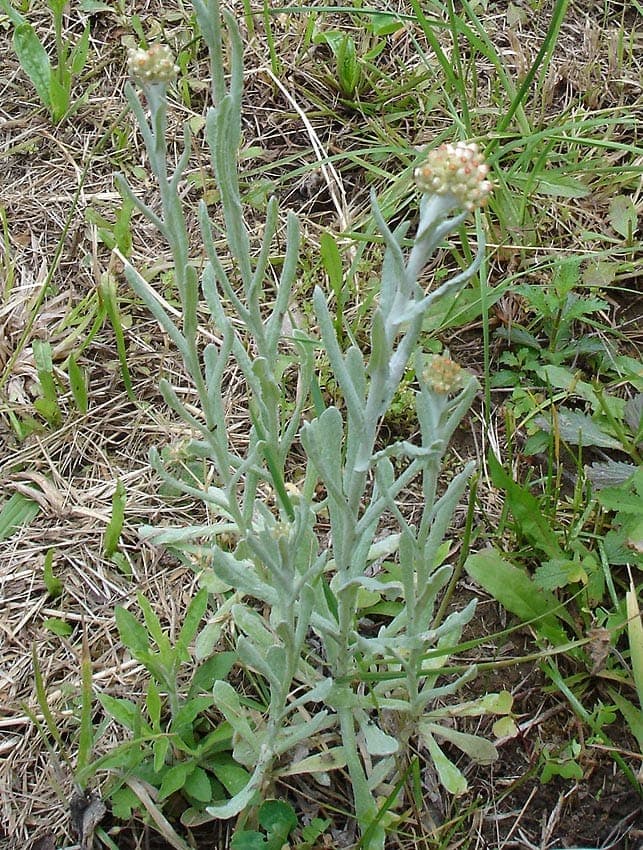
Helichrysum luteoalbum grows to approximately 20-40 cm tall and forms compact, bushy plants with fine, hairy leaves. The foliage is elliptic to lanceolate, greenish-gray and covered in soft hairs - this gives the plant a silvery appearance. The name 'luteoalbum' refers to the yellowish-white flowers. From June through September, the plant produces numerous tiny, compact flower heads in yellow and white. These are papery in texture, unlike traditional flower types. The flowers attract butterflies and small bees.
Ideal location
Jersey cudweed prefers very sunny locations in the garden. The plant thrives best on south-facing slopes, in Mediterranean gardens, along stone pathways and in dry sandy simulations. This is a perfect plant for gardeners with difficult dry soils - it actually thrives where many other plants fail. The plant cannot tolerate shade and requires full sunny exposure.
Soil quality
Jersey cudweed has a strong preference for dry, well-draining soils. The plant thrives in sandy soils, gravel mixtures and other highly draining mixes. This is a plant for gardeners with difficult dry soils - it actually thrives where moisture retention is problematic. Heavy clay and peat soils are not suitable. The plant also tolerates soils with low nutrient status.
Watering needs
As a dry-soil specialist, Helichrysum luteoalbum has very low water requirements. After establishment (first season), you can provide minimal water. Thereafter, the plant requires almost no supplemental water - the plant can tolerate extended periods without water thanks to its adaptation to dry habitats. Excessive watering can lead to root rot and should be avoided.
Free design
Want to see Jersey cudweed: complete guide in your garden? Make a free design now.
Pruning
Jersey cudweed requires minimal pruning. The plant grows naturally in compact, bushy forms. As the plant begins flowering, you can remove spent flower clusters for extended blooming, but this is optional. As an annual plant, it will disappear after the first or second year once seed setting is complete. Allow some plants to mature for seed collection for next season.
Maintenance calendar
- April-May: Plant seeds or seedlings
- June-September: Flowering period; remove faded flowers for extended bloom
- August-October: Seed setting; allow seeds to mature
- October-November: Collect seeds for next season
Winter hardiness
Helichrysum luteoalbum is not winter hardy in cold climates. This is an annual or short-lived biennial plant that grows in mild winters of southwestern Europe. In temperate climates, the plant dies off in winter. In Mediterranean climates, it may overwinter and grow again next season.
Companion plants
The interesting texture of Helichrysum luteoalbum combines well with other dry-soil plants:
- Salvia (sage) - together create dry-soil harmony
- Papaver (poppy) - color contrast and together create wildflower aesthetics
- Armeria (thrift) - together create Mediterranean-border combinations
- Thymus (wild thyme) - equal drainage requirements
- Echium (viper's bugloss) - together form sunny dry gardens
Conclusion
Jersey cudweed offers unique papery-textured beauty for gardeners with dry soils. This is a perfect plant for sunny, dry locations where many other plants fail. Its preference for sun and drainage makes it ideal for Mediterranean gardens and wildflower planting schemes. Try Helichrysum luteoalbum in your garden and discover the textural richness it brings. Available at Intratuin and Gamma in the Netherlands. Visit gardenworld.app for more plant combinations and design inspiration.
Want to see Jersey cudweed: complete guide in your garden? Make a free design now.
Upload a photo, pick a style, and get a photorealistic design with plant list in under a minute.
10,000+ gardens designed already
No credit card required


Similar plants
Calendula stellata: complete guide
Calendula stellata
Complete guide to Calendula stellata, the star-flowered marigold from Sicily: location, soil, watering and companion planting tips.
Korean chrysanthemum: complete guide
Chrysanthemum x rubellum
Chrysanthemum x rubellum is a hardy autumn perennial with single pink to copper flowers from August to November. Care and combinations.
Helianthus divaricatus: complete guide
Helianthus divaricatus
Helianthus divaricatus is a North American woodland sunflower with yellow summer blooms, ideal for naturalistic borders and shady edges.