
Wikimedia Commons / CC BY-SA 3.0, via Wikimedia Commons
Jerusalem-artichoke: complete guide
Helianthus tuberosus
Want to see Jerusalem-artichoke: complete guide in your garden?
1 minute, no credit card
Overview
Helianthus tuberosus, commonly known as Jerusalem-artichoke, is a herbaceous perennial native to the eastern United States. Despite the name, it has nothing to do with artichokes or Jerusalem. The misnomer dates back to a linguistic mix-up in the 17th century, but the plant has since earned its place in gardens and permaculture systems for its resilience, edibility, and ease of care. Gardeners across temperate zones appreciate its tall presence and productive tubers.
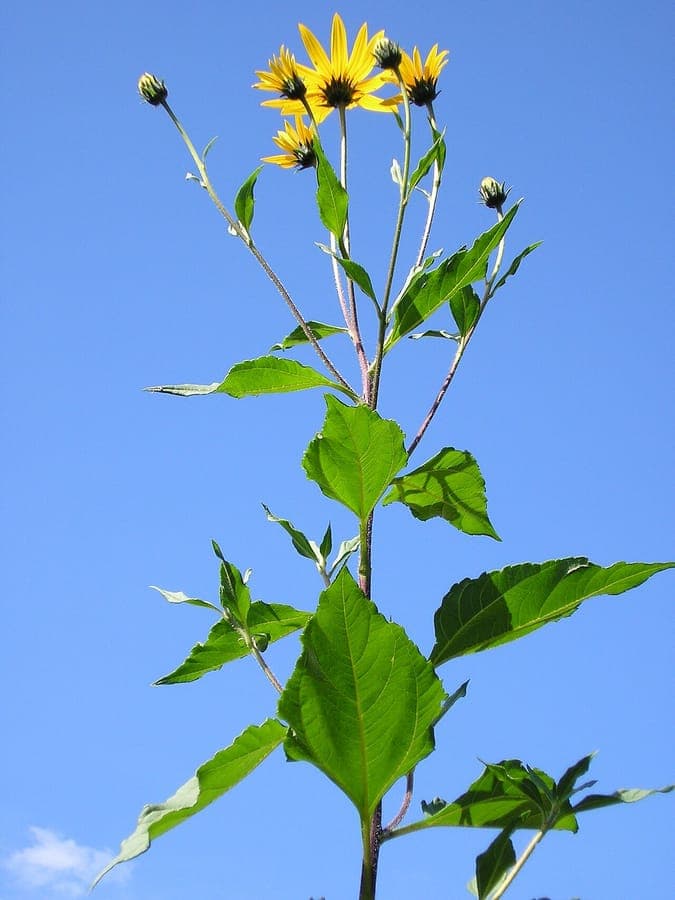
This member of the Asteraceae family can reach up to 3 meters in height by midsummer. It produces cheerful yellow flowers that resemble small sunflowers, but the real treasure lies underground: knobby, pale tubers rich in inulin, making them a great addition to soups and roasts. If you're planning a food forest or low-maintenance garden, consider mapping out a dedicated zone on gardenworld.app where Jerusalem-artichokes can thrive without crowding other plants.
Appearance & bloom cycle
Jerusalem-artichoke has a sturdy, hairy stem with opposite, ovate leaves up to 15 cm long. From August through October, it blooms with vibrant yellow composite flowers, each 5–10 cm across, featuring a dark center. These flowers are a magnet for bees, hoverflies, and late-season pollinators.
After flowering, the plant redirects energy to its underground tubers. Above-ground growth dies back completely in winter, but the tubers remain dormant and edible. New shoots emerge in March or April, sometimes aggressively pushing through mulch or soil. Watch for volunteer plants in unexpected spots - they're usually escaped tubers.
Ideal location
Jerusalem-artichoke thrives in full sun - aim for a light level of at least 8 out of 10. Choose a spot with unobstructed sunlight all day. While the plant tolerates some crowding, it performs best with at least 60 cm between tubers. For smaller gardens, consider growing in large containers or using root barriers to prevent spreading.
These plants are excellent for back borders, natural screens, or informal hedges. Their height and density provide visual interest and windbreaks. Before planting, check your yard's sun exposure and spacing using gardenworld.app to avoid overcrowding and ensure optimal yields.
Soil requirements
The plant adapts to various soils but prefers loose, well-drained loam. Ideal pH ranges from 4 to 7, making it suitable for acidic to slightly alkaline conditions. Heavy clay soils can cause misshapen or rotting tubers, so amend with sand or compost to improve drainage.
Avoid overly rich soils high in nitrogen, as this promotes leafy growth at the expense of tuber development. Rotate planting sites every few years to reduce disease risk, especially if tomatoes, potatoes, or eggplants previously grew there.
Free design
Want to see Jerusalem-artichoke: complete guide in your garden? Make a free design now.
Watering
Once established, Jerusalem-artichoke is drought-tolerant thanks to its deep roots. However, during active growth (May to September), consistent moisture boosts tuber size. Water deeply once a week, delivering about 20 liters per plant during dry spells.
Reduce watering in October as flowering ends. Overwatering in winter can lead to rot, so ensure the site drains well. In rainy climates, no supplemental irrigation is needed after autumn.
Pruning
Pruning isn't essential, but you can pinch back stems in June or July to 1.5 meters to encourage bushier growth and stronger flowering. Avoid cutting before August, as it may delay or reduce blooms.
In late winter, cut back dead stalks to ground level. Leaving some debris provides shelter for beneficial insects. For a tidier appearance, remove all residue before spring growth begins.
Maintenance calendar
- February: Prepare for planting or transplanting
- March: Plant tubers 10–15 cm deep
- April: Watch for emerging shoots, control weeds
- May: First growth spurt, light compost application
- June: Regular watering, monitor for slugs
- July: Rapid vertical growth, check for support
- August: Blooms begin, pollinators arrive
- September: Tubers start swelling
- October: Reduce watering, prepare for harvest
- November: Dig tubers, leave some in ground
- December: Cut back stalks, winter care
Winter hardiness
Jerusalem-artichoke is extremely cold-hardy, surviving down to -30°C. It's hardy in USDA zones 3 to 9, making it suitable across most of Europe and North America. Tubers can stay in the ground year-round and be harvested as needed, even through snow.
In areas with prolonged freezing, a light mulch of straw or wood chips protects tubers from frost heaving. No additional winter protection is needed in milder climates.
Companion plants
Pair Jerusalem-artichoke with corn, squash, and beans in a classic Three Sisters planting. The tall stems support climbing beans, while squash acts as a living mulch. Avoid planting near potatoes, tomatoes, or eggplants to reduce shared disease risks.
Other good companions include aromatic herbs like sage or thyme, which deter pests. Low-growing clover between rows suppresses weeds and enriches soil.
Closing
Jerusalem-artichoke is a low-maintenance, high-reward plant. It feeds people and pollinators alike, all while demanding little care. Its spreading habit means it's best suited for spacious gardens or contained beds.
Available at garden centres in early spring, tubers are easy to plant and quick to establish. For reliable sources, check local suppliers or online garden stores. And remember, sketching your planting plan on gardenworld.app helps track growth cycles and harvest timing - a smart move for any serious grower.
Want to see Jerusalem-artichoke: complete guide in your garden? Make a free design now.
Upload a photo, pick a style, and get a photorealistic design with plant list in under a minute.
No credit card required


Similar plants
Calendula stellata: complete guide
Calendula stellata
Complete guide to Calendula stellata, the star-flowered marigold from Sicily: location, soil, watering and companion planting tips.
Korean chrysanthemum: complete guide
Chrysanthemum x rubellum
Chrysanthemum x rubellum is a hardy autumn perennial with single pink to copper flowers from August to November. Care and combinations.
Helianthus divaricatus: complete guide
Helianthus divaricatus
Helianthus divaricatus is a North American woodland sunflower with yellow summer blooms, ideal for naturalistic borders and shady edges.