
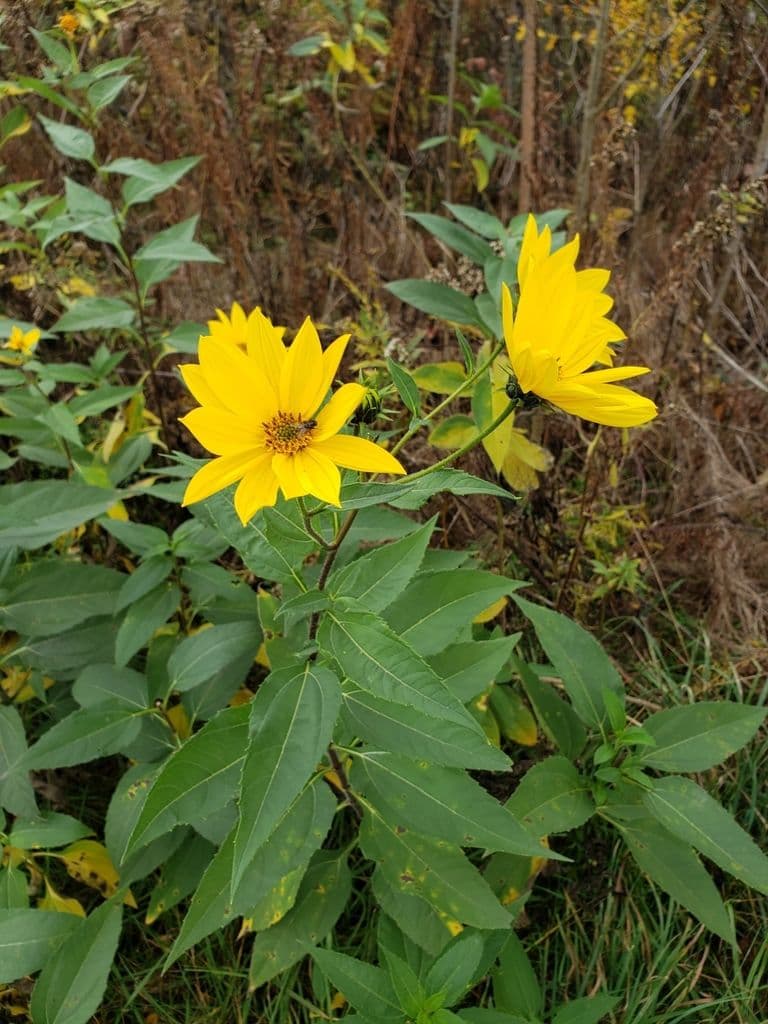
Pale-leaf sunflower: complete growing guide
Helianthus strumosus L.
Want to see Pale-leaf sunflower: complete growing guide in your garden?
1 minute, no credit card
The pale-leaf sunflower (Helianthus strumosus), also called rough-leaved sunflower or woodland sunflower, is a North American wildflower found from Canada to the eastern United States. This slender, elegant plant belongs to the Asteraceae family and is renowned for its robustness under difficult conditions and exceptional value for wild pollinators.
The plant grows naturally in moister conditions than many other sunflowers, yet without tolerating waterlogging. In gardens, this vigorous plant proves particularly valuable for naturalistic garden designs and wildflower meadows. For advice on integrating native wildflowers into garden design, consult gardenworld.app where plant profiles and biotope designs are available.
Appearance and bloom cycle
The pale-leaf sunflower forms a strong, upright plant, typically 100 to 150 centimeters tall, though under optimal conditions may reach 180 centimeters. Stems are straight and stiff, measuring approximately 4 to 6 millimeters in diameter, with minimal lateral branching points occurring primarily in upper portions. This provides elegant, vertical form working exceptionally well in borders and naturalistic meadows.
Foliage leaves are characteristically rough-textured, approximately 8 to 12 centimeters long and 3 to 5 centimeters wide, with distinctly serrated leaf margins. Leaf color is dark green with a dull surface, creating striking contrast with yellow-toned blooms. The alternate leaf arrangement allows stem visibility and creates pleasing architectural interest throughout the growing season.
Flowers are modest compared to cultivated sunflowers, yet attractive. They possess 12 to 15 yellow ray florets surrounding a yellow disk center, approximately 4 to 5 centimeters in diameter. The disk center contains hundreds of tiny florets that gradually transition from yellow to orange-brown during maturation. The bloom period extends from August through September, making this plant invaluable for late-season interest in naturalistic gardens.
Following bloom, characteristic seed heads form, drying over four to six weeks before fully ripening in October and November. These seeds prove highly nutritious for numerous bird species including finches, thrushes, and other seed-eating species.
Ideal location
Pale-leaf sunflower thrives in full sun (eight to ten hours direct sunlight daily), though it also grows acceptably in partial shade (four to six hours). Full sunlight produces more compact, flower-rich plants. Reduced sunlight results in more upright growth with diminished flowering and increased leaning tendencies.
The plant proves exceptionally wind-tolerant and thrives even in windy, exposed gardens. This makes it highly suitable for exposed borders, garden perimeters, and even windbreak plantings. The plant can function effectively in mixed windscreen hedges and natural shelter belts.
Regarding soil quality, pale-leaf sunflower demonstrates extreme tolerance. It grows successfully on poor sandy soils, in moister settings, and even on reasonably poor garden soils where other plants struggle markedly. This makes it ideal for problem sites.
Soil requirements
Pale-leaf sunflower grows on virtually any soil type, from sand to light clay, with pH 5.5 to 7.5. This is an extremely soil-tolerant plant. Heavy clay soils must, however, be well-worked to improve winter moisture drainage. Incorporating sand and gravel at 20-30 percent helps enhance drainage characteristics.
The plant prefers moderately nutrient-poor soils and responds poorly to excess nitrogen fertilization, which may promote excessive vegetative growth at the flowering expense. In nutrient-rich gardens, the plant tends toward vegetative expansion rather than abundant blooming.
In containers, very well-draining potting mix should be used, approximately 70 percent potting soil with 30 percent sand or perlite, as the plant tolerates moisture excess poorly. Some gardeners prefer custom mixes using 3:1:1 ratios (potting soil:sand:perlite).
Watering
Once established (three to four months after planting), pale-leaf sunflower proves highly drought-tolerant and can survive weeks without rainfall. During establishment phase, provide regular watering, keeping soil from complete drying. In later growth stages (July-September), water can be substantially reduced or completely eliminated.
During dry periods exceeding four weeks without rain, supplemental water proves helpful, approximately 25 millimeters per week. However, the plant survives normal summer droughts easily and even exceptional drought years. Deep rooting to 120-150 centimeters provides access to groundwater reserves.
During winter, virtually no water is required. The plant is deciduous and enters complete dormancy. Excessive winter watering can cause root problems.
Free design
Want to see Pale-leaf sunflower: complete growing guide in your garden? Make a free design now.
Pruning
Pale-leaf sunflower requires minimal to no regular pruning. Remove dead stems and leaves following bloom, approximately in October-November. The following spring (March-April), very old stems can be cut close to ground level (5-10 centimeters high).
Flowering encouragement and shape pruning can occur through light shortening of the plant once in early June, promoting increased lateral branching. Reduce the growing tip by approximately 20-30 centimeters. This results in more compact, richly flowering plants with better garden aesthetics.
Diseased or damaged stems may be removed at any time during the growing season. Disease prevention through good air circulation and avoiding wet foliage proves important.
Maintenance calendar
March-April: New growth starts. Cut back previous year's dead stems close to ground level. Work aged compost (5-7 centimeters) around plant base. Water regularly if no rain occurs, approximately 25 millimeters weekly.
May-June: Full growth initiates. Lightly shorten the plant once in early June to promote lateral branching and compact form. Monitor regularly for pest activity. Apply moderate feeding with low-nitrogen formula (such as 5-10-10).
July-August: Bloom preparation. Reduce watering once growth appears complete. Check stems for strength and provide protective support where needed. Ensure good air circulation around plantings.
August-September: Peak bloom period. Enjoy rich yellow flowers and bird visits. Seed head ripening begins. Ensure birds have clear access to developing seed heads.
October-November: Bloom gradually ends. Seed heads fully ripen. Leave seed heads so birds can feed. Remove damaged or diseased stems.
December-February: Dormancy period. No special care needed except in extreme climates. Mulch (7-10 centimeters) surrounding the plant base helps provide winter protection in very cold areas.
Winter hardiness
Pale-leaf sunflower proves extremely winter-hardy, tolerating temperatures to -20°C or lower (USDA zones 3-4). This makes it highly suitable for northern European and mountain gardens. In milder regions, the plant dies back to ground level in winter, but returns reliably each spring from the root crown.
In extremely windy locations, mulch (7-10 centimeters of organic material) around the plant base in late November helps prevent frost damage to roots and emerging shoots. Some gardeners also employ winter screening in extreme situations.
Companion plants
Pale-leaf sunflower combines beautifully with other late-blooming wildflowers and perennials. Consider asters (particularly Symphyotrichum novae-angliae), Joe-pye weed (Eupatorium purpureum), sedum, ornamental grasses (Panicum, Miscanthus), and goldenrod (Solidago).
In moister gardens it grows well with other wetland-associated plants such as Joe-pye weed and swamp milkweed (Asclepias incarnata). Ensure moisture-dependent companions don't become overshadowed or overcrowded.
In naturalistic borders it combines attractively with low-growing groundcovers such as sedum and creeping phlox (Phlox subulata). The vertical form of pale-leaf sunflower contrasts visually beautifully with the plateaued flower forms of sedum and aster. Color combinations work well with pink or purple asters.
For bird-friendly design, plant near other seed-bearing species such as sunflower (Helianthus annuus), coneflower (Echinacea purpurea), rudbeckia, and other native shrubs providing winter bird sustenance.
Closing thoughts
Pale-leaf sunflower represents an underappreciated North American wildflower offering substantial benefits for sustainable and naturalistic garden design. With its remarkable durability, drought tolerance, and ecological value for birds and pollinators, it deserves far greater attention from gardeners. Whether planting a wildflower border, creating a naturalistic hedge, or simply seeking a plant thriving without substantial intervention, pale-leaf sunflower truly merits your serious consideration.
Looking to learn more about native wildflowers and their place in the garden ecosystem? Discover more species and design strategies on gardenworld.app, where detailed plant profiles and naturalistic garden design guidelines are available. The pale-leaf sunflower will provide years of beauty, bird sustenance, and ecological value in your natural garden design. Visit gardenworld.app for further inspiration on applying native plants in your garden plan and for specific cultivar recommendations.
Want to see Pale-leaf sunflower: complete growing guide in your garden? Make a free design now.
Upload a photo, pick a style, and get a photorealistic design with plant list in under a minute.
10,000+ gardens designed already
No credit card required


Similar plants
Calendula stellata: complete guide
Calendula stellata
Complete guide to Calendula stellata, the star-flowered marigold from Sicily: location, soil, watering and companion planting tips.
Korean chrysanthemum: complete guide
Chrysanthemum x rubellum
Chrysanthemum x rubellum is a hardy autumn perennial with single pink to copper flowers from August to November. Care and combinations.
Helianthus divaricatus: complete guide
Helianthus divaricatus
Helianthus divaricatus is a North American woodland sunflower with yellow summer blooms, ideal for naturalistic borders and shady edges.