
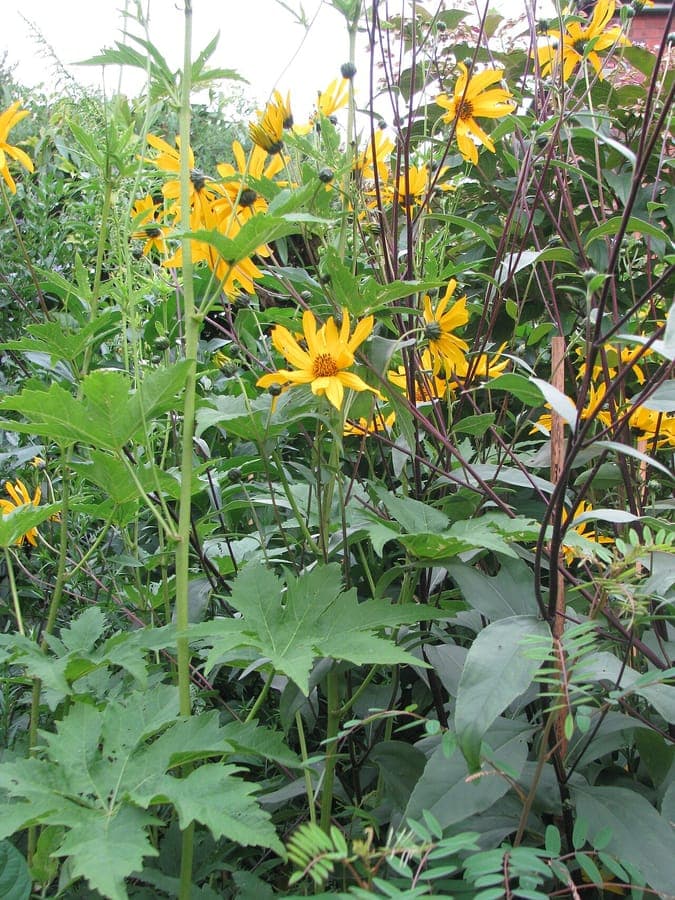
peganum from Small Dole, England / CC BY-SA 2.0, via Wikimedia Commons
Helianthus atrorubens: complete guide
Helianthus atrorubens
Want to see Helianthus atrorubens: complete guide in your garden?
1 minute, no credit card
Overview
Helianthus atrorubens, known as dark-eyed sunflower or purple-disc sunflower, is a stunning perennial from the Asteraceae family. This North American wildflower naturally occurs in the southeastern United States, from New Jersey to the Gulf states. The plant is celebrated for its long flowering period with yellow blooms and characteristically dark purple disk. At 1 to 2 metres tall, it forms a stately silhouette in flower borders and urban gardens.
Appearance and Bloom
Helianthus atrorubens grows as an upright perennial reaching 1 to 2 metres high. The stems are strong and branching. The leaves are linear to lance-shaped, green and rough-textured. The flowers are striking yellow with a deep purple to maroon disk, giving the plant its characteristic name. The flower heads reach 3 to 5 centimetres in diameter and appear abundantly from July to October. The blooms attract butterflies and other pollinators.
Ideal Location
Helianthus atrorubens grows optimally in fully sunny locations with at least 6 hours of direct sunlight daily. Half-shade is possible but reduces flowering. The plant also tolerates sheltered and windy locations well, though strong wind may require staking.
Soil
This plant is adaptable regarding soil. Well-draining, nutrient-rich soil with pH 6.5 to 7.5 is ideal. The plant performs better in heavy clay soils than sandy ones. It prefers slightly moist soil during the growing season.
Free design
Want to see Helianthus atrorubens: complete guide in your garden? Make a free design now.
Watering
Helianthus atrorubens appreciates regular moisture, especially during dry periods. Water when soil feels dry, particularly during growth and flowering. Mulching around the base helps retain moisture and regulate temperature. Avoid waterlogging.
Pruning
After winter, dead stems can be removed in spring. Some gardeners pinch the tops in June for bushier growth and more flowers. After blooming, spent flowers can be removed to keep the plant tidy.
Maintenance Calendar
Spring: Remove dead stems; prepare soil. Summer: Water regularly; stake if needed. Autumn: Enjoy blooming; remove only dead material. Winter: Plant dormancy; prune dead parts in spring.
Winter Hardiness
Helianthus atrorubens is fully winter-hardy in the Netherlands and temperate zones to -20 degrees Celsius. The plant can overwinter outdoors without special protection.
Companion Plants
Combine with other late bloomers like chrysanthemums, asters and other Helianthus species. Low-growing perennials like sage or catmint form beautiful underpinning. Back placement works well for cut flowers.
Conclusion
Helianthus atrorubens is an easy-care perennial with spectacular autumn flowering. Available from garden centres and nurseries. Bring this North American classic to your garden and enjoy months of blooming!
Want to see Helianthus atrorubens: complete guide in your garden? Make a free design now.
Upload a photo, pick a style, and get a photorealistic design with plant list in under a minute.
No credit card required


Similar plants
Calendula stellata: complete guide
Calendula stellata
Complete guide to Calendula stellata, the star-flowered marigold from Sicily: location, soil, watering and companion planting tips.
Korean chrysanthemum: complete guide
Chrysanthemum x rubellum
Chrysanthemum x rubellum is a hardy autumn perennial with single pink to copper flowers from August to November. Care and combinations.
Helianthus divaricatus: complete guide
Helianthus divaricatus
Helianthus divaricatus is a North American woodland sunflower with yellow summer blooms, ideal for naturalistic borders and shady edges.